
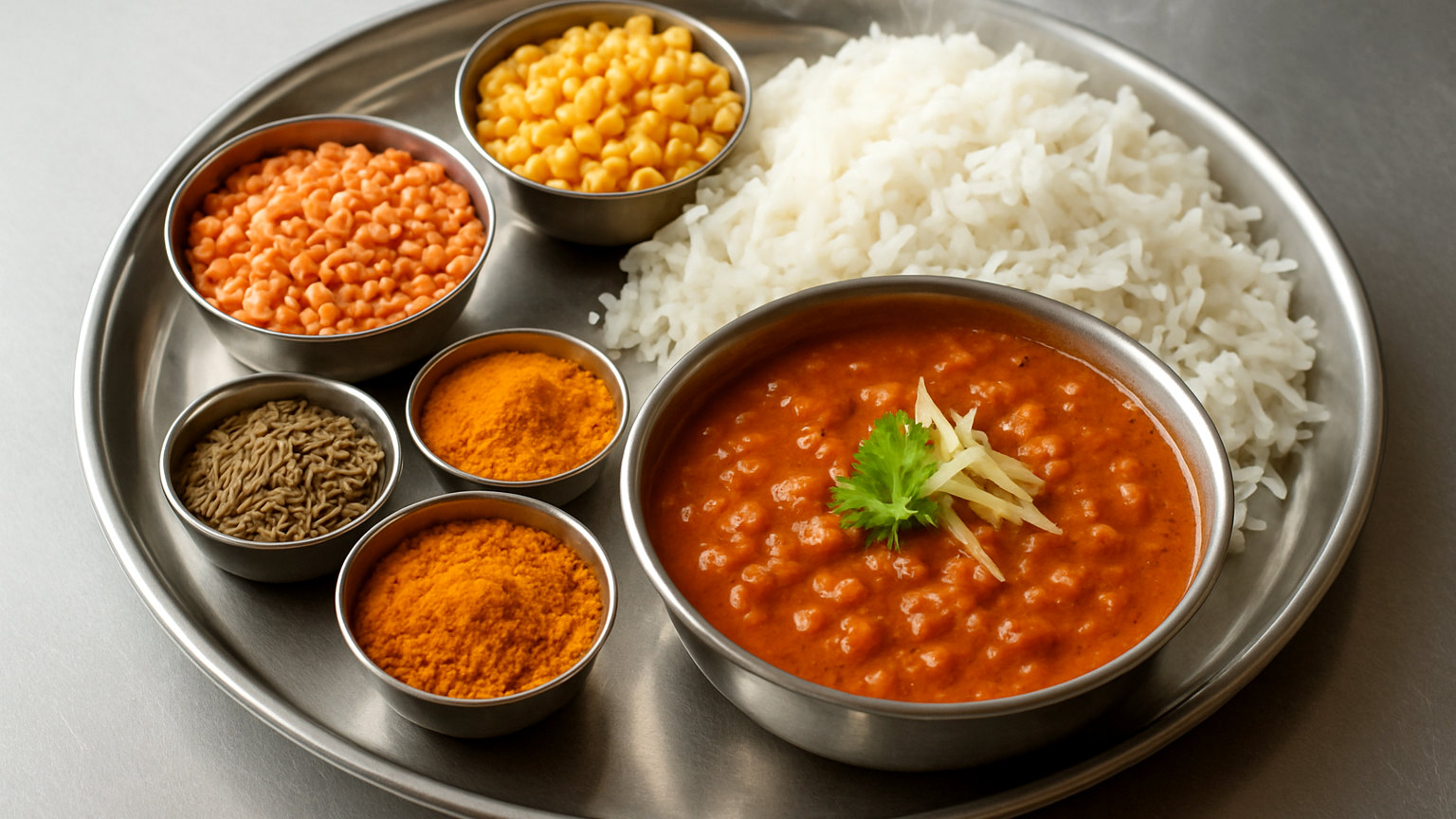
South Asian cooking uses a dozen or more pulses and the names overlap confusingly, particularly since the same pulse appears whole, split and skinned under different names. Five cover most recipes.
Red lentils
Masoor dal, split and skinned, orange-pink and quick. They collapse into a puree in eighteen to twenty minutes with no soaking. This is the lentil for a smooth dal or a curry-house dhansak.
They need thorough rinsing, since the surface starch makes the finished dish gluey and causes it to foam over.
Chana dal
Split chickpeas, yellow and substantially larger. They hold their shape and need soaking for at least two hours, ideally overnight, then thirty-five to forty-five minutes of cooking.
The finished texture has distinct grains in a thick liquid rather than a smooth puree, which is the point of using it.
Toor dal
Split pigeon peas, yellow and slightly larger than red lentils. The everyday dal across much of India and the base of sambar. Around thirty minutes, and soaking for an hour helps.
Often sold oiled, with a slightly greasy coating that should be rinsed off in warm water.
Moong dal
Split mung beans, pale yellow when skinned and green when whole. Quick, light and easily digested, cooking in around twenty-five minutes. Used in khichdi and in lighter dals.
Urad dal
Black gram, sold whole with black skins or split and skinned as white. Whole urad is the basis of dal makhani and needs long slow cooking. Split white urad is used in South Indian tempering and in dosa batter.
Which need soaking?
- Red lentils - no, and rinse thoroughly.
- Moong dal - not essential, thirty minutes helps.
- Toor dal - an hour is useful.
- Chana dal - yes, two hours minimum.
- Whole urad and whole chickpeas - overnight.
Does salt affect cooking?
Adding salt very early can slow the softening of tougher pulses such as chana dal and chickpeas. For quick lentils it makes no practical difference. Salting partway through is a safe habit.
How long do they keep?
A year or more in a sealed jar, and older pulses take longer to soften and never quite reach the same texture. If a batch of chickpeas refuses to soften after hours, age is usually the reason.
Do they need skimming?
The foam that rises in the first few minutes is starch and protein, and skimming it gives a cleaner result and stops the pot boiling over. It is not harmful if left in and most cooks remove it as a matter of habit.
What about tinned pulses?
Tinned chickpeas and kidney beans are entirely reasonable and save hours. Tinned lentils are less useful, since lentils cook quickly from dry anyway and the tinned versions are often mushy. Rinse tinned pulses well before use.
How much per person?
Around 60 to 75g of dry pulses each for a dal served as part of a meal, which roughly triples in weight when cooked. As a main dish with rice, closer to 100g. Dry pulses expand more than people expect.
Which should you keep in?
Red lentils and chana dal cover most recipes between them, being the quick smooth one and the firm textured one. Toor dal is the third to add if you cook South Indian food. The rest can wait for specific dishes.
Why do the names overlap?
Because the same pulse is sold whole, split with skins on, and split and skinned, each under a different name. Moong appears as whole green mung, split green, and split yellow. Recognising that pattern makes the shelf far less confusing than it first looks.
Do they need rinsing?
All of them, and red lentils most of all. Rinse in several changes of cold water until it runs almost clear. The surface starch makes a dal gluey and causes the pot to foam over, and thirty seconds under a tap prevents both.
Can you cook them in a pressure cooker?
Very effectively, and it is standard practice across South Asia. Chana dal takes around fifteen minutes at pressure rather than forty-five, and chickpeas twenty rather than an hour and a half. Red lentils are quick enough that it saves little.


