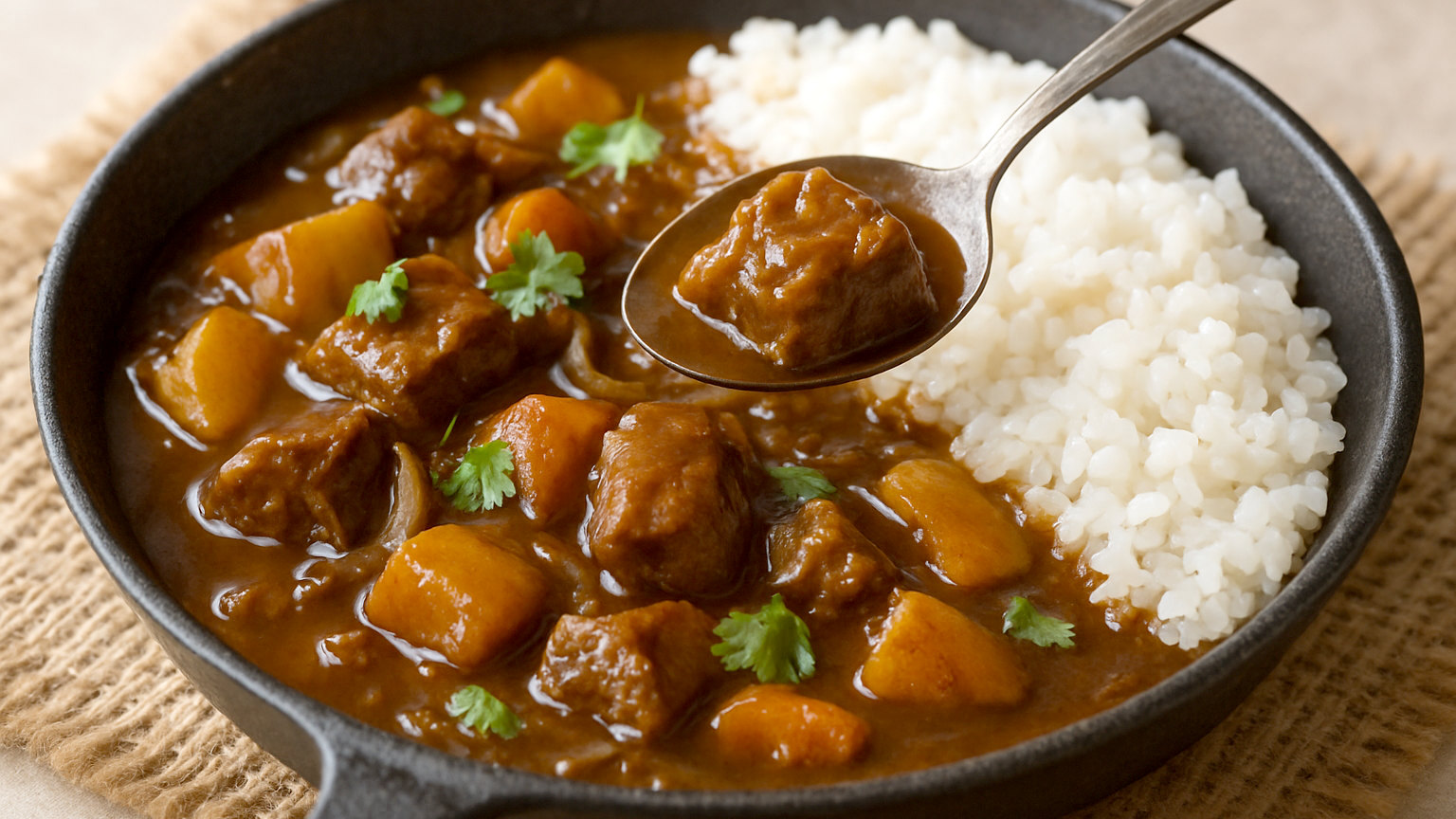
How to Make Japanese Beef Curry
Two hours of gentle cooking, a dark roux and the apple and honey that round it off. It is closer to a rich beef stew than to anything Indian or Thai.
By Curry Recipes Team
14 Jan 2026

Slow-cooked beef in a dark, sweet Japanese sauce, with the apple and honey that give it its particular roundness.
Two hours of gentle cooking, a dark roux and the apple and honey that round it off. It is closer to a rich beef stew than to anything Indian or Thai.
They supply the rounded sweetness that defines the dish, and the apple adds acidity alongside it. Neither is detectable as itself in the finished sauce.
Shin above everything else, then chuck and brisket. The sauce depends on gelatine from connective tissue, so a lean cut leaves it thin however long you cook it.
Ninety minutes for the beef, then thirty-five more with the vegetables. Checking at an hour and finding it tough is normal rather than a problem.
It suits the dish well, provided the roux is made in a pan first and the potatoes go in for the last ninety minutes only.
The roux was not taken far enough. Colour in a Japanese curry comes from browning flour and butter, not from the curry powder or from anything added later.
The way most Japanese households actually cook it. The block goes in at the end, off the heat, and the beef still needs its two hours first.
Chocolate, coffee, ketchup, jam and grated onion all appear in Japanese home cooking. Most are adding depth or acidity as much as sweetness.
The close relative of Japanese beef curry, built on the same roux with tomato and red wine instead of curry powder. Thin beef, twenty-five minutes.
Yes, and it matters more here than in a spiced Indian curry. The residue left in the pan is where a large part of the savoury depth comes from.
Potato, carrot and onion, cut large. The trio is close to compulsory, and the timing matters because each wants a different amount of the cooking.
Thirty-five minutes at pressure replaces ninety of simmering, and the saute function handles the browning and the roux in the same pot.


