How to Brown Onions Properly
Twenty-five minutes rather than six, in more oil than feels sensible. It is the stage that separates a good curry from a thin one and the one everybody rushes.
By Curry Recipes Team
29 Jul 2025

Browning onions, blooming spice, splitting coconut cream, tempering and reducing - the handful of moves every curry recipe assumes.
Twenty-five minutes rather than six, in more oil than feels sensible. It is the stage that separates a good curry from a thin one and the one everybody rushes.
Frying ground spice in hot fat for thirty to sixty seconds. Spices dropped into liquid stay raw and taste dusty, and no amount of simmering fixes it.
Whole spices go in first and release slowly. Ground spices go in later and release everything at once. Most curries use both, at different moments.
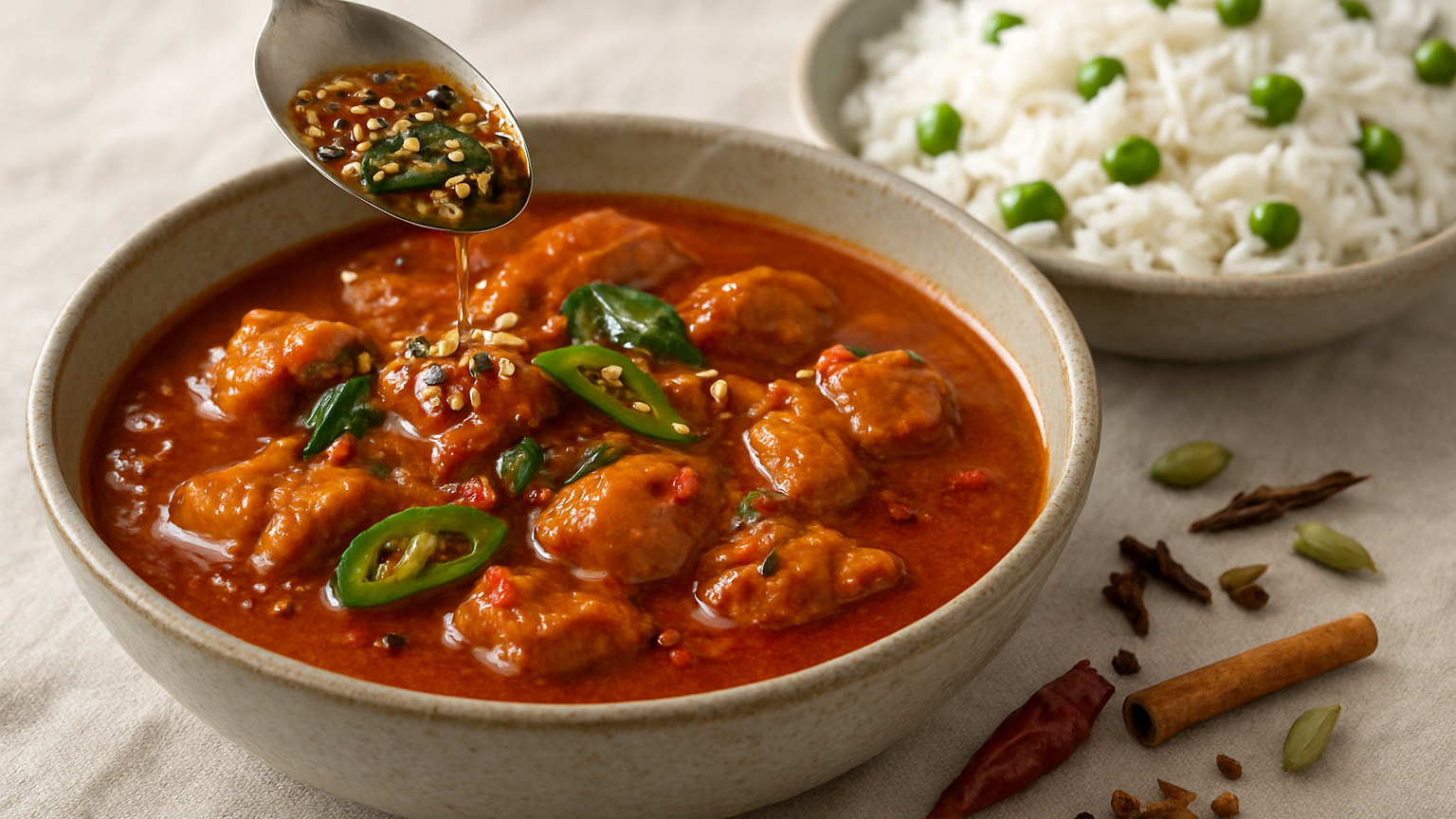
Whole spices fried in hot fat and poured over a finished dish. It takes ninety seconds and it transforms a plain pot of lentils entirely.
Because the water has gone and the masala is frying rather than boiling. It is the signal cooks across South Asia actually watch for.
Heat the thick cream from an unshaken tin until clear oil separates, then fry the paste in it. Only some tins will do it.
Yoghurt, cream and thick coconut milk all break under heat. The fixes are the same in each case and they are mostly about when things go in.
Uncovered, in a wide pan, and further than you think. Most homemade curries are served at least ten minutes before they are finished.
Equal weights blended with a little oil, frozen in cubes. It takes ten minutes once and removes the most tedious step from every curry afterwards.
Different chillies at different stages give depth rather than a single flat burn. Colour and heat are separate jobs and are best done separately.
A little early to help the onions, the rest at the end once the sauce has reduced. Season a curry at the start and it will be too salty by the finish.
It usually needs acid or salt rather than more spice. Adding more curry powder to a dull curry almost always makes it worse.