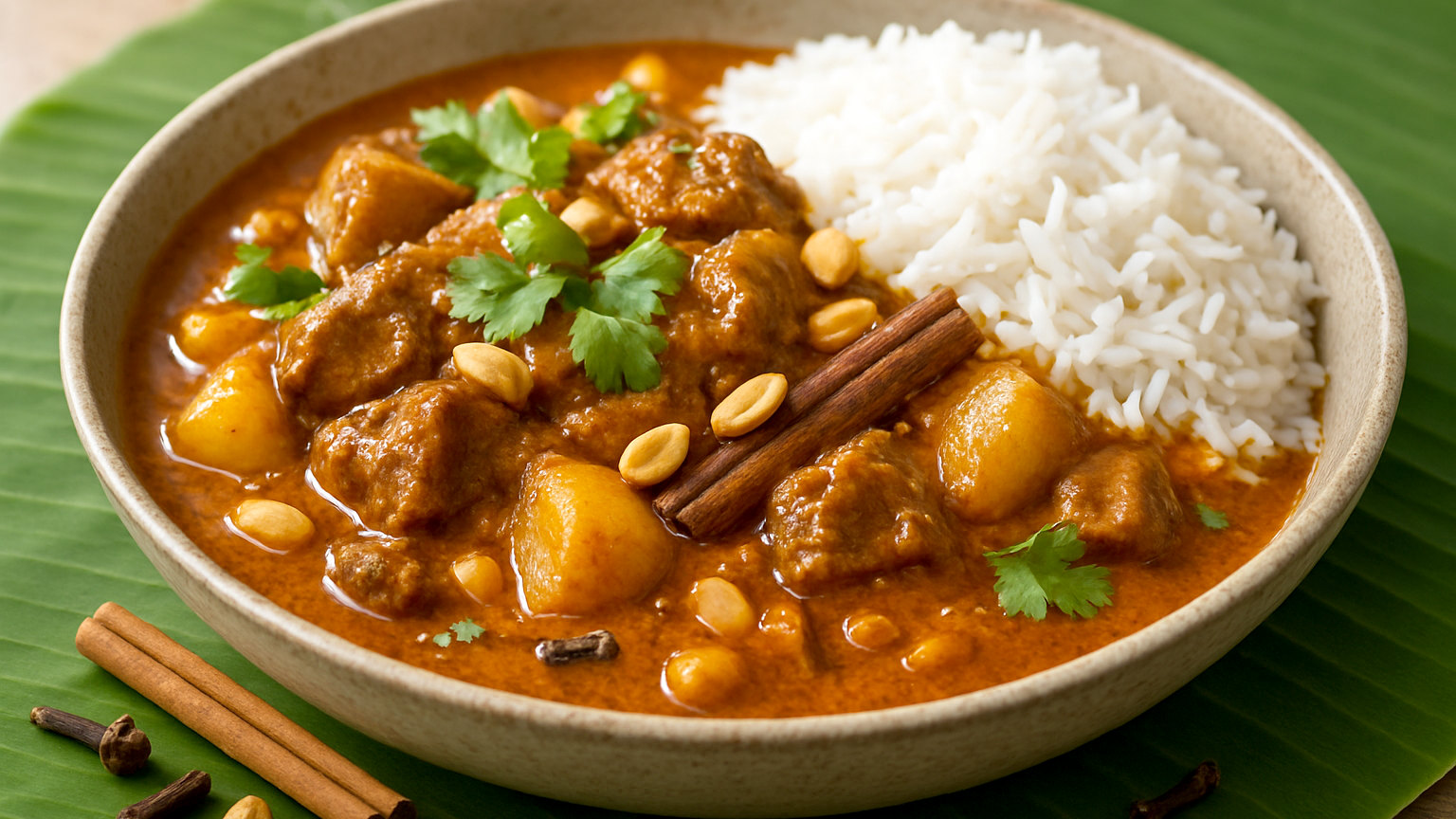
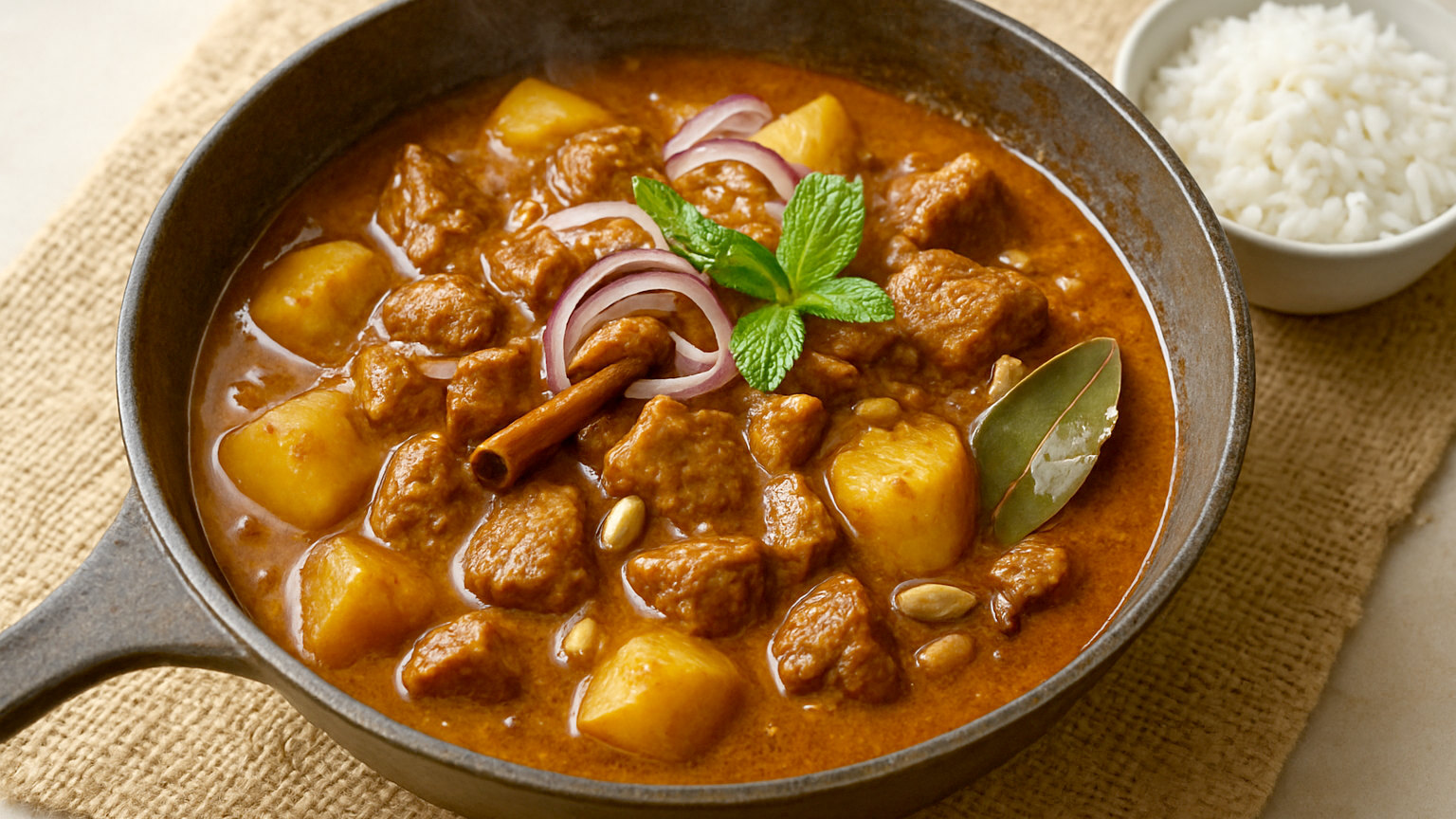
How to Make a Proper Massaman Beef Curry
The only Thai curry that wants a long braise. Two hours of gentle cooking, warm whole spices, potato and tamarind, and a sweetness balanced by real sourness.
Warm whole spices, potato, peanut and tamarind - the slow, sweet Thai curry with a clear Persian and Indian inheritance.
The only Thai curry that wants a long braise. Two hours of gentle cooking, warm whole spices, potato and tamarind, and a sweetness balanced by real sourness.
From Muslim traders reaching the Siamese court, most likely Persian. The name and the whole spices both point outward rather than to Thailand.
The most involved of the Thai pastes, because the whole spices have to be toasted and ground before the wet pounding begins. Forty minutes for two curries.
Cinnamon, cardamom, clove, star anise and nutmeg. None of them appears in any other Thai curry, and their presence is the whole point of the dish.
Chicken cuts the cooking time to forty minutes, but the spices still need a head start. Build the sauce first and add the chicken partway through.
It stops the dish being cloying. Massaman contains four sweet ingredients and without a firm sour note the whole thing collapses into something sickly.
Because the heat comes largely from white pepper and mild dried chillies, and the warm spices, coconut and peanut between them buffer what remains.
Lamb suits the warm spices better than beef does, and shoulder gives the same long braise. Skim the fat, because lamb releases considerably more.
They are traditional and they thicken as well as flavour, but a massaman without them is still a massaman. Several substitutes work for allergies.
Waxy varieties that hold their shape. Floury potatoes break down and cloud the sauce, which is a different dish and not a better one.
Massaman adapts more easily than the other Thai curries, since potato and peanut already carry the dish. Check the paste for shrimp and swap the fish sauce.
Because four sweet ingredients are stacking and the tamarind or fish sauce is short. Salt first, then sourness, and only then consider the sugar itself.