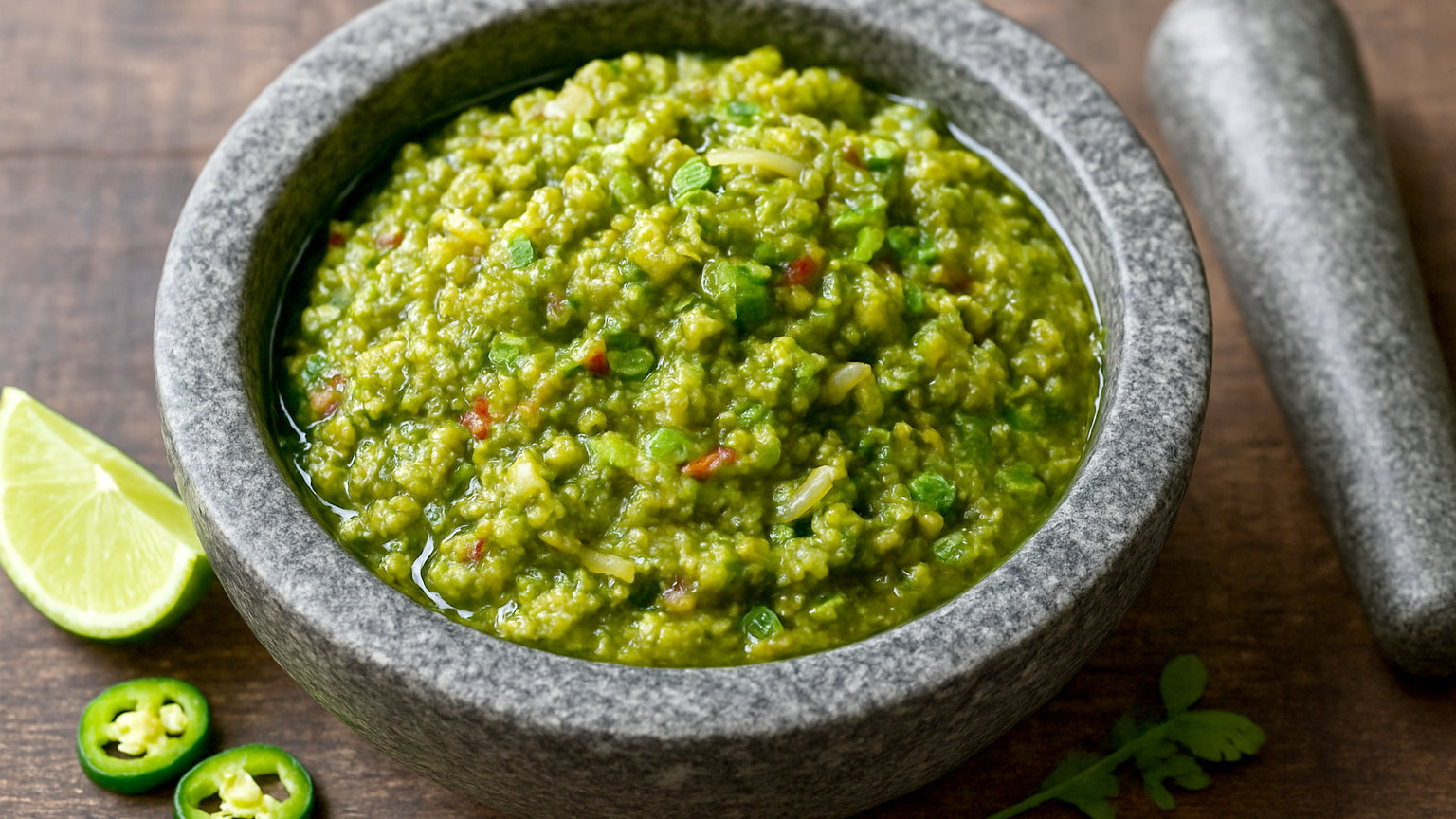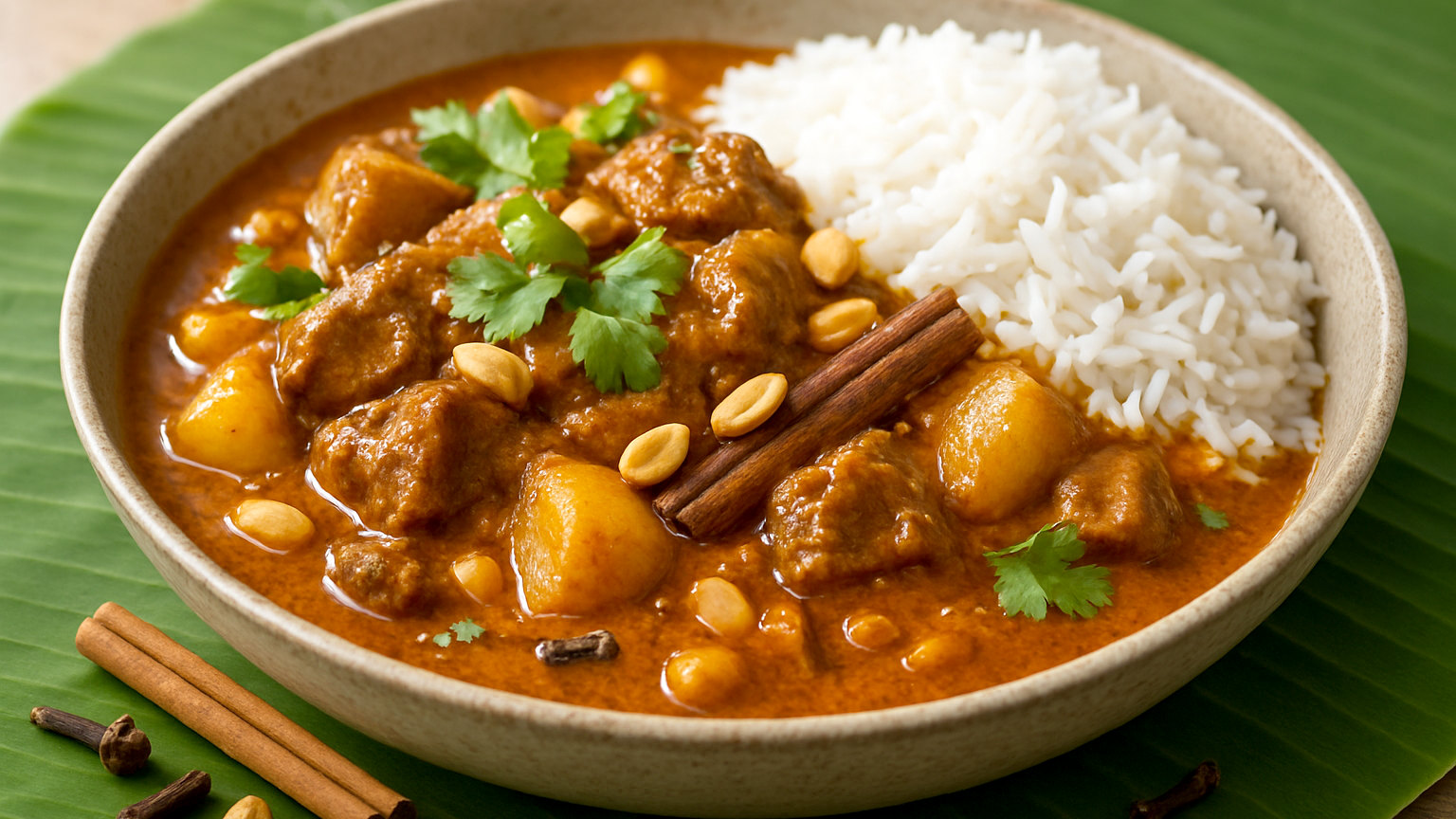
Massaman does not look like a Thai curry and does not taste like one, and the reason is that its ancestry lies outside Thailand. It arrived through trade, and both the name and the spice list point to where from.
What does the name mean?
The most widely accepted reading is that massaman derives from a Thai rendering of a word meaning Muslim, and the dish is understood as the curry of the Muslim community. Various spellings appear, including matsaman, which is closer to the Thai pronunciation.
That reading fits the ingredients. The dish contains no pork, uses beef or chicken where much central Thai cooking of the period would have used pork, and carries spices associated with Persian and Indian cooking rather than South East Asian.
Who brought it?
Persian traders and diplomats reaching the Siamese court at Ayutthaya, most probably during the seventeenth century, when the kingdom was an unusually cosmopolitan trading centre with Persian, Indian, Chinese, Japanese and European communities present.
A Persian merchant named Sheikh Ahmad Qomi is frequently cited as a figure in that community, and the culinary exchange that followed is well documented in general terms even if the specific dish cannot be traced to one person.
Which ingredients are the giveaway?
- Cinnamon and cassia - almost unknown in other Thai curries.
- Cardamom - a Persian and Indian staple, rare elsewhere in Thai cooking.
- Clove and nutmeg - warm spices from the spice trade routes.
- Star anise - Chinese in origin and arriving by the same routes.
- Peanut - used as a thickener in a way that echoes Persian nut-thickened stews.
- Potato - a later addition, since potatoes reached Asia through European trade.
Is it still a Thai dish?
Entirely, and it has been for centuries. The base is a Thai curry paste with lemongrass, galangal, shrimp paste and dried chillies, and the seasoning follows Thai logic with fish sauce, palm sugar and tamarind in balance.
What arrived from outside was grafted onto a Thai structure rather than replacing it, which is why the dish tastes like neither an Indian curry nor a Persian stew but distinctly like itself.
Where is it eaten in Thailand?
Most strongly in the south, where Muslim communities are largest and where the dish has been part of everyday cooking longest. It is also a court dish with a long association with royal cuisine, and it appears in a well-known eighteenth-century Thai poem attributed to a prince.
Why is it so popular abroad?
Because it is the gentlest entry point. Its mildness, sweetness and familiar warm spices make it approachable to palates used to European cooking, and the potato and peanut give it a substance that reads as a complete meal.
It has appeared at or near the top of various international lists of favourite dishes, which says as much about accessibility as about quality.
Does the history change how you cook it?
It explains the long cook. A dish descended from slow-braised spiced stews wants ninety minutes rather than fifteen, and whole spices need that time to give up their aromatics. Treating massaman like a green curry is the most common mistake, and knowing where it came from makes clear why that does not work.
Is it related to any Indian dish?
Loosely to the korma family, which shares the nut thickening, the mild warm spicing and the slow braise. The resemblance is structural rather than direct, and both descend from Persian court cooking through different routes rather than one from the other.
How has it changed over time?
The potato is the clearest addition, since potatoes only reached Asia through European trade well after the dish would have taken shape. Peanuts arrived the same way. The core of dried chilli, lemongrass, galangal and warm spices is the older part, and the vegetables are later grafts onto it.
Why is it associated with royal cooking?
Because the Ayutthaya court was where the exchange happened, and dishes that arrived through diplomatic and trading contact entered the palace kitchens first. Massaman appears in an eighteenth-century Thai poem attributed to a prince, praising the dish and the woman who made it, which fixed its status.