How to Make Chicken Karahi
No onion, almost no ground spice and twenty-five minutes over a fierce heat. It is the opposite of a slowly simmered curry and it tastes like it.
By Curry Recipes Team
26 Aug 2025

Karahi, nihari and haleem - meat-forward, tomato-lean, and cooked hard rather than simmered gently.
No onion, almost no ground spice and twenty-five minutes over a fierce heat. It is the opposite of a slowly simmered curry and it tastes like it.
Because the flavour comes from frying rather than stewing. High heat drives water off fast and forces the oil out, which is where the depth develops.
A technique before it is a dish. Bhunao means frying and stirring a masala over heat until the water has gone and the oil comes out.
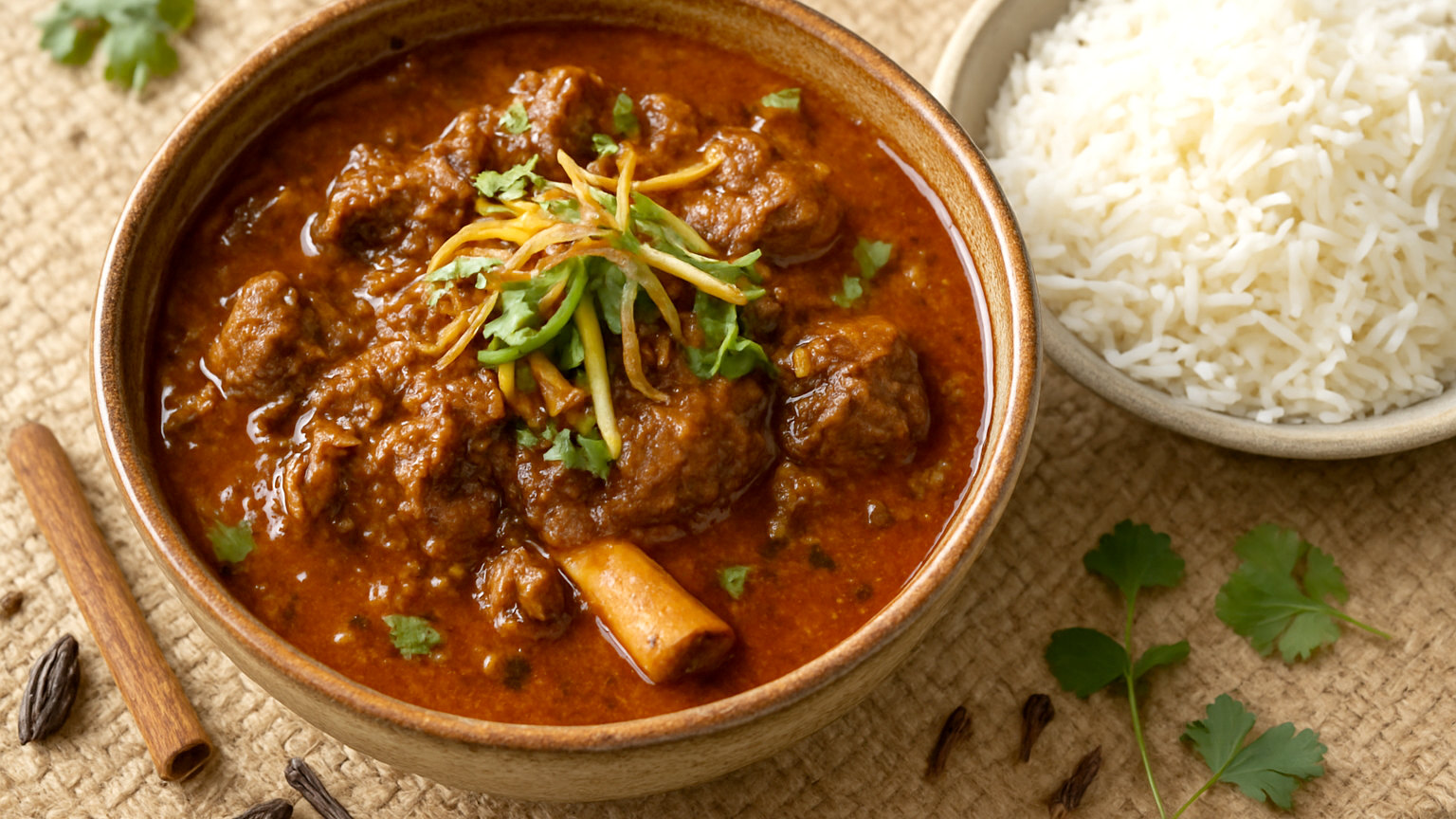
Beef shank cooked overnight until it collapses, thickened with wheat flour and finished with ginger, chilli and lemon. It is eaten for breakfast.
Because they are built on meat, yoghurt and onion rather than on a tomato gravy. Where tomato appears it is fried down hard rather than used as a base.
The same fierce technique as a chicken karahi with an hour of covered cooking first. Mutton needs time that chicken does not.
A thick round-bottomed pan that holds heat and lets liquid evaporate fast. A heavy wok or a wide cast iron pan does most of what it does.
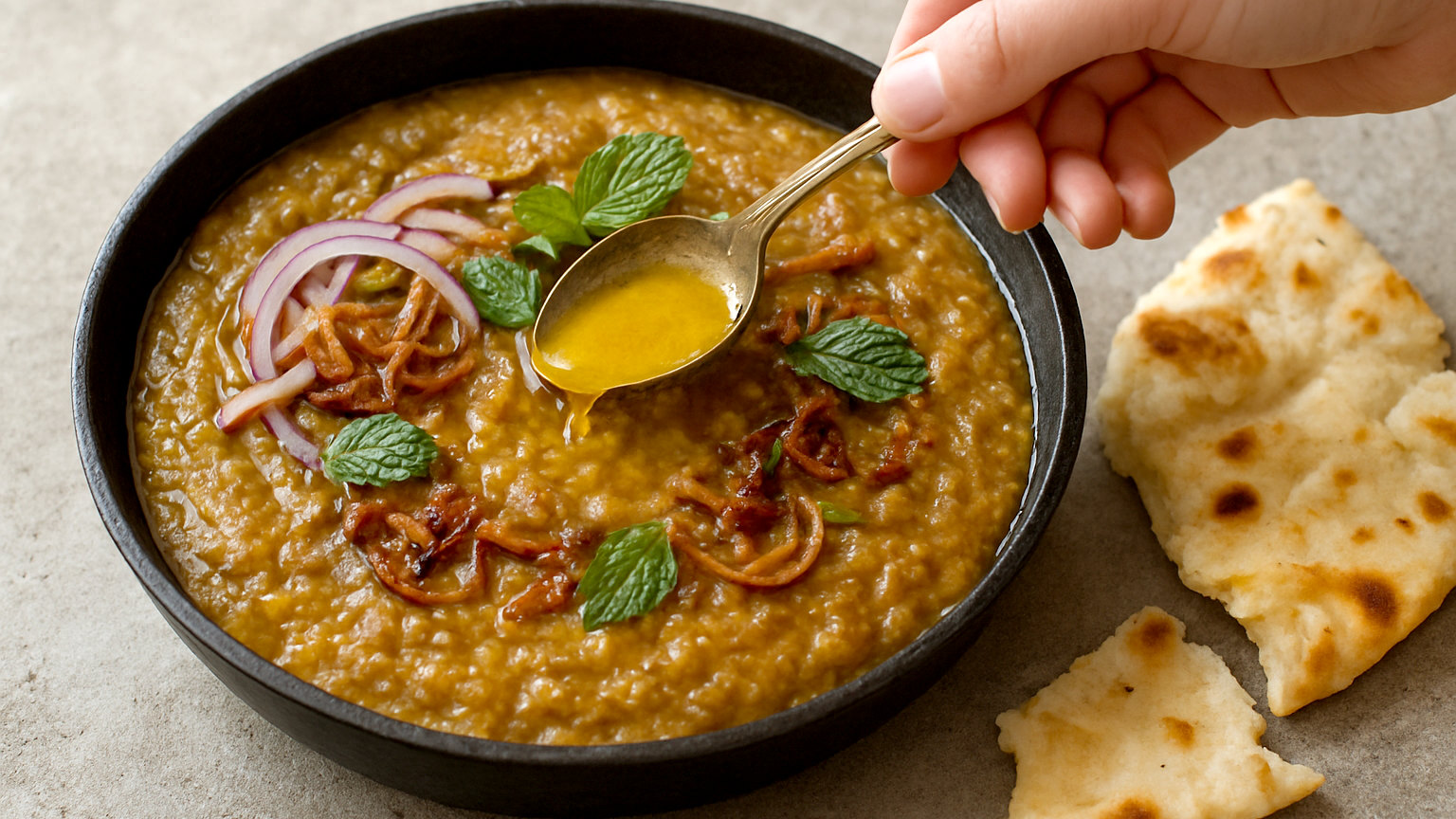
Wheat, barley, lentils and meat cooked for hours and pounded until nothing is identifiable. It is closer to a savoury porridge than a curry.
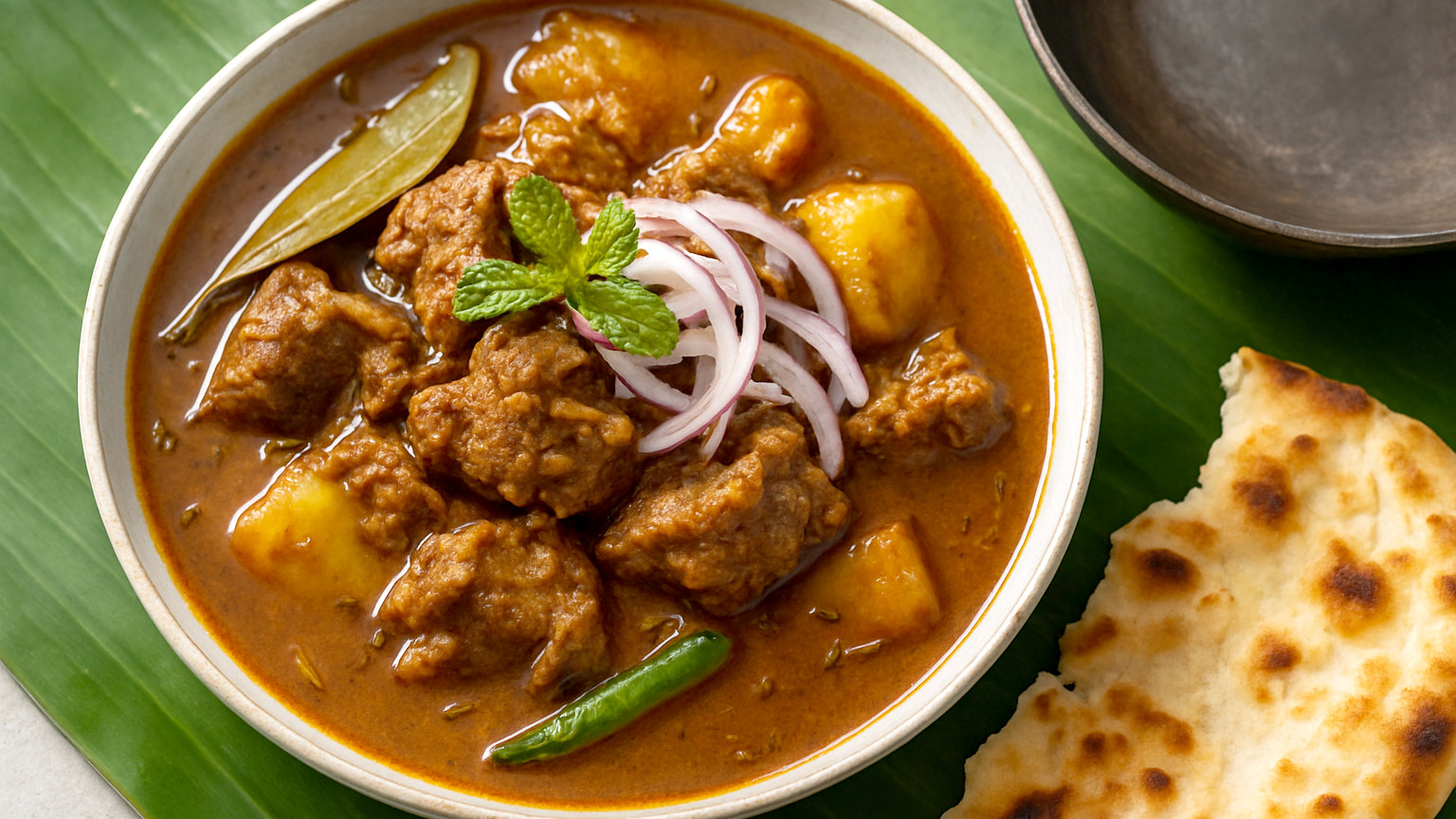
Meat and potato in a thin savoury gravy, and the most commonly cooked dish in Pakistani homes. It is the weeknight curry rather than the restaurant one.
More meat, more wheat, less tomato and almost no coconut. The overlap with North Indian cooking is enormous and the differences are consistent.
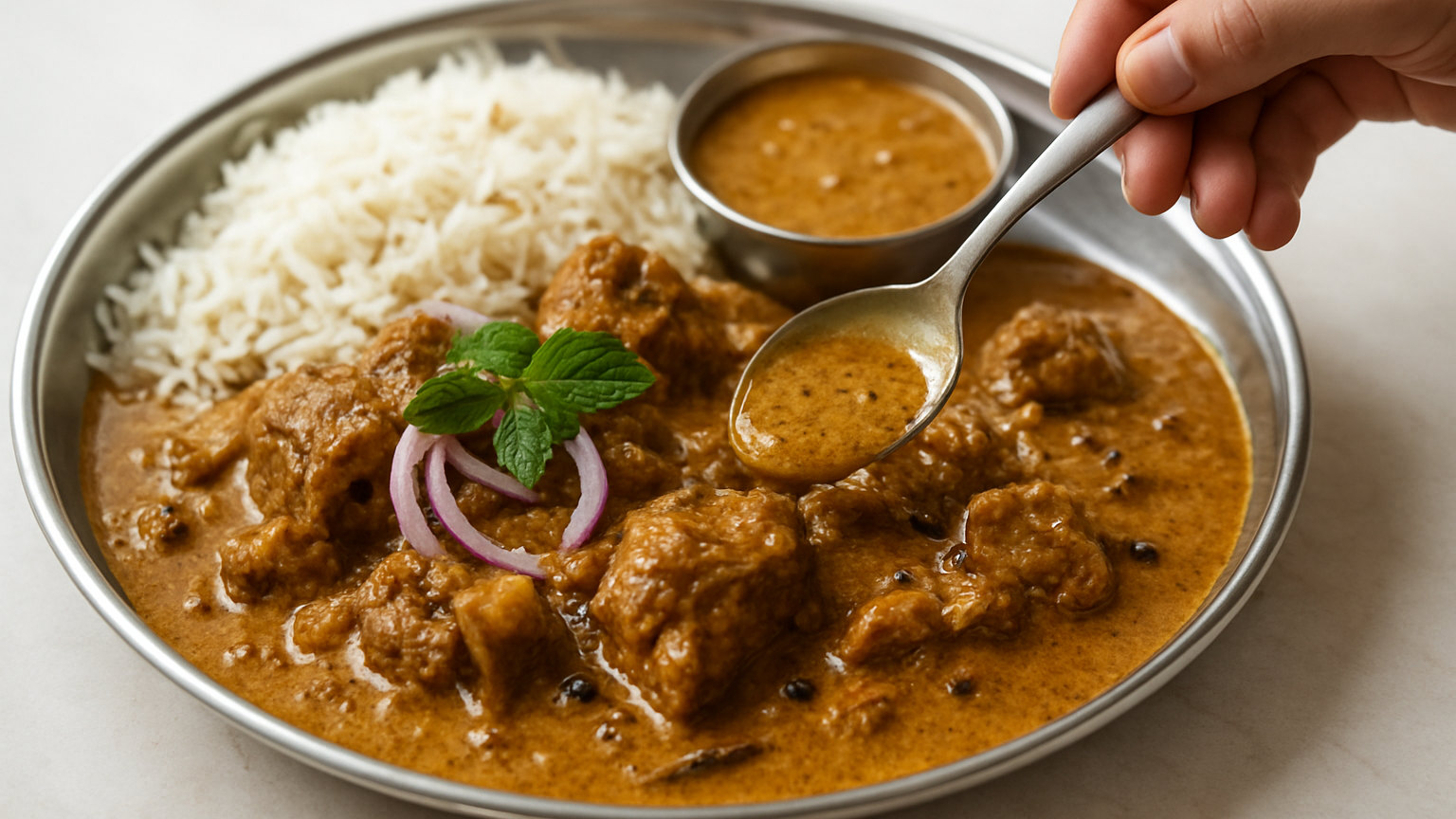
Fried hard like a karahi then finished with yoghurt and cream, which makes it the richest of the everyday Pakistani chicken dishes.
Shank for nihari, shoulder for karahi, and bone-in for almost everything. The cut is chosen for the cooking time rather than for tenderness.