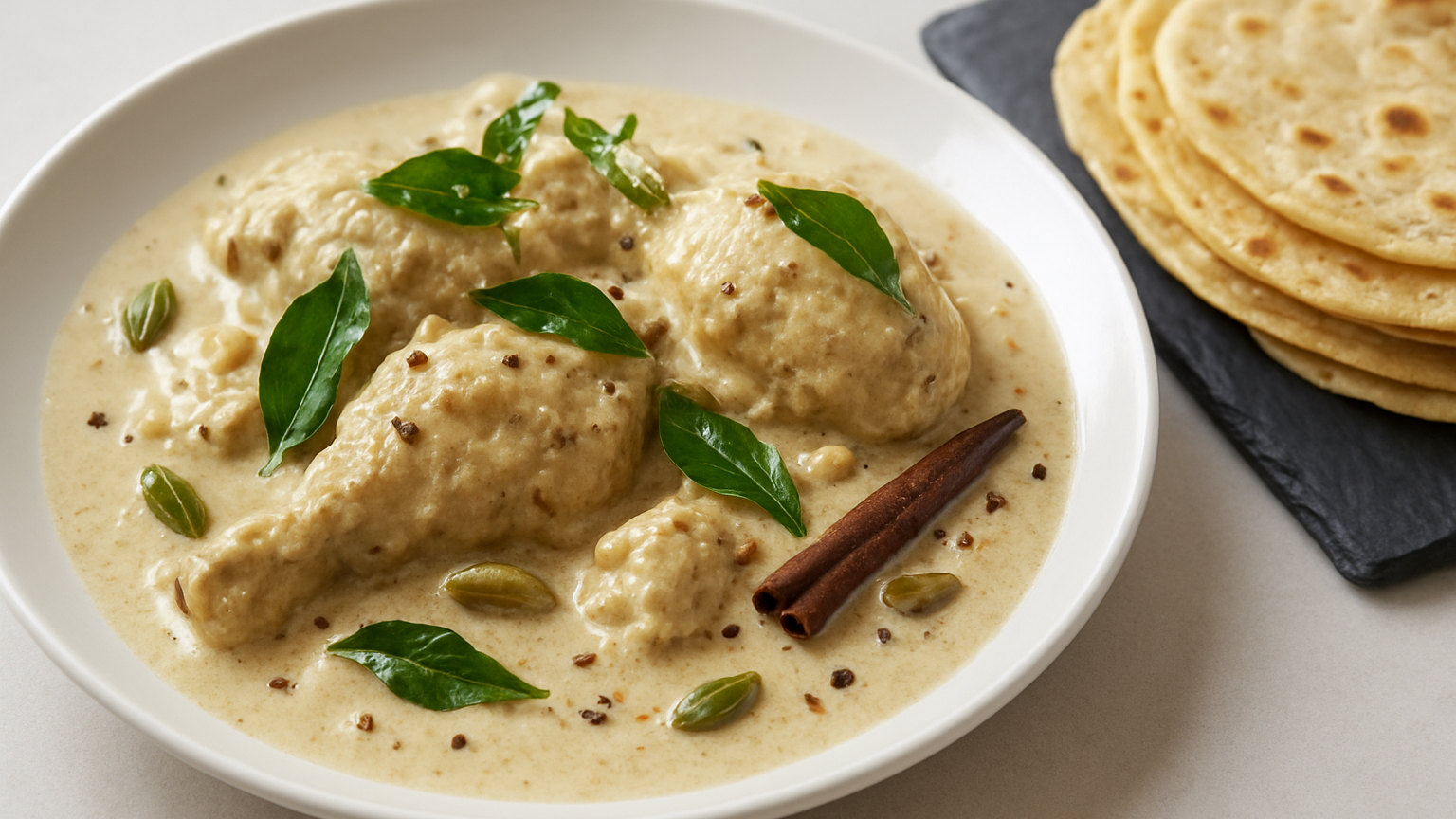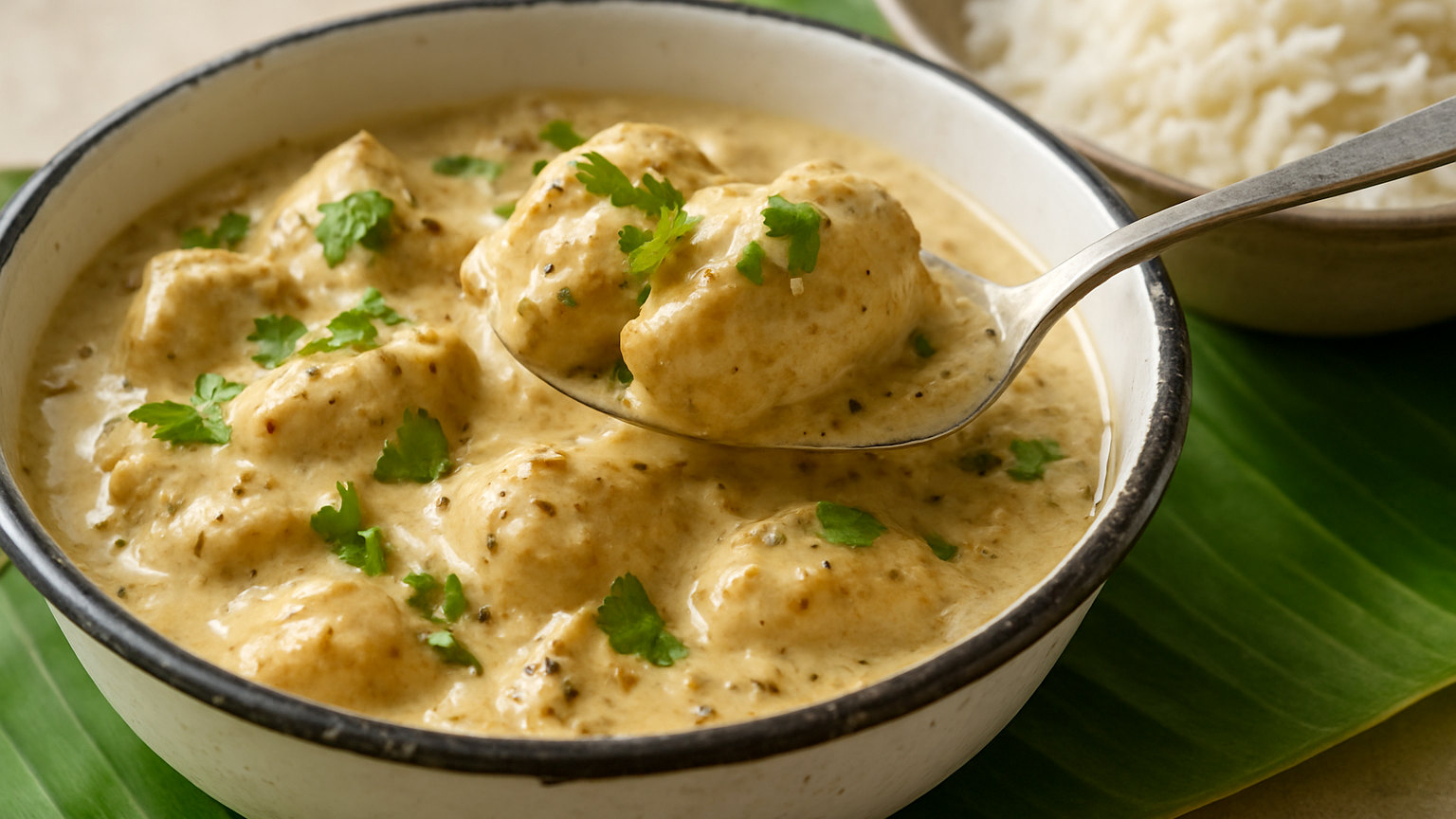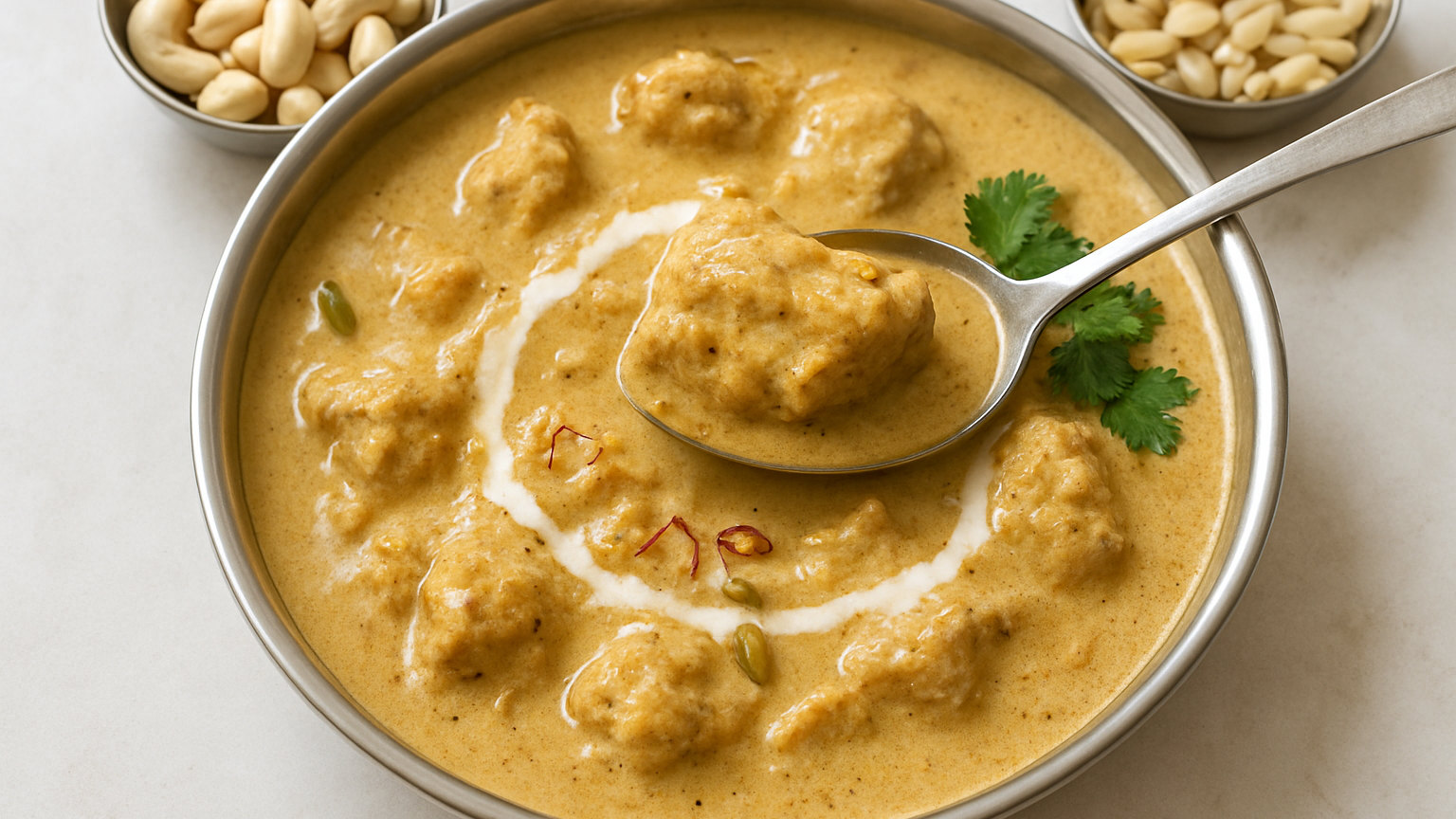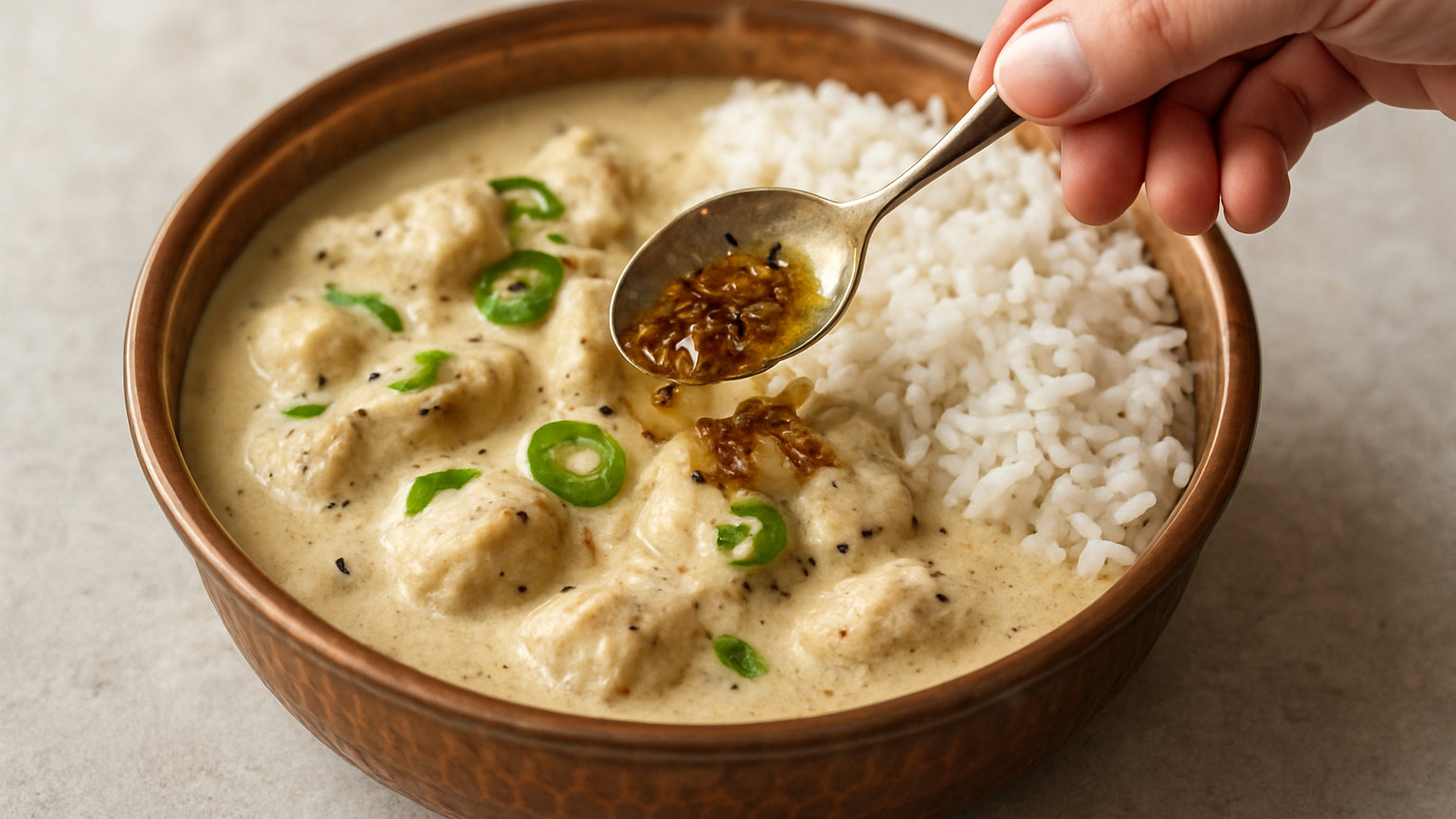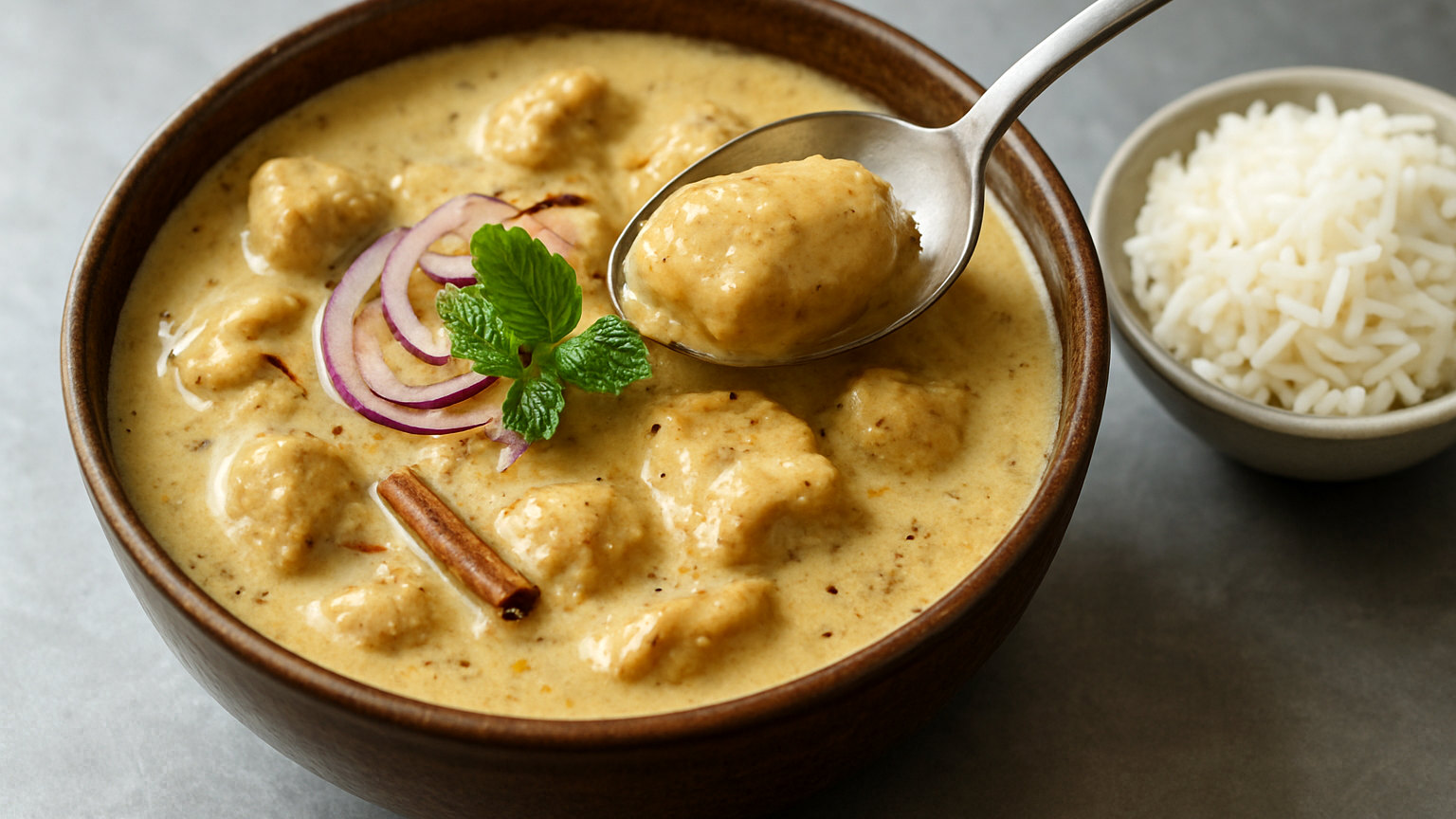
How to Make a Proper Chicken Korma at Home
A korma is built on nuts, dairy and gentle heat rather than browning and reduction. Almost everything that goes wrong comes from cooking it too hard.
Mild, sweet and creamy without being sickly - balancing almond, coconut and cream, and keeping the sauce from splitting.
A korma is built on nuts, dairy and gentle heat rather than browning and reduction. Almost everything that goes wrong comes from cooking it too hard.
Korma is a braising method rather than a flavour. It is defined by nuts and dairy doing the thickening, not by being mild or sweet.
Splitting is heat damage to an emulsion. It is almost entirely preventable, and a split sauce can usually be brought back in under a minute.
Cashews give the smoothest sauce, almonds the most traditional, and melon seeds the most authentic to Mughal cooking. All three need soaking.
Sunflower seeds, gram flour and thick yoghurt between them do everything ground almonds do. The result is lighter but recognisably a korma.
Korma became mild in Britain. Across northern India and Pakistan there are kormas built on black pepper and green chilli that would surprise most people.
Coconut cream and cashew paste together do what yoghurt and double cream do, and the sauce is more stable because there is no dairy protein to split.
Sweetness usually comes from three sources compounding. Salt and acid pull it back faster than anything, and the fix takes about two minutes.
Shahi means royal, and the name signals saffron, mace, cream and a deliberately restrained hand with the spicing. It is the courtly ancestor of the takeaway korma.
Yoghurt brings tang, cream brings richness and stability, coconut brings sweetness. Most good kormas use two of the three rather than one.
Restaurant smoothness comes from blending, not from stirring. Soaking the nuts and blending the base are the two steps home versions usually skip.
Korma suits a slow cooker better than most curries, because it never wanted high heat. The dairy is the only thing that needs holding back.