
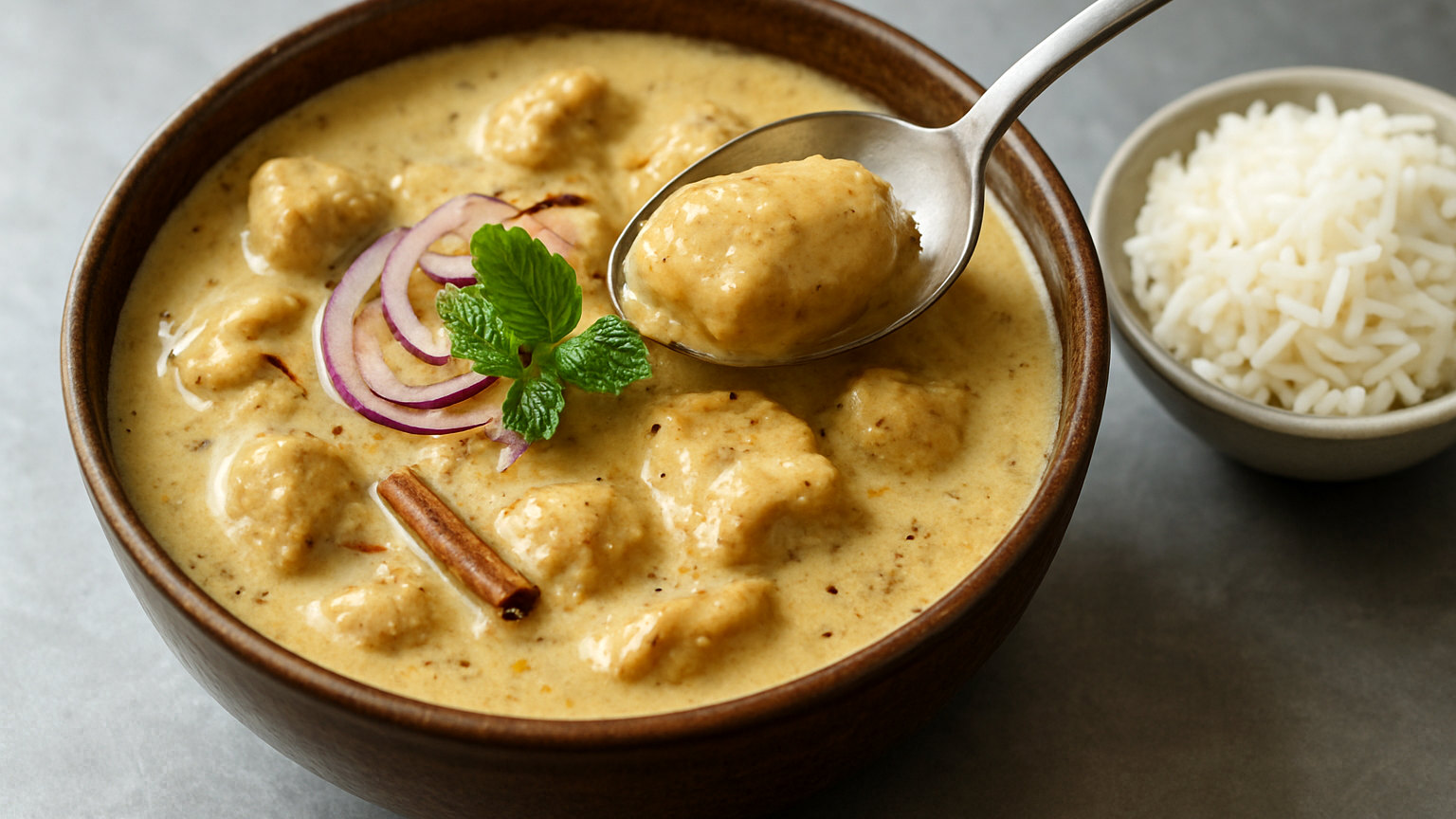
A korma is the one Indian curry where almost every instinct from other curries works against you. The onions should not be browned dark, the spices should not be pushed hard, and the sauce should never come to a proper boil. It is a gentle dish, and the discipline is in restraint rather than effort.
What actually defines a korma?
The technique of braising meat slowly in a sauce thickened with ground nuts, yoghurt or cream, and seasoned with aromatic rather than hot spices. That is the whole definition, and it says nothing about sweetness or about coconut, both of which are British additions to a dish that arrived from Mughal court cooking.
The thickening is the key structural difference. Most curries thicken by reduction, boiling water off until the sauce concentrates. A korma thickens because ground almonds or cashews absorb liquid and swell, which happens at a low temperature and does not need aggressive heat at all.
Why should the onions stay pale?
Because dark caramelised onion brings a deep, slightly bitter sweetness and a brown colour, and a korma wants neither. Cook the onions until they are soft and translucent with only the faintest gold at the edges, around twelve minutes rather than twenty-five.
Some versions go further and boil the onions before blending them to a white paste, which gives the pale ivory colour of a restaurant korma.
How do you stop the sauce splitting?
Keep it below a simmer once the dairy is in. Yoghurt and cream are emulsions of fat and protein in water, and a rolling boil breaks them apart into grainy curds and oil. Whisk yoghurt smooth before it goes near the pan, add it off the heat a spoonful at a time, and never let the surface do more than tremble afterwards.
Chicken korma
Serves four. Around twenty minutes of preparation and forty-five minutes of cooking.
Ingredients
- 800g boneless chicken thigh, in large chunks
- 4 tbsp ghee or a mixture of butter and oil
- 6 green cardamom pods, 1 cinnamon stick, 4 cloves, 2 bay leaves
- 3 medium onions, finely sliced
- 5 garlic cloves and 4cm ginger, crushed to a paste
- 75g cashew nuts, soaked in hot water for 20 minutes
- 2 tsp ground coriander
- 1 tsp ground cumin
- Half tsp ground white pepper
- 150g full-fat natural yoghurt, whisked smooth
- 1.25 tsp salt
- 150ml hot water or light chicken stock
- 75ml double cream
- Half tsp garam masala and a pinch of ground mace
Method
- Drain the soaked cashews and blend them with 100ml of fresh water to a completely smooth cream. Set aside.
- Heat the ghee over a medium heat and add the cardamom, cinnamon, cloves and bay. Fry for 40 seconds until fragrant.
- Add the onions with a pinch of salt and cook for 12 to 14 minutes, until soft and translucent with barely any colour. Lower the heat if they start to brown.
- Add the garlic and ginger paste and cook for 2 minutes.
- Reduce the heat, add the coriander, cumin and white pepper, and stir for 40 seconds.
- Add the chicken and turn it through until every piece is coated. Cook for 5 minutes without letting it colour.
- Take the pan off the heat. Add the whisked yoghurt one spoonful at a time, stirring thoroughly between each. Return to a low heat.
- Stir in the cashew cream, the salt and the hot water. Bring to the barest simmer, cover and cook for 20 minutes, stirring every five.
- Uncover, stir in the cream and cook gently for a further 5 minutes without boiling.
- Add the garam masala and mace, check the salt, and rest off the heat for 5 minutes before serving.
How thick should it be?
Pourable rather than clinging. A korma is one of the few curries that is meant to be properly saucy, thick enough to coat a spoon but loose enough to run into rice. If it has gone too thick, loosen it with a splash of hot water or milk rather than boiling it further.
What is the most common mistake?
Adding sugar. A well-made korma tastes rich and faintly sweet from the nuts, the cream and the gently cooked onion, and it does not need help. If it tastes flat rather than dull, it almost certainly needs salt instead, and a squeeze of lemon at the end will lift it further than any amount of sugar.


