What Sides Does a Curry Actually Need?
A starch, something cooling and something sharp. Three jobs, and most of what appears on a curry-house table is filling one of them twice.
By Curry Recipes Team
11 May 2025

Naan, raita, chutney, bhajis and poppadoms - the things that make a curry a meal, and which are worth making yourself.
A starch, something cooling and something sharp. Three jobs, and most of what appears on a curry-house table is filling one of them twice.
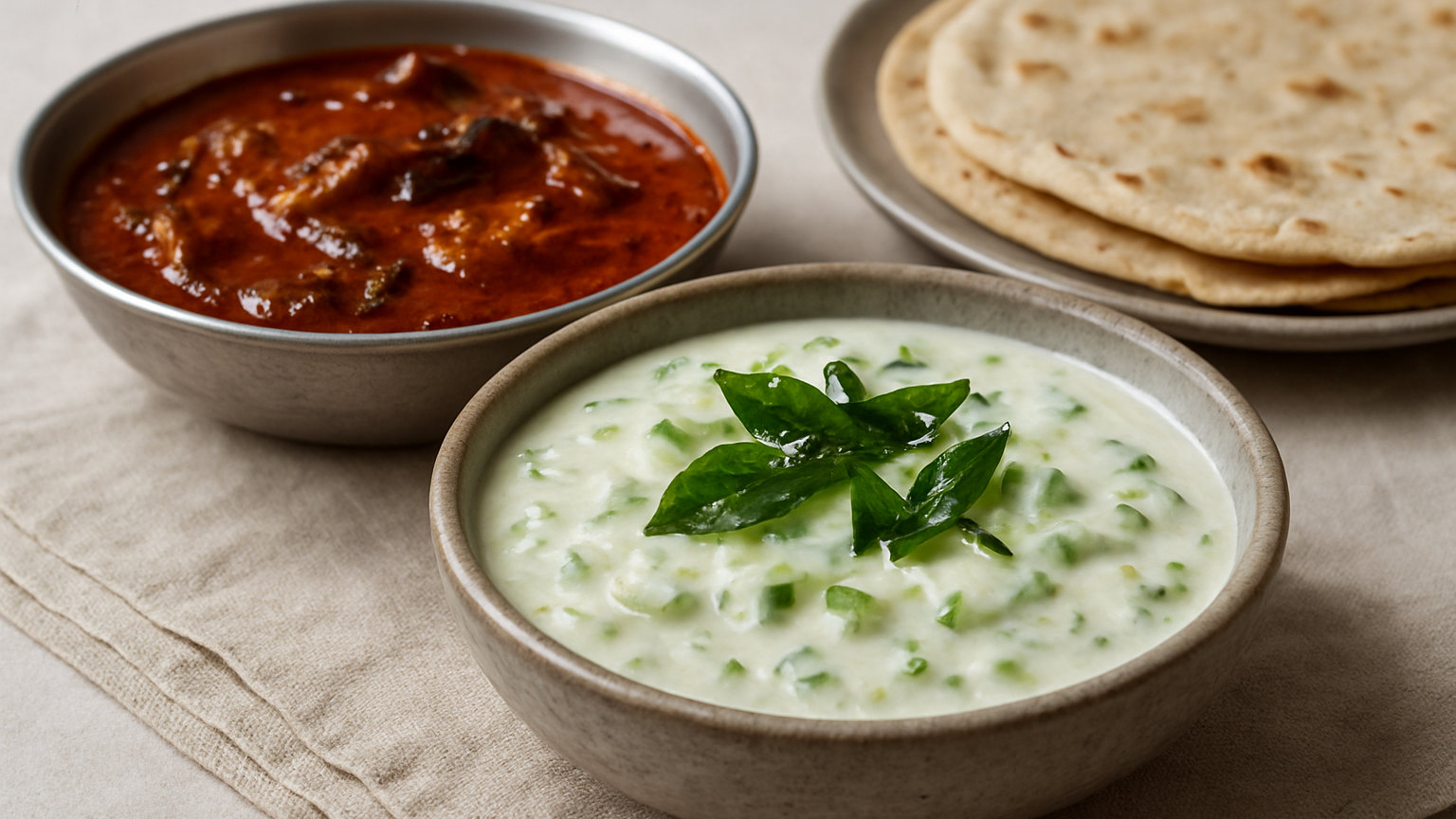
Yoghurt thinned and seasoned, with roasted cumin and grated cucumber squeezed dry. It takes five minutes and it is not a dip.
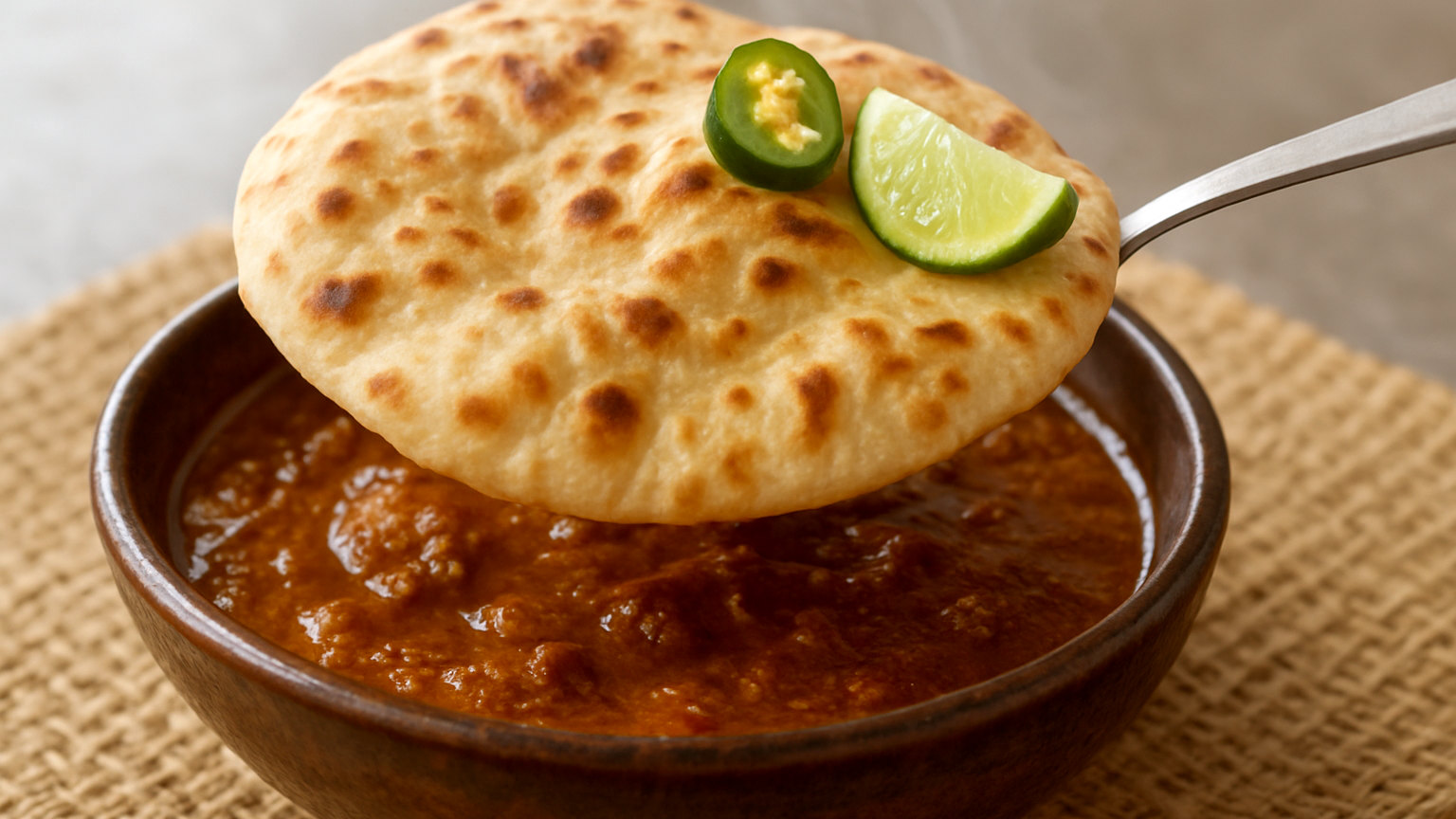
A soft enriched dough cooked in a screaming hot pan under a grill. No tandoor needed and the blisters are achievable at home.
Because capsaicin dissolves in fat and binds to casein, and water does neither. It is the reason yoghurt is on the table and beer is not the answer.
Two ingredients, a hot dry pan, and a puff of steam that inflates the whole bread. The everyday flatbread across most of South Asia.
Onion, tomato and cucumber with lemon and salt, dressed at the last moment. It is the sharp element a rich curry plate needs.
Mango for sweetness, lime for salt and sourness, coriander for freshness. Most people use all three the same way, which wastes two of them.
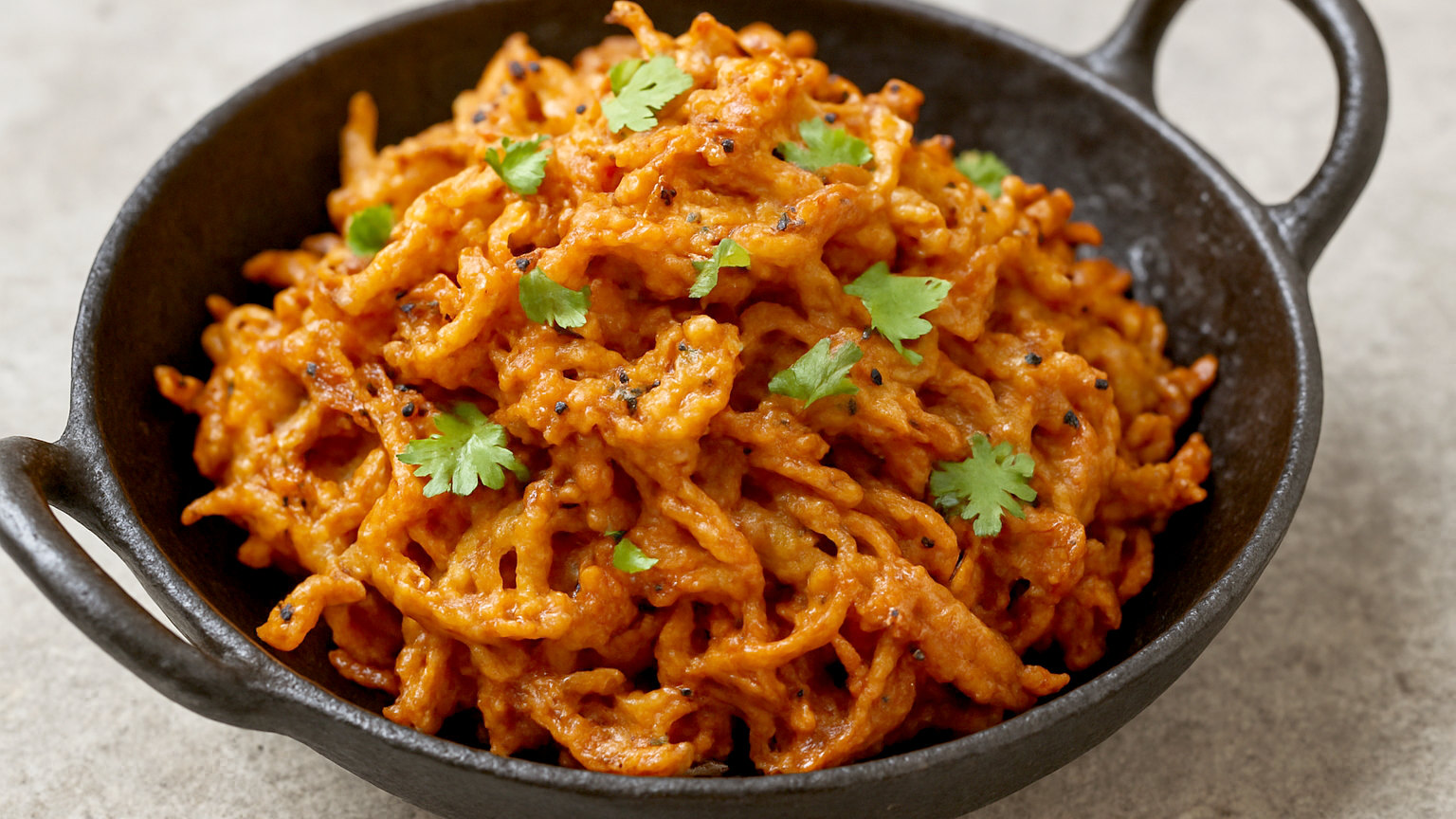
Sliced onion salted to draw out its own water, then bound with gram flour and no added liquid at all. That is the whole trick.
Frying takes fifteen seconds, microwaving takes forty and uses no oil, and grilling is the one that goes wrong. All three work.
Firm underripe mango cooked down with vinegar, sugar and whole spices. It keeps for months and it is far better than the jarred version.
Red onion, mint sauce and a little tomato ketchup. It is not Indian at all and it is what arrives with the papadums.
Chutneys keep for months, raita for a day, and anything raw or fried should be done last. Planning around that removes most of the pressure.