
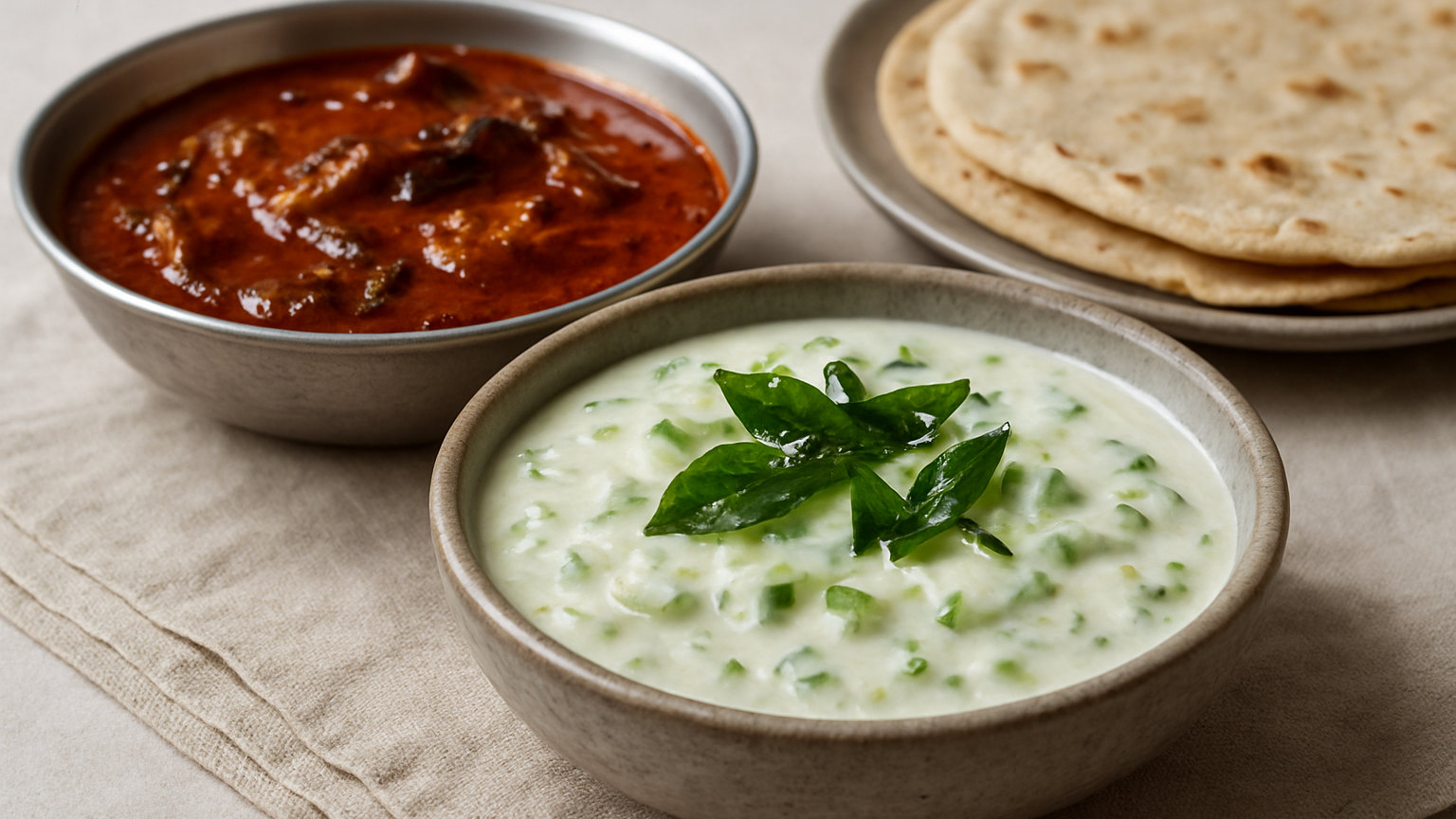
Reaching for water when a curry is too hot is close to the worst available option, and understanding why explains most of what appears on a curry table.
What is capsaicin doing?
Binding to a receptor in the mouth that ordinarily detects heat and physical damage. The nerve reports burning even though nothing is actually hot, which is why the sensation is so convincing.
Why does water not help?
Capsaicin is oil-soluble and barely dissolves in water at all. Rinsing with water spreads it around the mouth to surfaces it had not yet reached, which briefly makes things worse.
The cold gives a moment of relief and then the burning returns undiminished.
Why does dairy work?
Two reasons together. Milk fat dissolves capsaicin and carries it away. And casein, the main milk protein, binds to capsaicin molecules and lifts them off the receptors.
That combination is why dairy outperforms anything else, and why full-fat versions work better than skimmed.
Which dairy is best?
- Full-fat yoghurt or raita - the most effective and the traditional answer.
- Lassi - yoghurt drink, salted or sweet.
- Whole milk - effective, and less pleasant with a meal.
- Cream in the curry itself - prevention rather than cure.
What else helps?
Coconut milk, since the fat does the dissolving even without casein, which is why Thai and Sri Lankan curries carry their heat differently from a Durban one. Starch, from rice and bread, helps by physical dilution.
Sugar and acid both distract from the sensation without removing capsaicin.
Does beer help?
Barely, and it is mostly water. The alcohol content is far too low to dissolve much capsaicin, though a cold beer is pleasant enough that the question rarely gets asked seriously.
Why does heat build during a meal?
Capsaicin accumulates on the receptors, so the sensation is cumulative. A curry that seems manageable at the first mouthful can be difficult by the tenth, which is worth knowing when seasoning a dish you have been tasting throughout.
What does this mean for the table?
Put yoghurt out with anything hot. A bowl of plain full-fat yoghurt costs nothing and is more useful than any number of chutneys, and it is why raita is standard rather than decorative.
Does it matter which dairy?
Fat content matters most, since both mechanisms depend on it. Full-fat yoghurt outperforms low-fat noticeably. Whole milk works well. Hard cheese is effective but rarely appropriate. Ice cream is genuinely one of the better options if the meal has reached that stage.
What about capsaicin on your hands?
The same principle applies. Washing with water spreads it, where washing with oil first and then soap removes it. Milk on a burning hand works for the same reason it works in the mouth, and it is worth knowing after chopping a lot of chillies.
Does sugar help?
It distracts rather than removes, giving the brain something else to attend to without touching the capsaicin. Sweet lassi works on both counts, since it is dairy and sugar together. A spoonful of mango chutney works the same way.
Does building tolerance work?
Genuinely, and it is why baseline heat levels differ so much between cuisines. Regular exposure desensitises the receptors over weeks. Increasing chilli gradually across several months is far more effective than attempting a fierce curry and abandoning the effort.
What about the heat scale on a menu?
The ladder from korma to phall is a British curry-house convention rather than a South Asian one, where dishes are distinguished by technique and region rather than arranged by strength. It is useful for ordering and tells you nothing about the tradition a dish comes from.
Does the effect wear off?
The relief from dairy is immediate and lasts only as long as it takes to eat more curry. That is why raita sits on the table throughout rather than being taken once at the start, and why a bowl for each person is more useful than a shared one.


