
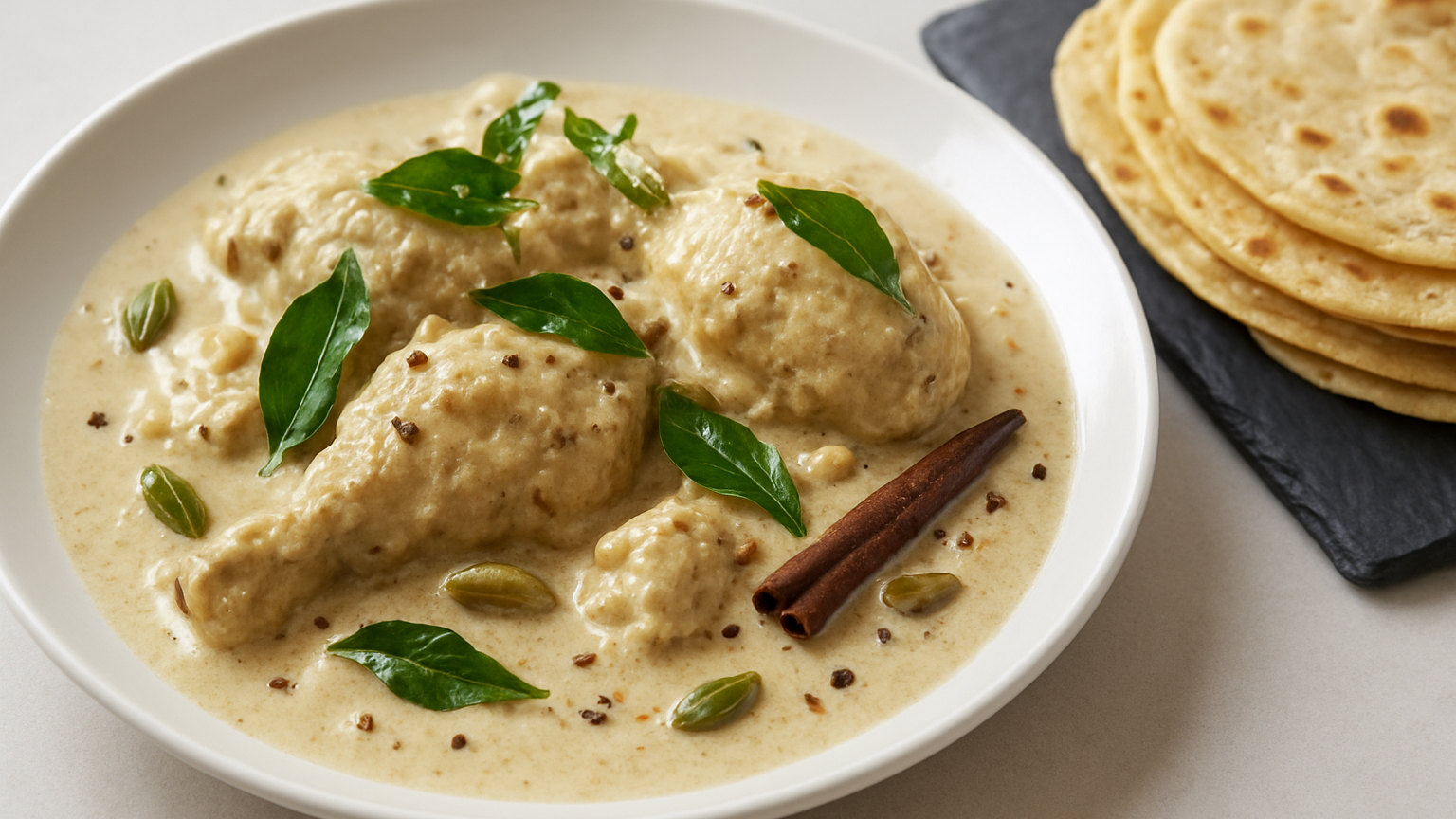
Korma is a cooking method, not a flavour profile. The word comes from a Urdu and Turkish root meaning to braise, and it describes meat cooked slowly in a small amount of liquid thickened with ground nuts, yoghurt or cream. Nothing in that definition requires the dish to be mild, pale or sweet.
How does the thickening differ?
This is the real structural distinction. Most curries thicken by reduction, driving water off until what remains is concentrated. A korma thickens by absorption, because ground almonds, cashews or poppy seeds swell as they take up liquid, and because the proteins in yoghurt and cream add body of their own.
That difference dictates everything else. Reduction needs sustained heat and time. Absorption happens at a gentle temperature, and in fact requires one, since boiling would split the dairy that is doing half the work. A korma is therefore cooked low and covered where a bhuna is cooked hard and open.
Why are the onions treated differently?
In most Indian curries the onions are browned deeply, sometimes to the point of near-mahogany, and that browning supplies the sweet, savoury foundation everything else rests on. A korma leaves them pale, either softened gently or boiled and blended into a white paste.
The reasoning is partly colour and partly flavour. Caramelisation produces assertive, slightly bitter compounds that would compete with the delicate aromatics a korma is built around, and it turns the sauce brown when the dish is supposed to be ivory or pale gold.
Which spices does it use?
Aromatic ones rather than pungent ones. Green cardamom, mace, cinnamon, clove, white pepper, coriander seed and sometimes fennel or rose. What is largely absent is chilli, mustard seed and the heavy use of turmeric that colours most other curries yellow.
Turmeric in particular is usually left out or used in a pinch, because it would tint the sauce and because its earthiness sits awkwardly against cream and nuts.
Is the British version the same dish?
Related but distinctly different, and it is worth being honest about it. The curry-house korma is sweeter, often contains coconut and sugar, is usually built on a communal base gravy rather than from scratch, and is positioned on menus as the mildest option available.
The Mughal original is a courtly dish that could be substantially spiced, and versions with a serious quantity of black pepper and green chilli exist across northern India and Pakistan. A Kashmiri korma and a Hyderabadi korma taste nothing like each other, and neither tastes much like what arrives in a takeaway container.
Where does it sit against a passanda or a masala?
- Passanda - very close relative, also nut-and-cream based, traditionally using flattened strips of meat rather than chunks.
- Tikka masala - tomato-led and reduced, with charred meat added to a sauce, where a korma braises raw meat gently in dairy.
- Makhani or butter chicken - tomato and butter rather than nuts and yoghurt, and considerably tangier.
- Bhuna - the direct opposite, dry and fried hard, with no dairy and no thickener beyond reduction.
Can a korma be hot?
Yes, and several traditional ones are. A Kashmiri or Pakistani korma may carry a good deal of black pepper and green chilli while remaining unmistakably a korma, because the defining features are the braise and the thickener rather than the absence of heat.
If you want to spice one up at home, use green chilli and black pepper rather than red chilli powder. Both add heat without staining the sauce, which keeps the appearance right while changing the character.
Is it worth making from scratch?
More so than most curries, because the shop-bought and takeaway versions have drifted furthest from the original. A homemade korma made with soaked cashews, whole aromatics and no added sugar tastes richer and considerably less cloying, and people who assume they dislike korma frequently turn out to dislike only the sweetened version of it.


