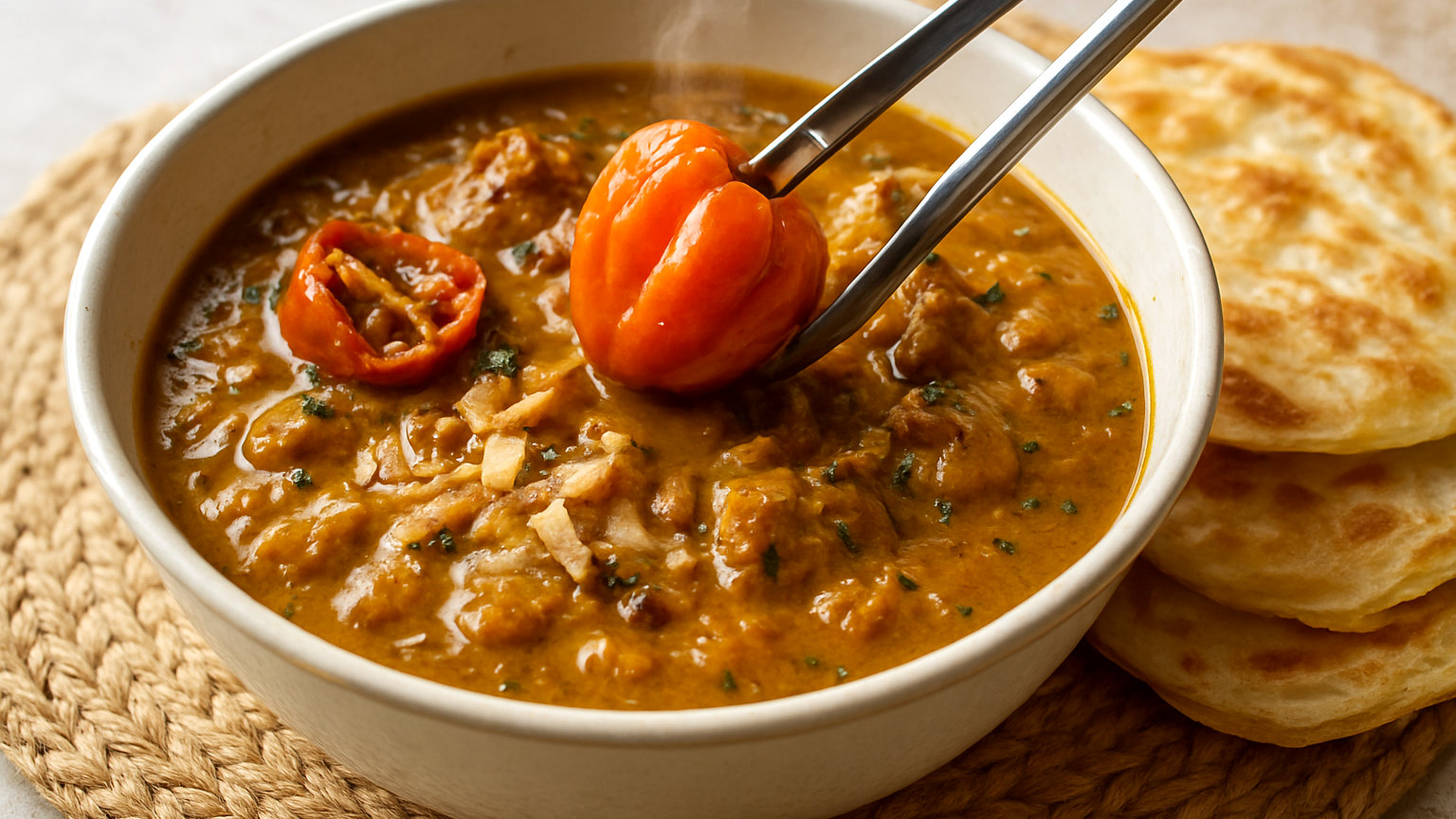
Anyone moving from British curry-house food to Pakistani home cooking notices the same thing: there is far less tomato, and the sauces are quite different as a result.
What carries the sauce instead?
- Onion - browned deeply, contributing sweetness and body.
- Yoghurt - the main souring and thickening agent in many dishes.
- The meat itself - bone-in cuts releasing gelatine into the sauce.
- Ghee or oil - present in quantity and visible at the end.
- Ginger and garlic - in far larger quantities than most Indian recipes use.
Between them these produce a sauce that is savoury and meat-forward rather than sweet and tomato-led.
Where does tomato appear?
In karahi, where it is the main sauce ingredient, and in various everyday curries where a couple of chopped tomatoes go in alongside the onion. It is used as an ingredient rather than as the base.
Even in a karahi, the tomato is fried down hard until it collapses entirely and the oil separates, which is a long way from a tomato sauce.
Why does curry-house food use so much?
Because the base gravy system that British curry houses run on is built on onion, tomato and water blended smooth, which gives a consistent neutral sauce that can be turned into any dish in minutes. Tinned tomato is cheap, consistent and available year round.
It is a commercial solution to serving twenty dishes from one kitchen quickly, and it works. It is not how the food is cooked at home.
Does yoghurt replace it?
Largely. Yoghurt provides acidity, body and a tang that tomato would otherwise supply, and it is used generously in Pakistani cooking. It also tenderises meat when used as a marinade.
The technique is different, since yoghurt splits if added carelessly. It goes in off the heat or a spoonful at a time with constant stirring.
Fresh or tinned tomato?
Fresh, in almost every case, and chopped rather than blended. A karahi wants ripe tomatoes that break down into visible pieces, not a smooth puree. Tinned tomato gives a sweeter, more uniform result that pulls the dish toward curry-house food.
Does it make the food less sweet?
Noticeably. Tomato carries sugar and tinned tomato more so, and British curry-house sauces are sweeter partly for that reason. Pakistani home cooking is savoury, sharp with ginger and yoghurt, and considerably less sweet.
Is this true across Pakistan?
Broadly, with regional variation. Punjabi cooking uses more tomato than Sindhi or Pashtun cooking, and Pashtun food in particular is notably lean on it, relying on meat, onion and yoghurt almost entirely.
Does it make the food less familiar?
To a British palate, yes, and that is worth knowing before cooking it. A karahi tastes sharper and more savoury than the sweet tomato-based curry most people expect, and the first reaction is often that something is missing. It is not, and it takes a couple of attempts to recalibrate.
What about tomato puree?
Rare in home cooking and common in restaurants, where it adds colour and body quickly. A tablespoon fried with the masala deepens a sauce without adding much liquid. It pushes the dish toward a curry-house profile, which may or may not be what you want.
Does it affect the colour?
Directly. Pakistani curries tend to be browner and more russet where curry-house food is orange-red, because the colour comes from browned onion and Kashmiri chilli rather than from tomato. A karahi is redder than most, since tomato is the main sauce ingredient in that dish specifically.
Should you add tomato puree?
It is not traditional in home cooking and a tablespoon fried with the masala adds colour and body without much liquid. Restaurants use it freely. If you want a deeper colour without a sweeter sauce, it is a reasonable addition used sparingly.
Is it a recent difference?
Tomato arrived in South Asia through Portuguese trade and took a long time to become central to any regional cooking. Its dominance in British curry-house food is a twentieth-century commercial development rather than an old tradition, which is worth knowing when a recipe is described as authentic.
What do you lose without it?
Sweetness and a certain body, both of which yoghurt and browned onion supply differently. What you gain is a sharper, more savoury sauce where the meat and the ginger come forward. Neither is better and the two produce genuinely different food.