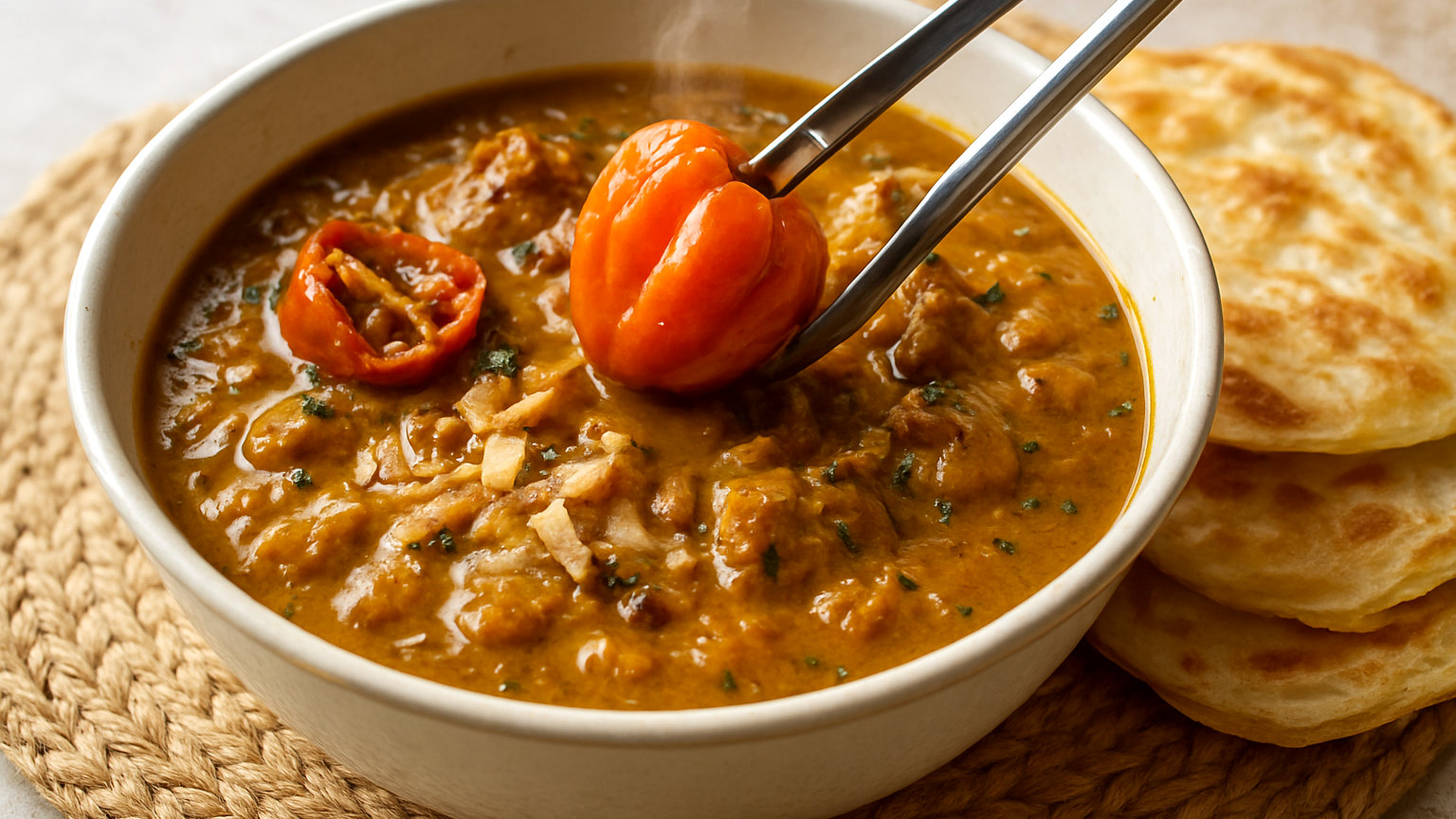
Curry goat is the flagship dish of Jamaican cooking and one of the great slow-cooked curries anywhere. Two techniques define it, and both are unfamiliar to anyone coming from Indian or Thai cooking: burning the curry powder in oil before anything else, and cooking with a whole unbroken scotch bonnet.
What does burning the curry powder mean?
Frying the dry powder hard in hot oil for two or three minutes until it darkens, foams and the oil takes on its colour. It is more aggressive than the gentle blooming of spices in Indian cooking, and it is the step that gives Jamaican curry its particular depth.
The powder should smell toasted rather than raw. It stops short of actual burning, and the name reflects how close to the edge the technique goes.
Why does the scotch bonnet stay whole?
Because an intact chilli infuses the dish with its fruity aroma without releasing the full capsaicin load from the seeds and pith. It is dropped in whole and lifted out before serving.
Split it and you have a considerably hotter curry. Whichever you choose, do not let it burst during cooking.
Jamaican curry goat
Serves six. Twenty minutes of preparation, overnight marinating and around two and a half hours of cooking.
Ingredients
- 1.4kg bone-in goat shoulder or leg, in large pieces
- 4 tbsp Jamaican curry powder, divided
- 6 garlic cloves, crushed, and 4cm ginger, grated
- 1 tbsp allspice berries, crushed, or 2 tsp ground
- 2 tsp salt and 1 tsp black pepper
- 4 tbsp vegetable oil
- 2 large onions, sliced
- 4 spring onions, chopped
- 6 sprigs of fresh thyme
- 1 whole scotch bonnet, left intact with the stem on
- 700ml water or light stock
- 600g waxy potatoes, in large chunks
- 2 carrots, in thick rounds
Method
- Rub the goat with 2 tbsp of the curry powder, the garlic, ginger, allspice, salt and pepper. Cover and refrigerate overnight, or for at least four hours.
- Heat the oil in a heavy pot over a medium-high heat until it shimmers.
- Add the remaining 2 tbsp of curry powder and fry hard for 2 to 3 minutes, stirring constantly, until it darkens and the oil turns deep gold. This is the burning stage.
- Add the marinated goat and turn it through the oil for 6 minutes until sealed on all sides.
- Add the onions, spring onions and thyme and cook for 5 minutes.
- Pour in the water, add the whole scotch bonnet, and bring to a bare simmer.
- Cover and cook very gently for 2 hours, stirring every half hour and topping up with water if it reduces too far.
- Lift out the scotch bonnet before it bursts. Add the potatoes and carrots and cook uncovered for a further 35 minutes.
- Check the salt and rest for 10 minutes before serving with rice and peas.
Why divide the curry powder?
Because it does two different jobs. Half goes into the marinade, where it penetrates the meat over several hours. Half is burned in the oil, which produces the toasted depth the marinade cannot.
Should the goat be browned?
Sealed rather than deeply browned, since the marinade contains spices that scorch. Six minutes of turning through the hot curried oil is enough, and the long braise develops the rest.
Should it be made a day ahead?
It improves noticeably, and this is worth planning around. The meat continues absorbing the sauce as it cools, the spices integrate, and any fat sets on the surface overnight so it can be lifted off cleanly. Reheat gently and loosen with a splash of water.
What if the sauce is too thin?
Lift the meat out, raise the heat and reduce the sauce for ten minutes, then return it. A properly made curry goat thickens on its own from the gelatine released by the bones, so a thin sauce usually means either boneless meat or too much water added during the braise.
Can you use a pressure cooker?
Forty-five minutes at high pressure with a full natural release replaces the two-hour braise, and the potatoes go in afterwards on a saute setting. Burn the curry powder first in the pot, since no pressure cooker reaches that temperature once sealed.