
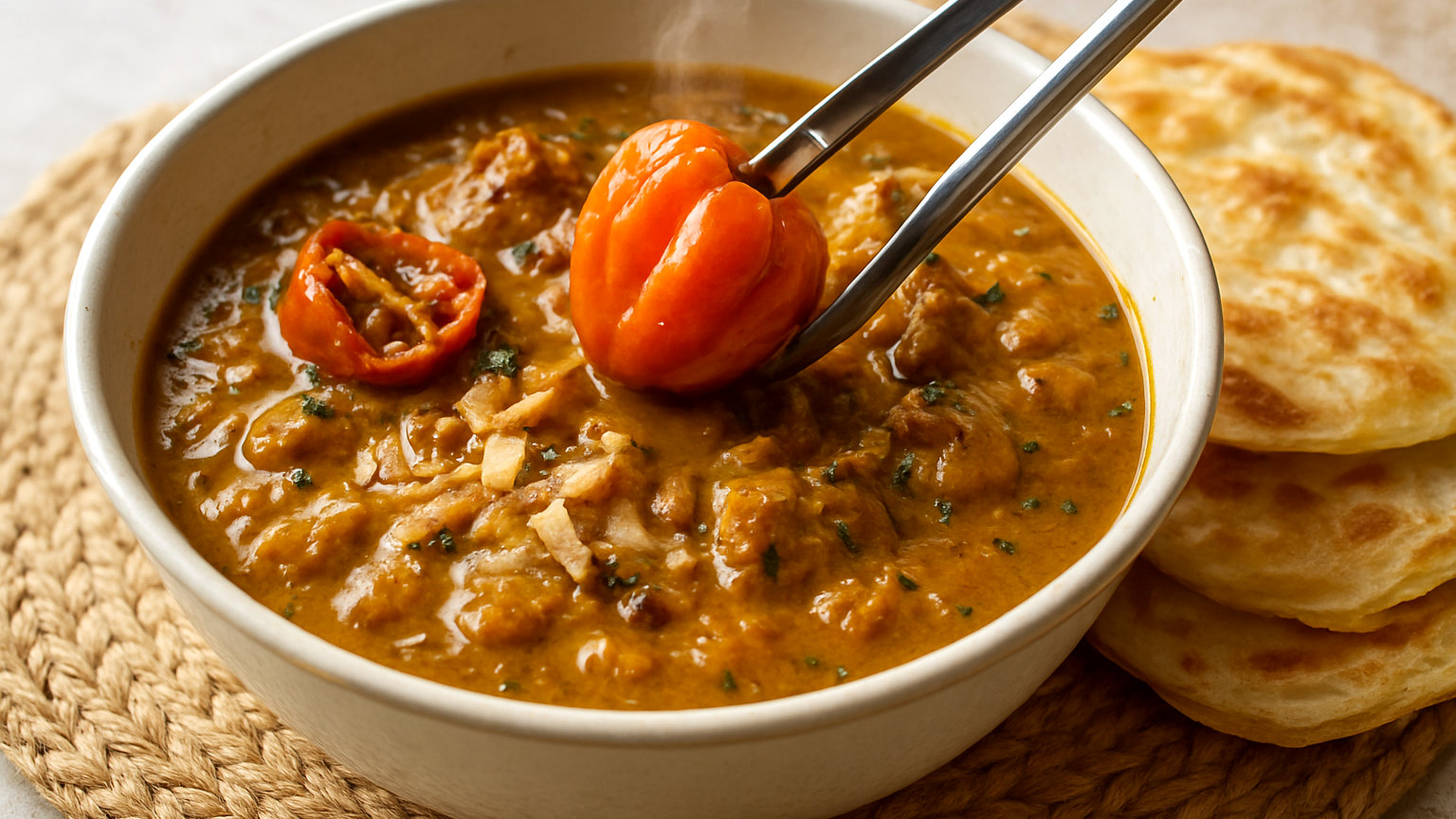
Scotch bonnet is the defining chilli of Caribbean cooking, and it is genuinely hot in a way that catches people out. Used properly it contributes a fruity, almost apricot-like aroma alongside the heat, which is why nothing else substitutes cleanly.
How hot is it?
Between around 100,000 and 350,000 on the Scoville scale, which puts it in the same range as a habanero and roughly forty times hotter than a jalapeno. A single one can dominate a pot feeding six.
Why does it go in whole?
Because most of the capsaicin sits in the white pith and around the seeds, and an intact chilli releases very little of it. What it does release is the fruity aroma from the flesh and skin, which is the part you want.
Dropped in whole with the stem on, it infuses the dish gently and can be lifted out before serving. That is how most Jamaican curries handle it.
What if you want it hotter?
Pierce it once or twice with a knife tip for a moderate increase, or split it lengthways for considerably more. Chop it finely, pith and seeds included, for a fiercely hot dish.
Each step up is substantial, so move one stage at a time rather than jumping to chopped.
Why must it not burst?
Because a chilli that ruptures during a two-hour braise releases everything at once and there is no taking it back. A dish that was pleasantly warm becomes uncomfortably hot in minutes.
Check it every half hour and lift it out once the flesh looks soft and the skin is beginning to loosen, which is usually after an hour and a half.
How should you handle them?
- Wear gloves - disposable ones, and this is not excessive caution.
- Never touch your face or eyes - capsaicin lingers on skin for hours.
- Use a separate board - or wash it immediately with hot soapy water.
- Wash hands with oil first - capsaicin is fat-soluble, so oil lifts it where water does not.
- Avoid contact lenses - until well after washing.
What if you get it on your skin?
Rub the area with vegetable oil first, which dissolves the capsaicin, then wash with soap and warm water. Water alone spreads it around rather than removing it. Milk or yoghurt also works, for the same fat-soluble reason.
What can you substitute?
Habanero is the closest by a wide margin, being the same species with a similar fruity character and comparable heat. Beyond that nothing is close, and a Thai bird eye chilli gives you heat without any of the fruitiness.
If you want the aroma without much heat, scotch bonnet sauces and pastes are widely available and let you add a controlled amount.
Can you make a dish milder afterwards?
Only by dilution, which means more liquid, more potato or a larger batch. Dairy, coconut milk and sugar all reduce the perception of heat without removing any of it. Removing the chilli itself achieves nothing once it has burst.
Do they freeze?
Very well, whole and unprepared, for six months. They can be used straight from frozen in a braise, and freezing does not reduce the heat noticeably. Buying a bag when you see them and freezing what you will not use within a week is the practical approach.
How do you pick a good one?
Firm and glossy with taut skin and a fresh green stem. Colour ranges from green through yellow and orange to red as they ripen, and riper ones are fruitier and slightly hotter. Avoid anything wrinkled or soft, which has lost both aroma and texture.
Is the fruitiness really noticeable?
Very much so, and it is why the chilli is used whole in the first place. Scotch bonnet has a distinct apricot and citrus aroma that comes through in a dish even when very little heat has been released. A curry made with a plain hot chilli tastes flatter in a way that is hard to place.


