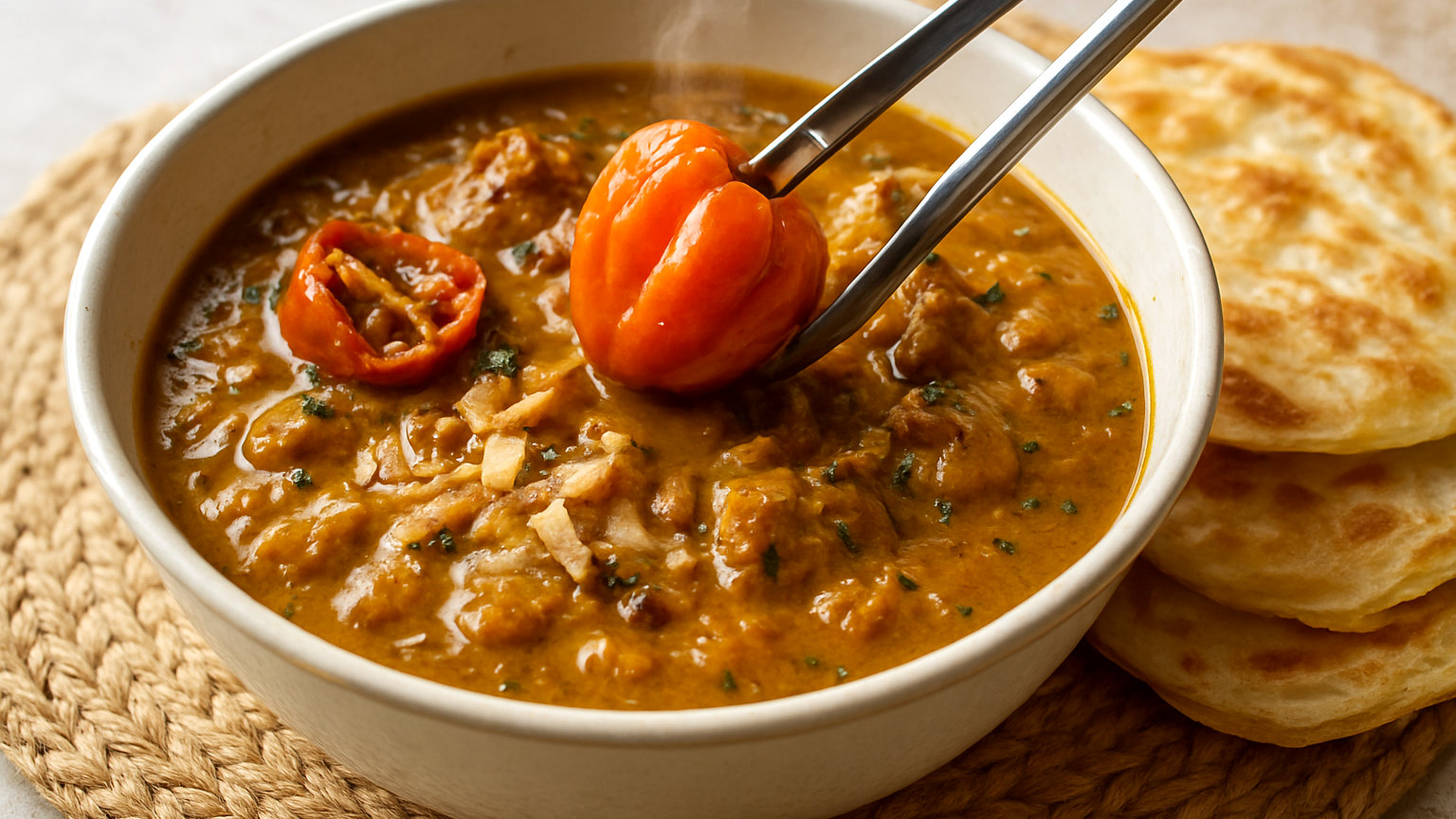
Handi takes its name from the deep clay pot it was traditionally cooked in, and the dish is essentially a karahi finished with dairy. It is richer, creamier and milder, and it is the version most likely to appeal to anyone finding a karahi too sharp.
How does it differ from a karahi?
The frying stage is much the same. What changes is the finish, where yoghurt and cream go in over a low heat to produce a rounded, thicker sauce.
A karahi is sharp and oily with a loose sauce. A handi is creamy and thick.
How do you stop the yoghurt splitting?
Take the pan off the heat, or turn it right down, and add the yoghurt a spoonful at a time while stirring continuously. Whisking it smooth first helps, and full-fat yoghurt is considerably more stable than low-fat.
A teaspoon of cornflour whisked into the yoghurt is an untraditional insurance policy that works.
Chicken handi
Serves four. Fifteen minutes of preparation and thirty-five minutes of cooking.
Ingredients
- 900g bone-in or boneless chicken, in pieces
- 5 tbsp ghee or oil
- 1 onion, finely chopped
- 6 garlic cloves and 4cm ginger, crushed
- 400g tomatoes, chopped
- 5 green chillies, split
- 2 tsp coriander powder, 1 tsp cumin powder
- 1 tsp Kashmiri chilli powder and half tsp turmeric
- 2 tsp salt
- 150g full-fat plain yoghurt, whisked smooth
- 100ml double cream
- 1 tsp garam masala and 1 tsp crushed dried fenugreek leaves
- Julienned ginger and coriander to finish
Method
- Heat the ghee over a high heat and fry the chicken hard for 8 minutes until coloured.
- Add the onion and cook for 6 minutes until softened and golden.
- Add the garlic and ginger and fry for 2 minutes.
- Add the tomatoes, ground spices, green chillies and salt. Fry hard for 12 minutes, stirring, until the tomatoes collapse and the oil separates.
- Turn the heat right down. Add the yoghurt a spoonful at a time, stirring continuously.
- Simmer gently for 6 minutes.
- Stir in the cream, garam masala and fenugreek leaves and warm through for 3 minutes without boiling.
- Check the salt and finish with julienned ginger and coriander.
What are the fenugreek leaves for?
Dried fenugreek leaves, sold as kasuri methi, add a distinctive savoury slightly bitter note that is characteristic of North Indian and Pakistani restaurant cooking. Crush them between your palms as they go in to release the aroma.
Do you need a clay handi?
No, and any heavy pan works. A clay pot holds heat more gently and is used partly for serving. The dish is defined by the finish rather than the vessel.
Can you use boneless chicken?
Yes, and handi is one of the dishes where boneless works well, since the cream and yoghurt supply the body that bones would otherwise provide. Thigh is better than breast, and it needs around twenty minutes rather than the twenty-five bone-in pieces take.
Is it a restaurant dish?
More so than aloo gosht, and it appears widely on menus. The cream makes it richer than everyday home cooking usually is. It is cooked at home for guests rather than on a Tuesday, which is roughly its position in the repertoire.
Is it milder than a karahi?
Noticeably, since the cream and yoghurt bind capsaicin and round off the sharpness. The same quantity of green chilli reads as considerably gentler. It is the dish to cook for anyone who found a karahi too aggressive.
Can you make it ahead?
Two days refrigerated, and reheat it gently since the cream and yoghurt will split if pushed. It thickens in the fridge and loosens with a splash of water or cream. It does not freeze as well as a tomato-based curry, for the same reason.
What does handi mean?
The pot itself, a deep round clay or metal vessel with a narrow mouth, used across South Asia for slow cooking. As with karahi, the dish takes its name from the vessel. Clay is prized for the gentle even heat it gives, and any heavy pan works.
Should the cream go in at the end?
Always, and off a high heat. Cream added early will reduce and can split over a long simmer, and it also mutes the spices it cooks alongside. Three minutes of warming through at the end is all it needs, and the sauce should not boil after it goes in.