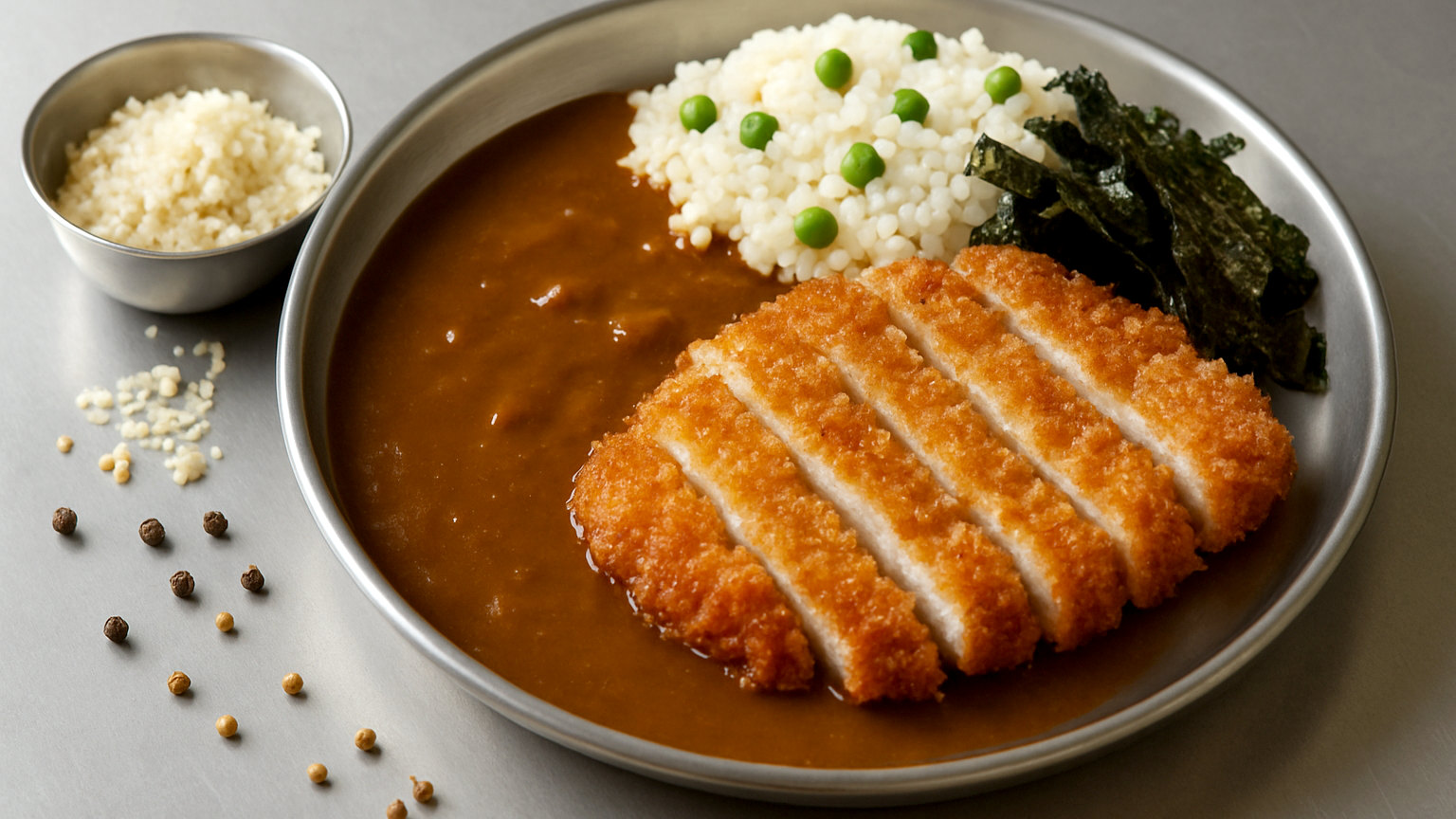
Browning meat before braising is one of those steps that gets skipped when time is short, and in a Japanese beef curry it is worth the extra ten minutes. The reason is not that it seals in juices, which it does not, but what it leaves behind in the pan.
What does browning actually do?
It produces hundreds of new savoury aromatic compounds on the surface of the meat through browning reactions between proteins and sugars, none of which exist in raw or simmered beef.
It also leaves a layer of caramelised residue stuck to the base of the pan. That residue dissolves the moment liquid arrives and is where a large part of the depth in a good braise comes from.
Does it seal in the juices?
No, and this is a persistent myth. Browned meat loses moisture at much the same rate as unbrowned meat, and a seared crust is not waterproof.
The reason to do it is flavour, which is a better reason anyway.
Why does it matter more here?
Because Japanese curry is gently spiced. An Indian curry carrying three teaspoons of chilli and a heavy garam masala has plenty of assertive flavour, and a missing browning stage is less obvious.
A Japanese sauce is mild, sweet and savoury, and it depends on depth rather than on spice. Take away the browning and there is nothing to compensate.
How do you do it properly?
- Pat the beef thoroughly dry, since surface moisture has to boil off before browning can start.
- Get the pan genuinely hot with a thin film of oil, until it shimmers.
- Add the beef in a single layer with gaps between the pieces.
- Leave it alone for two or three minutes so a crust forms, then turn.
- Work in two or three batches rather than crowding.
- Do not wash the pan afterwards. The residue is the point.
Why does crowding ruin it?
Beef releases moisture as it heats, and in a crowded pan that moisture cannot evaporate fast enough. The temperature drops below the point at which browning occurs and the meat simmers in its own juices instead, going grey.
The visual cue is unmistakable. Meat that hisses sharply and stays dry is browning. Meat sitting in a pool of liquid is not.
How do you get the residue into the sauce?
The onions do it for you. Adding sliced onions to the same pan releases their moisture, which loosens the residue, and scraping the base with a wooden spoon as they soften lifts all of it.
A splash of stock or wine into the empty hot pan achieves the same thing faster if you prefer to deglaze directly.
Is it worth it for the block version too?
More so, if anything. A roux block supplies thickening and a fixed savoury flavour, and browning is one of the few ways to add depth the block does not contain. It is the single most effective improvement available to a block-based curry.
Does it work with a slow cooker?
The browning has to happen in a frying pan first regardless, since no slow cooker reaches the temperature. That is the argument for a pressure cooker or a hob casserole instead, both of which handle browning and braising in the same vessel and save washing a second pan.
Does it work for the minced beef version?
Even more so. Mince should be browned hard and left undisturbed until it develops a genuine crust rather than being stirred constantly, which steams it grey. Since there is no long braise to build depth, the browning is doing proportionally more of the work.
What if the pan sticks badly?
A little sticking is exactly what you want and burning is not. If the residue is turning black rather than deep brown, the heat is too high or the pan too thin. Deglaze immediately with a splash of stock before it burns, since a scorched base taints the whole pot.