
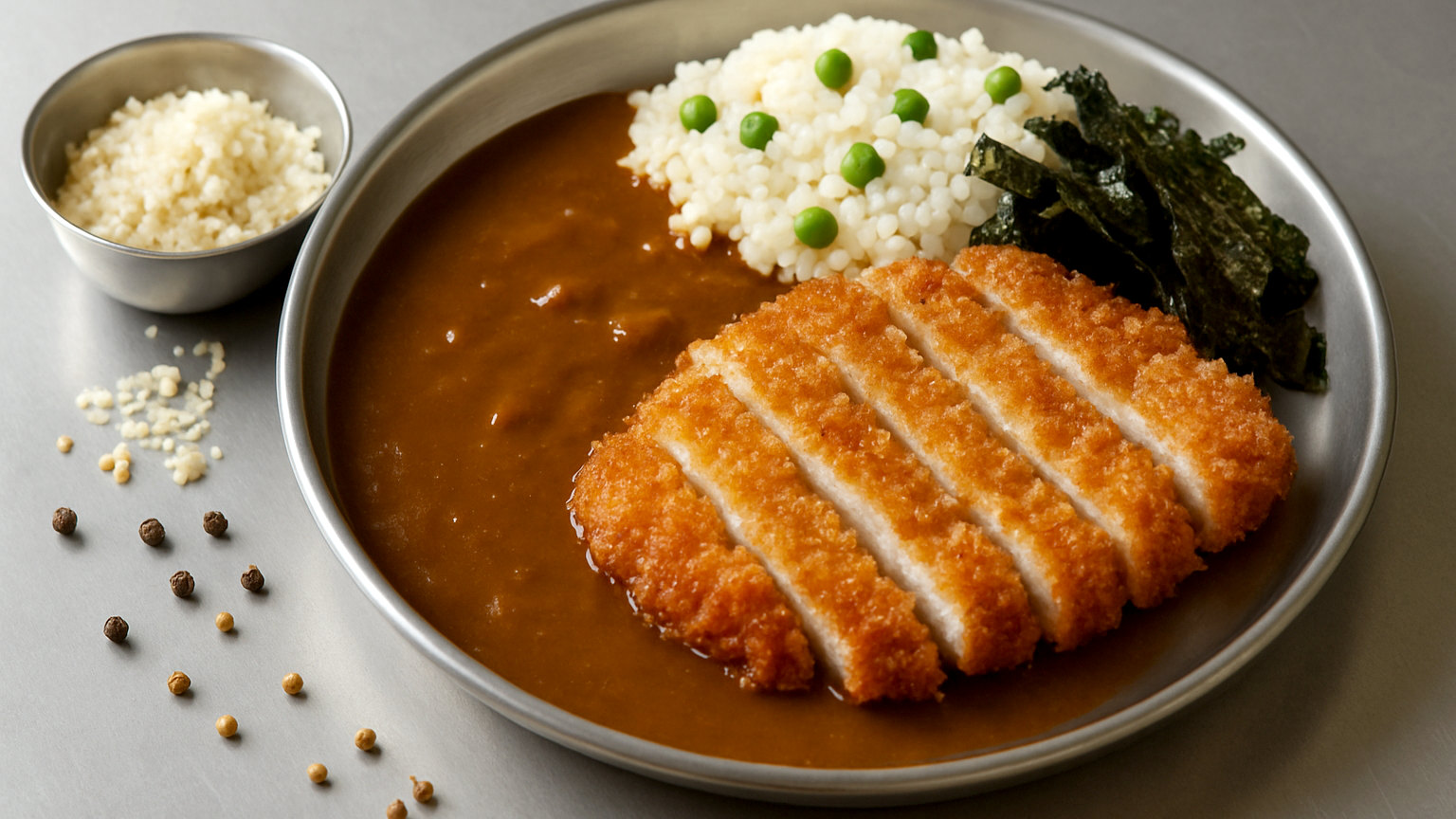
Panko is Japanese breadcrumb, and it behaves quite differently from the fine dry crumbs sold in most British supermarkets. The difference is structural rather than a matter of quality, and it is why katsu has the crust it does.
How is it made?
From a crustless white bread, traditionally baked by passing an electric current through the dough rather than in an oven, so it browns nowhere and forms no crust at all. That bread is then torn or shredded into flakes rather than ground.
The result is large, jagged, airy shards rather than fine uniform particles.
Why does the shape matter?
Because large flakes create air gaps between them. A panko coating is mostly space, so it browns quickly, absorbs far less oil and stays light and shattering rather than dense.
Fine breadcrumbs pack tightly together, leaving nowhere for oil to escape and nowhere for air to circulate. They absorb far more fat and produce a coating that is heavier and softens faster.
Does it really absorb less oil?
Noticeably. The jagged surfaces mean less contact area with the oil per gram of crumb, and the open structure lets steam escape rather than trapping it against the meat. A panko cutlet feels lighter to eat than one crumbed conventionally.
Can you make it at home?
Reasonably well. Take a white loaf that is a day or two old, cut off every trace of crust, and tear or pulse the crumb briefly in a food processor until you have coarse flakes rather than fine crumbs.
Spread them on a tray and dry them in a very low oven, around 100C, for fifteen to twenty minutes without letting them colour. The aim is dry and pale rather than toasted.
What should you look for when buying?
- Large visible flakes - if it looks like sand in the bag, it is not really panko.
- Pale colour - white or very faintly cream, not golden.
- Short ingredient list - flour, water, yeast and perhaps sugar and salt.
- Japanese brands - generally coarser and lighter than Western imitations.
Some supermarket panko is closer to ordinary breadcrumb sold under a fashionable name. Look through the bag before buying.
How should it be stored?
Airtight in a cupboard, where it keeps for months since it is already dry. It picks up moisture readily from a humid kitchen, and damp panko clumps and browns unevenly, so reseal the bag properly.
If a bag has gone soft, spread it on a tray and dry it in a low oven for ten minutes.
What else is it good for?
Anything that wants a light crisp coating. Fish fingers, croquettes, scotch eggs and fried aubergine all improve. It also works scattered over a gratin or a pasta bake, where it browns without going greasy, and as a binder in meatballs where it keeps them lighter than dry crumbs would.
Does it brown differently?
Faster and more evenly, since the open structure means more surface area meeting hot oil and less dense mass to heat through. A panko crust reaches a deep gold in three or four minutes where fine crumbs need longer and often colour unevenly, going dark in patches while staying pale elsewhere.
How much do you need?
Around 120g for four cutlets, which is more than you will actually use. Working with a generous quantity in a wide dish makes coating far easier than scraping at a thin layer, and the surplus can go back in the bag provided it has not become damp with egg.
Are there different grades?
Japanese producers sell coarse, medium and fine, and coarse is what tonkatsu uses. Fine panko exists for coatings where a delicate crumb is wanted, such as some fish preparations. If a bag does not specify, judge by looking at the flakes through the packet.
Does it work for anything gluten-free?
Standard panko is wheat bread and is not. Gluten-free panko exists and is sold in larger supermarkets and Asian grocers, made from rice or maize flour, and it browns and crisps acceptably. Crushed cornflakes or rice cereal are the improvised alternatives and both produce a coarser, sweeter crust.
Can you flavour it?
Mixing dried herbs, sesame seeds or grated parmesan through the panko works well for other dishes and is not traditional for katsu, where the crust is meant to be plain and the seasoning comes from the sauce. Salt and white pepper on the meat itself is as far as a Japanese cook would go.


