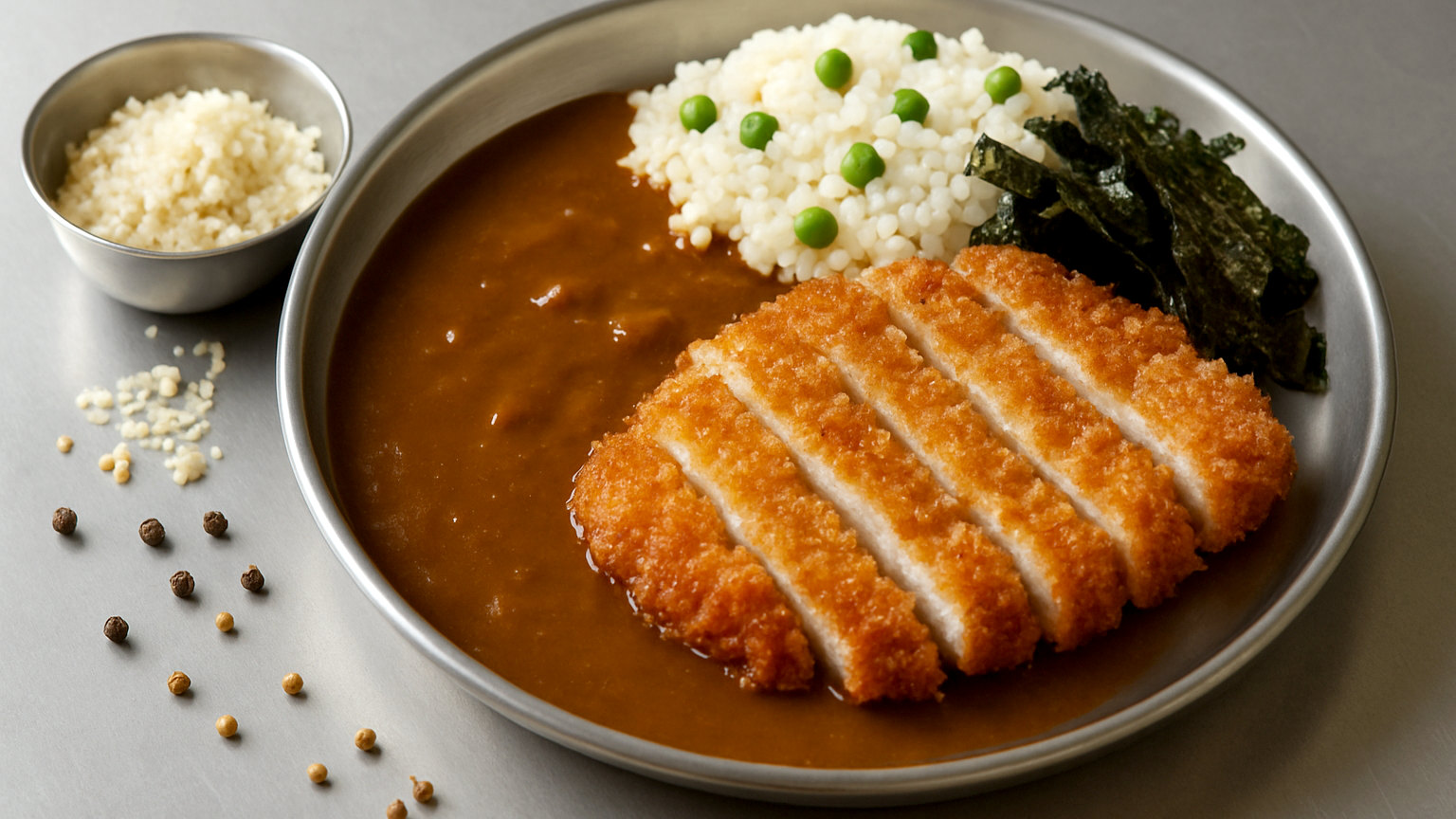
Japanese curry sauce is a French-style roux carrying curry powder, thinned with stock and rounded with something sweet. That construction is unusual among curries and it is why the sauce is glossy and thick rather than oily and separated.
Why a roux rather than a paste?
Because Japanese curry arrived through the Royal Navy in the late nineteenth century, as a British colonial dish rather than an Indian one. British curry sauce of that period was thickened with flour in the French manner, and the technique stuck.
The flour does two things: it thickens, and cooked in butter it develops a nutty depth that gives the sauce its particular character.
How long should the roux cook?
Four to five minutes over a low heat, until it smells biscuity and turns the colour of pale honey. Undercooked roux tastes raw and floury, and that taste persists through the whole sauce.
Some Japanese cooks take it considerably further, to fifteen or twenty minutes and a deep brown, which produces a darker and more savoury sauce. That is worth trying once you have the basic version working.
Japanese curry sauce
Serves four. Twenty-five minutes.
Ingredients
- 3 tbsp butter and 3 tbsp plain flour
- 1.5 tbsp Japanese curry powder
- 1 large onion, finely sliced
- 1 carrot, finely diced
- 2 garlic cloves and 2cm ginger, grated
- 700ml chicken or vegetable stock
- Half an apple, grated
- 1 tbsp soy sauce and 1 tsp honey
- 1 tsp tomato puree and half tsp salt
Method
- Melt the butter in a saucepan over a low heat. Stir in the flour and cook for 4 to 5 minutes, stirring constantly, until it smells biscuity and turns pale gold.
- Stir in the curry powder and cook for 1 minute more, then scrape the roux into a bowl and set aside.
- In the same pan, soften the onion and carrot in a little more butter for 10 minutes without browning.
- Add the garlic and ginger and cook for 2 minutes.
- Pour in about a third of the stock and whisk in the roux a spoonful at a time, letting each dissolve before adding the next.
- Add the remaining stock gradually, whisking continuously until smooth.
- Add the apple, soy sauce, honey, tomato puree and salt.
- Simmer gently for 20 minutes, stirring often, until thick enough to coat a spoon.
- Blend smooth with a stick blender if you want the restaurant texture, or leave it as it is.
Why add the roux to the stock rather than the reverse?
Because adding cold or cooled roux to warm liquid in small pieces lets each dissolve completely before the next goes in, which prevents lumps. Pouring stock onto a hot roux all at once is how most lumpy sauces happen.
What does the apple do?
Sweetness and acidity together, plus a fruity roundness that sugar alone does not provide. Grated apple is standard in Japanese home cooking, and half an apple in a sauce for four is barely detectable as apple while being obvious by its absence.
How long does it keep?
Four days refrigerated and three months frozen, and it thickens considerably as it cools. Loosen it with a little stock when reheating. Making a double batch is sensible, since the sauce is the slowest part of a katsu curry.
Can you make the roux in advance?
It is the most useful thing to batch. A double or triple quantity of butter, flour and curry powder cooked together, cooled and portioned, keeps two weeks refrigerated and three months frozen. Dropping a portion into simmering stock gives you the convenience of a shop-bought block with a considerably better flavour.
What if it goes lumpy?
Whisk hard, which resolves most cases if caught early. If lumps persist, pass the sauce through a sieve or blend it with a stick blender, both of which fix it completely. Lumps come from adding liquid too quickly to a hot roux, so next time add it in stages and let each incorporate fully.
How thick should it be?
Thick enough to coat a spoon heavily and to sit on rice without running to the edge of the plate. Japanese curry is noticeably thicker than any Indian or Thai sauce, closer to a gravy. It thickens further as it cools, so pull it off the heat slightly looser than you want it.