
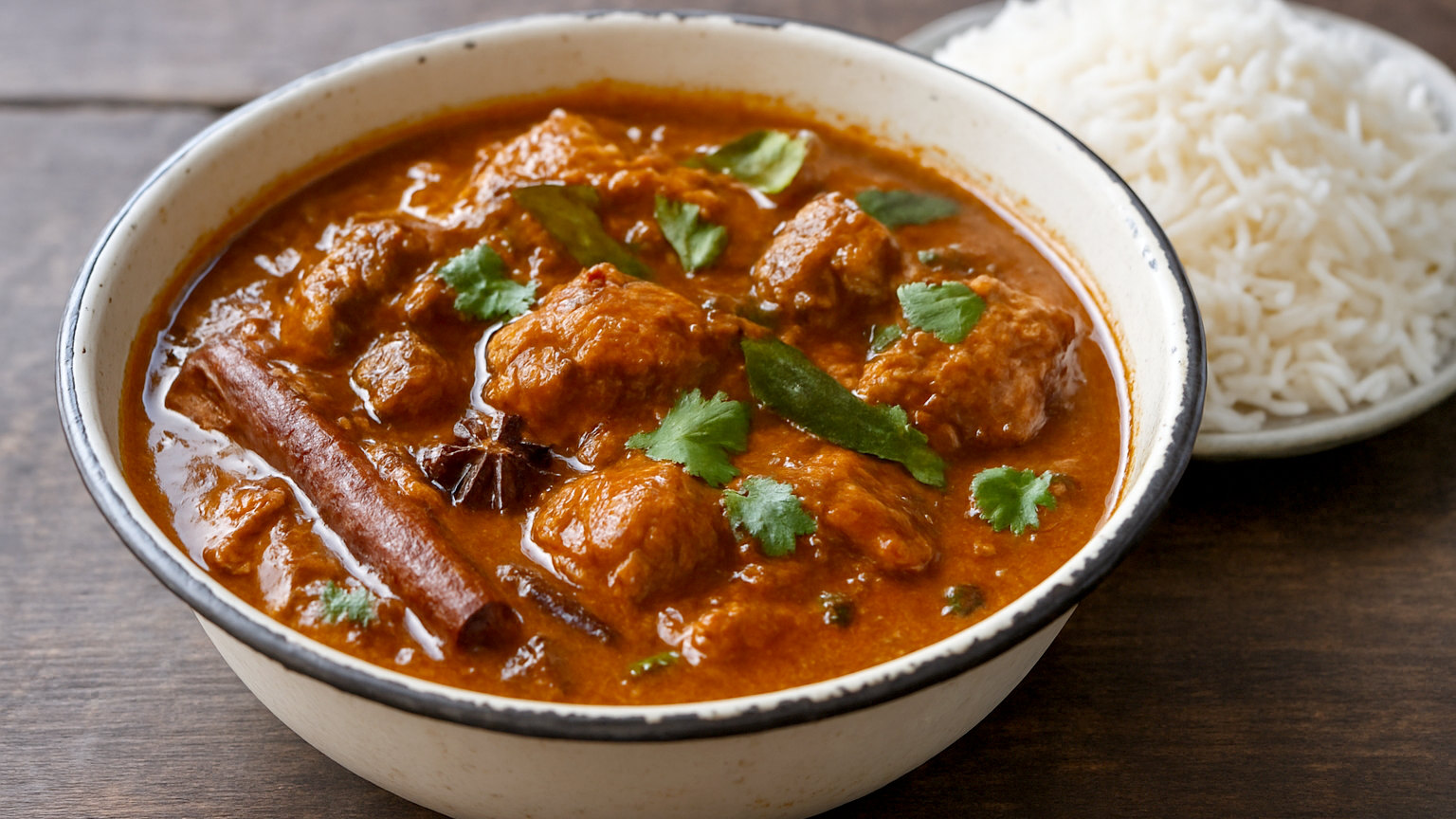
Two different barks are sold as cinnamon, and in Britain the one you buy is almost always the cheaper of the two. For most curry cooking that is fine, and it is worth knowing which is which.
What is the difference?
True cinnamon, sometimes called Ceylon cinnamon, comes from Sri Lanka and is delicate, sweet and complex. Cassia comes mainly from China, Indonesia and Vietnam and is stronger, coarser and more aggressively spicy.
They come from related but different trees.
How do you tell them apart?
- True cinnamon - thin papery layers rolled into a multi-layered quill, tan coloured, crumbles easily.
- Cassia - a single thick hard curl of bark, darker reddish brown, very hard to break.
If a stick snaps like a twig and is hard to crumble, it is cassia. If it flakes apart in layers, it is true cinnamon.
Which do supermarkets sell?
Cassia, almost always, whatever the label says. British and American labelling permits both to be sold simply as cinnamon, so the packet often does not distinguish them.
True cinnamon is usually labelled explicitly as Ceylon cinnamon and costs considerably more.
Does it matter for curry?
For most Indian and Pakistani cooking, not much. Cassia is robust enough to hold up in a long-cooked meat dish, and its strength is an advantage rather than a fault.
For Sri Lankan cooking it matters more, since the delicacy of true cinnamon is part of the cuisine and cassia overwhelms it. Sri Lanka is where the true spice comes from.
Is there a health consideration?
Cassia contains considerably more coumarin than true cinnamon, and high intakes have been associated with liver effects. At the quantities used in cooking this is not a practical concern for most people, though anyone consuming large daily amounts as a supplement might reasonably prefer Ceylon.
How is it used in curry?
Whole, as a stick, into hot fat at the start with the other whole spices. It is not eaten and is pushed aside on the plate. A 5cm piece is enough for a curry serving four.
Should you buy ground?
Only if you bake. For curry cooking, whole sticks are what recipes call for and they keep far longer. Ground cinnamon fades within months where a stick holds for well over a year.
How much is a stick?
Roughly a teaspoon of ground per 5cm stick, though the conversion is approximate and the flavour release is quite different. A whole stick perfumes slowly through a long cook, where ground cinnamon delivers everything at once.
Which is used in Sri Lankan cooking?
True Ceylon cinnamon, and the island is where it comes from. It appears in roasted curry powder and in almost every meat curry. Using cassia there gives a coarser and more aggressive result that sits awkwardly against the delicacy of the other spices.
Does it matter which you buy for curry?
Cassia is entirely serviceable for North Indian and Pakistani cooking and is what most recipes were developed with in Britain. If you cook Sri Lankan food regularly, buying Ceylon separately is worth it. Otherwise one stick of either does the job.
Where do you buy Ceylon cinnamon?
Sri Lankan and South Asian grocers, and specialist spice suppliers, usually labelled explicitly as Ceylon or true cinnamon. It costs several times the price of cassia. The papery multi-layered quills are unmistakable once you have seen both side by side.
How is cassia sold?
Usually as thick hard curls of bark, sometimes broken into pieces, and often labelled simply as cinnamon or cinnamon sticks. Chinese and Indonesian cassia are the most common. The hardness is the giveaway, since true cinnamon crumbles under light pressure.
Does it matter in a long-cooked dish?
Less than in a quick one, since two hours of simmering evens out much of the difference in intensity. Cassia holds up better over that time. In a fast dish where the spice is added late, the difference between the two is far more noticeable.


