
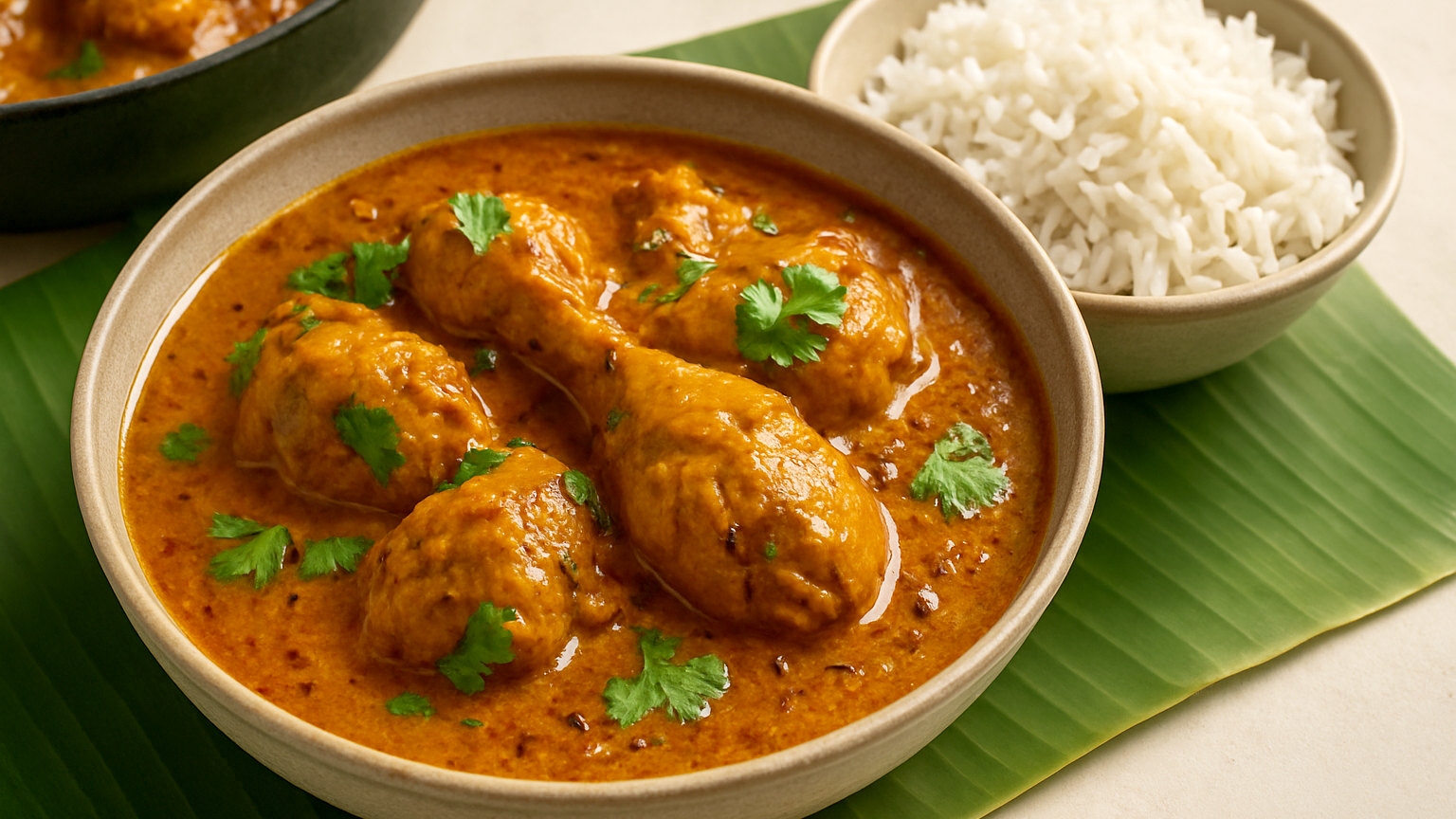
Turmeric is the spice people most often overuse, usually because they are chasing colour. It is potent, and past a small quantity it contributes bitterness rather than anything useful.
How much is right?
Around a teaspoon in a curry serving four, and often half that. It is measured in teaspoons where coriander is measured in tablespoons.
A tablespoon of turmeric in a domestic curry will taste medicinal and slightly chalky.
What does it actually contribute?
Colour first, and a distinctive earthy, faintly bitter, slightly musty warmth. It is not a background spice in the way coriander is, and its character is recognisable once you know it.
It also has a mild preservative effect, which is part of why it appears so widely in hot climates.
Does it burn easily?
Faster than most, and scorched turmeric is unmistakably bitter. Add it slightly after the coriander and cumin, or lower the heat when it goes in, and give it a shorter time in the fat.
Is fresh turmeric different?
Noticeably. Fresh rhizome is brighter, less bitter and slightly gingery, and it is used in South East Asian and Sri Lankan cooking where the dried powder would be wrong.
As a rough conversion, 3cm of fresh is around a teaspoon of ground, and the flavours are not identical.
Does it stain?
Everything it touches. Fingers, wooden spoons, plastic containers, worktops and clothing. Skin stains fade within a day, plastic is often permanent, and clothing needs treating immediately.
Use metal or ceramic where you can, and be careful with pale worktops.
Which dishes want a lot?
Sri Lankan and South Indian cooking uses turmeric more heavily than North Indian, and some fish preparations are rubbed with it directly. Even there the quantities are teaspoons rather than tablespoons.
Japanese and British curry-house dishes get much of their yellow from other sources, including commercial colouring.
Should you buy it ground?
Yes. Grinding dried turmeric at home is genuinely difficult, since the rhizome is hard and fibrous, and it stains grinders permanently. This is one spice where the ready-ground version is the sensible choice.
How long does it keep?
It holds its colour far longer than its flavour, which is misleading. A jar two years old will still look vivid and will have lost most of its aroma. Replace it annually even if it still looks right.
Does it have a taste at all?
Definitely, and people who think of it as purely a colouring are usually underusing it to the point where they cannot detect it. Half a teaspoon on its own in hot oil smells distinctly earthy and slightly medicinal, which is what it brings to a dish.
Which dishes leave it out?
Anything meant to stay pale. Indonesian opor omits it deliberately so the sauce stays white, and Sri Lankan kiri hodi uses only a teaspoon for a gentle gold. A korma uses very little. Knowing when not to use it is as useful as knowing how much.
Can you remove a stain?
From skin it fades on its own within a day and scrubbing achieves little. From worktops, a paste of bicarbonate of soda works reasonably. From fabric, treat it immediately and expect partial success. Sunlight bleaches turmeric stains surprisingly well.
Does it need long cooking?
A short fry in fat is enough, and it should be brief. Turmeric is one of the fastest spices to scorch, so it wants perhaps twenty seconds rather than the full minute coriander and cumin can take. Adding it a few seconds after the others is the practical approach.
Is fresh worth seeking out?
For Sri Lankan, Malaysian and Indonesian cooking, yes, since those cuisines assume it and the brightness shows. It freezes well and can be grated from frozen. For everyday North Indian cooking the dried powder is what recipes are written around.
What is the golden milk claim?
Turmeric has been widely promoted for health, usually around curcumin, which is poorly absorbed by the body on its own. Black pepper is often paired with it for that reason. Whatever the merits, the culinary case for using it sparingly is unaffected either way.


