
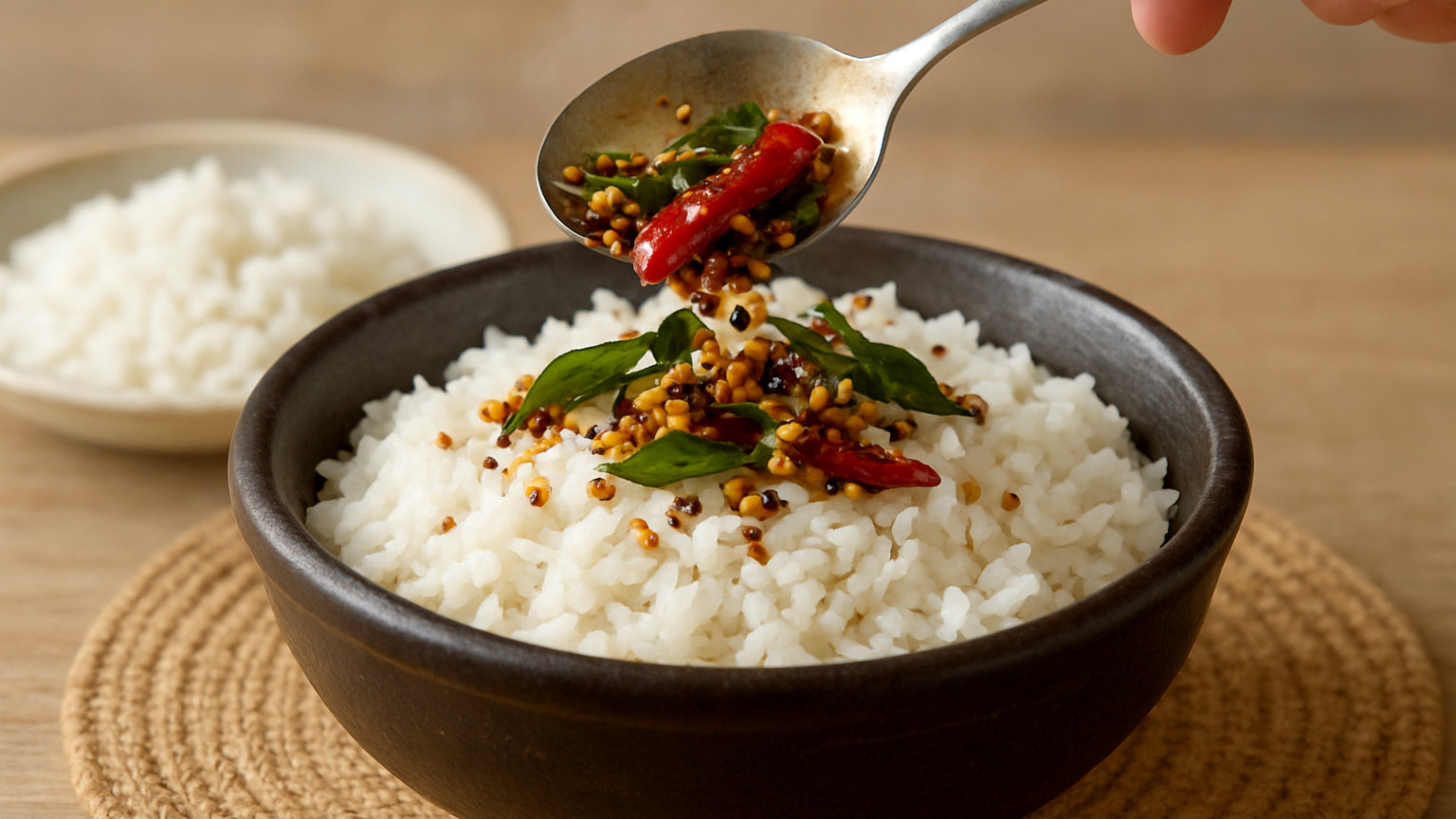
A rice cooker does one thing and does it reliably. Whether that justifies the counter space depends mostly on how often you cook rice.
How does it work?
It heats the pot until all the free water has been absorbed. At that point the temperature rises above boiling, a sensor detects it, and the cooker switches to a warming setting.
That single mechanism is why it cannot really overcook rice by the absorption method.
What does it do better than a pan?
- Timing - it decides when the rice is done rather than you.
- Consistency - the same result every time with the same ratio.
- Coconut rice - gentle even heat, so it catches far less readily.
- Keeping warm - useful when the curry is running late.
- Freeing a burner - which matters when several dishes are cooking.
What does it not do?
Fry. Whole spices for a jeera rice or a pilau still need frying in a pan first, then everything transfers across. That extra step removes some of the convenience for spiced rice.
It also will not fix a wrong ratio, which is still yours to get right.
Which type should you buy?
A simple one-switch cooker does everything described above and costs very little. The expensive models with multiple programmes and induction heating are aimed at Japanese short-grain rice and add little for basmati.
For curry cooking, the cheap one is the sensible purchase.
Does the ratio change?
Slightly. A sealed cooker loses almost nothing to evaporation, so it usually needs marginally less water than a pan. Start at 1.4 to 1 for soaked basmati and adjust after the first batch.
Should you still rinse and soak?
Yes to both. A rice cooker controls the heat and the timing and does nothing about surface starch or grain hydration. Skipping those steps gives the same sticky short grains it would in a pan.
Is the keep-warm setting safe?
For a few hours, since it holds the rice above the temperature range where bacteria multiply. Leaving it on overnight is not a good idea, and the rice dries out considerably after two or three hours regardless.
What is the verdict?
Worth it for regular rice cooking, and unnecessary if you cook rice occasionally. A heavy pan with a tight lid produces rice just as good, and it requires you to pay attention for eleven minutes.
Does it handle brown rice?
Basic cookers handle it acceptably with more water and a longer cycle, and some will switch off before it is fully done, requiring a second cycle. Models with a dedicated brown rice programme manage it properly.
How do you clean it?
The inner pot is usually non-stick and should be washed by hand rather than scoured. Soaking it for ten minutes removes anything stuck. The lid and steam vent need occasional attention, since starch collects there and can smell.
Can you cook other things in it?
Some models steam vegetables in a basket above the rice, which is genuinely useful. Beyond that, treat it as a single-purpose appliance. Multi-cookers that also pressure cook are a different product and do rice less well than a dedicated cooker.
How much space does it take?
A three-cup cooker is about the size of a large kettle and suits a household of two to four. Larger models are bulky enough that they tend to live in a cupboard, which reduces how often they get used.
Is it worth it for one person?
Arguably more than for a household, since small quantities of rice are the hardest to get right in a pan and a cooker handles them reliably. A small three-cup model takes little space and removes the one fiddly part of cooking for one.
What about the cheap models?
A basic one-switch cooker does the job well for basmati and jasmine, which is most of what curry cooking needs. The expensive fuzzy-logic machines are built around Japanese short-grain rice and add little for the rice on this site.


