
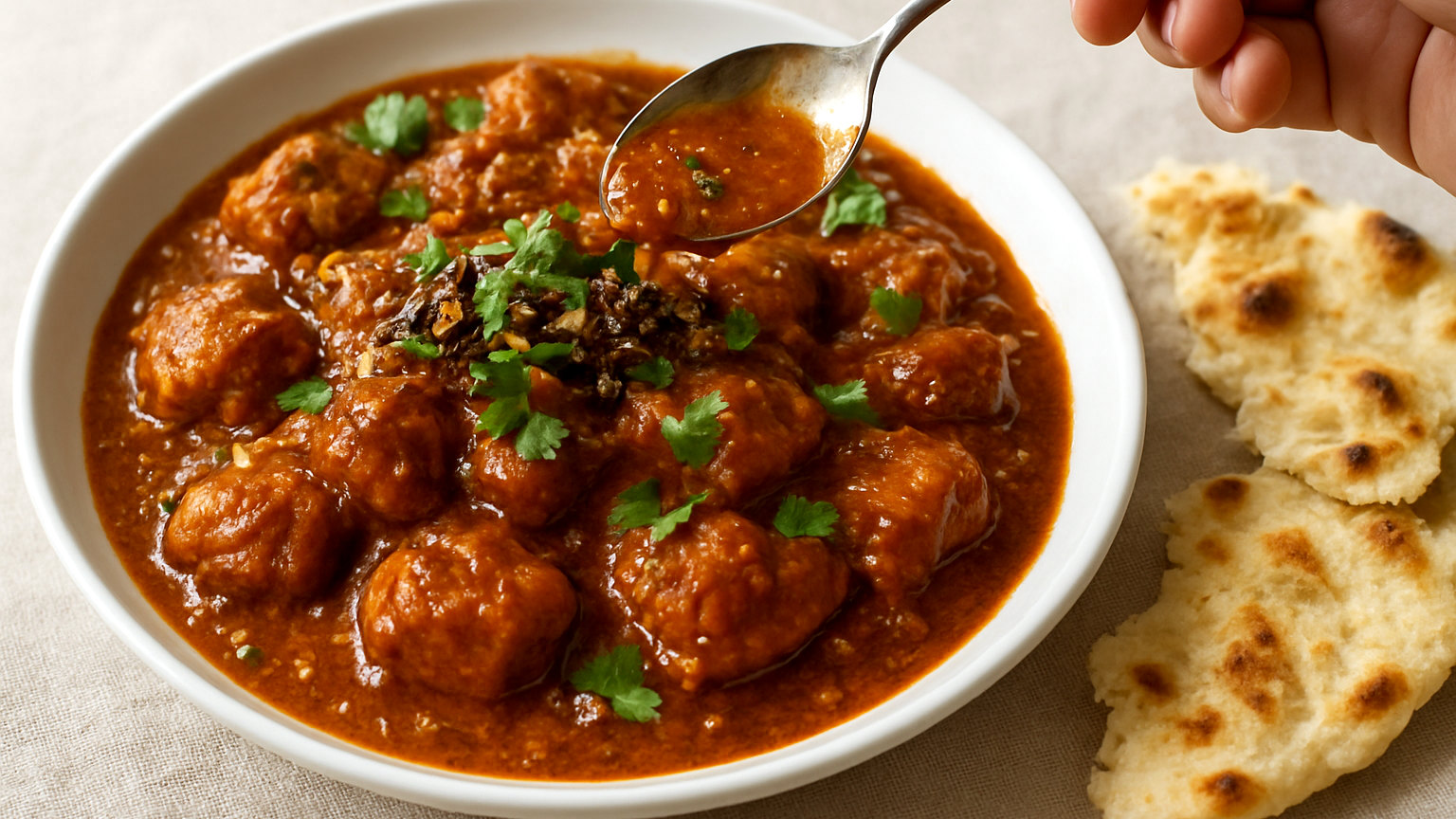
A curry in half an hour is achievable, but only by being honest about where the time goes. Browning onions takes twenty-five minutes and cannot be compressed. Every genuinely quick curry either uses onions browned in advance or accepts a lighter, fresher style that never needed them.
What is the one shortcut worth setting up?
Brown a large batch of onions when you have time and freeze them in portions. Six onions, sliced and cooked down in a wide pan for half an hour, gives you five or six portions frozen flat in bags or in an ice cube tray. Dropped straight from frozen into a hot pan, they thaw and are ready in three minutes.
This single habit is what turns a forty-five minute curry into a twenty-five minute one with no loss of depth, and it is much closer to how a professional kitchen operates than any jar of sauce.
Which shortcuts are not worth it?
Fried onion from a packet, sold as crispy onions, which tastes of stale frying oil rather than sweetness. Onion powder, which contributes a flat savoury note and no body. And skipping the tomato stage, which leaves the sauce tasting raw and sharp no matter how long you cook it afterwards.
Quick weeknight chicken curry
Serves four. Around ten minutes of preparation and eighteen of cooking.
Ingredients
- 600g boneless chicken thigh, cut small, into 2.5cm pieces
- 3 tbsp vegetable oil
- 1 tsp cumin seeds
- 250g browned onions, from the freezer, or 2 onions finely chopped and cooked hard for 12 minutes
- 5 garlic cloves and 4cm ginger, crushed
- 2 tsp ground coriander, 1 tsp ground cumin, three quarter tsp turmeric
- 1.5 tsp Kashmiri chilli powder
- 3 tbsp tomato puree and 100ml water
- 150g full-fat yoghurt, whisked, or 150ml coconut milk
- 1 tsp salt
- 1 tsp garam masala, juice of half a lemon, fresh coriander
Method
- Heat the oil in a wide pan and fry the cumin seeds for 30 seconds.
- Add the browned onions and cook for 3 minutes until hot and sizzling.
- Add the garlic and ginger and fry for 90 seconds.
- Lower the heat, add the ground spices and stir for 40 seconds.
- Stir in the tomato puree and cook for 2 minutes, which does in concentrated form what fresh tomatoes need ten minutes to achieve.
- Add the chicken, cut small so it cooks fast, and fry hard for 4 minutes until sealed all over.
- Add the water and salt, and simmer for 8 minutes.
- Take off the heat, stir in the yoghurt or coconut milk, then return to a low heat for 2 minutes.
- Finish with garam masala, lemon juice and coriander.
What else saves time?
Cutting the chicken smaller than usual, which halves the simmering time. Keeping frozen garlic and ginger paste in the freezer. Using tomato puree rather than tinned tomatoes, since the water has already been removed. And starting the rice before anything else, so it is resting while the curry finishes.
Is it as good as the long version?
Close, provided the onions were browned properly at some earlier point. What it lacks is the slow marrying that happens over a longer simmer, which is why a quick curry benefits more than most from a squeeze of lemon and a generous handful of fresh coriander to give it lift at the end.
What if you have no browned onions ready?
Change style rather than rushing the base. A South Indian coconut curry, a Thai-style curry built on a paste, or a tomato and cream sauce of the tikka masala type all reach the table in half an hour without a browned onion base, because none of them ever depended on one.
What does not work is giving onions eight minutes and hoping. You get raw sharpness and none of the sweetness, and the sauce tastes noticeably harsher than either of the alternatives above.
Are jarred curry sauces worth keeping in?
As a starting point rather than a finished sauce. Most are heavily sweetened and thin on spice, and a jar improves considerably if you bloom a teaspoon of your own ground spice in oil first, tip the sauce in on top of it, and finish with lemon and fresh coriander. That takes four minutes and turns something forgettable into something perfectly good.


