
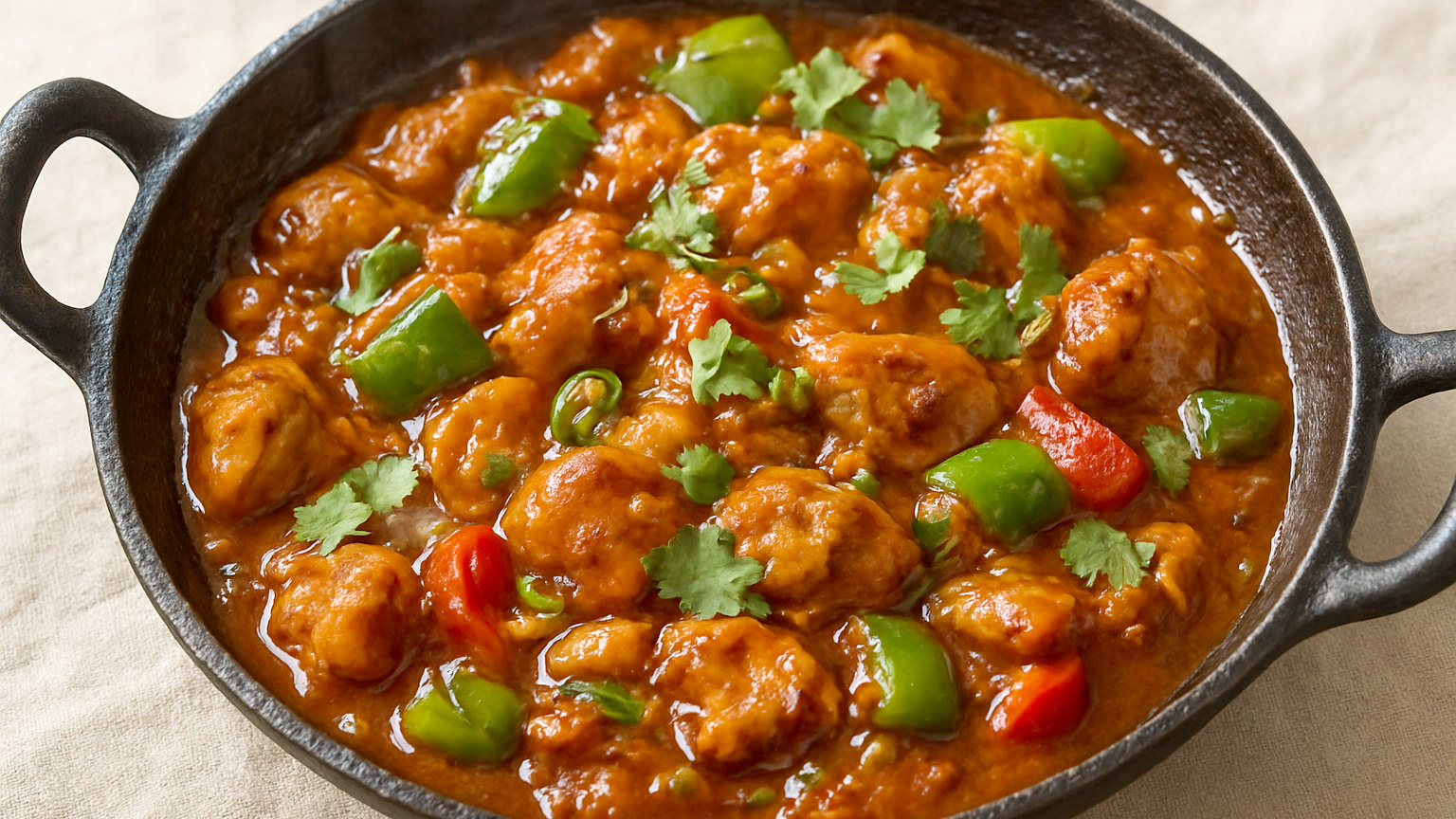
The vegetables in a jalfrezi are not garnish. They are half the dish, and both which ones you choose and how you cut them determine whether the finished plate has texture or is simply a curry with soft things in it.
Why is green pepper traditional?
Because it is firmer and less sweet than the ripened colours. A green pepper is an unripe one, with more structure and a slightly bitter, grassy edge that stands up to the chilli and the spice rather than sweetening the dish.
Red, yellow and orange peppers are the same vegetable further along, with more sugar and softer flesh. They taste sweeter and they go limp perhaps thirty seconds sooner in a hot pan.
Should you use more than one colour?
One green and one red is the practical answer. The green supplies the firmness and the characteristic edge, the red supplies sweetness and colour, and the contrast between them is more interesting than either alone.
Using only red produces a noticeably sweeter jalfrezi that some people prefer and that drifts slightly away from the expected flavour.
How should peppers be cut?
Into squares of around 3cm, which is larger than most recipes suggest. Large pieces have less surface area relative to their volume, so they lose water more slowly and hold their structure through the stir-fry.
Thin strips are the common mistake. They look neat, they cook in ninety seconds, and they go floppy immediately. If you want strips for appearance, cut them thick.
Which onion and how?
A jalfrezi wants onion in two forms, and it is worth using two separate onions rather than splitting one.
- Finely chopped - cooked into the masala base for fifteen to twenty minutes, providing the sweet foundation.
- Cut into petals - quartered, then the layers separated by hand, added in the last four minutes as a vegetable.
Separating the petals is the detail most people skip. Onion quarters left intact steam in their own layers and cook unevenly. Separated petals sear individually and keep a distinct crunch.
Red or white onion?
White or brown for the base, since they cook down more readily and have a deeper savoury sweetness. Red for the petals, if you have one, because it holds its shape slightly better and adds colour, though the difference is small enough that using the same variety for both is entirely fine.
Can you add other vegetables?
Yes, provided they suit a fast fierce cook. Mushrooms work if seared hard and separately, since they release a great deal of water. Green beans work, blanched for two minutes first. Baby corn and mangetout suit the stir-fry logic well.
What does not work is anything that needs sustained cooking. Potato, carrot and squash all belong in a braised curry rather than here, and adding them means either undercooked vegetables or overcooked peppers.
Does the tomato count as a vegetable here?
It does, and it is worth using fresh tomato in wedges alongside the puree in the base. Added in the last minute or two, the wedges soften slightly at the edges while staying intact, contributing acidity and a burst of moisture without thinning the masala.
Firm tomatoes work far better than ripe soft ones, which collapse into the sauce immediately and defeat the purpose.
Should the vegetables be seasoned separately?
Lightly, and at the end rather than the beginning. Salting peppers before they hit the pan draws water out and works directly against the texture you want. A pinch scattered over once they are already blistered seasons them without softening them.
How much vegetable per portion?
Two peppers and one onion for four portions is the standard balance, which gives roughly equal volumes of vegetable and meat. Pushing further makes an excellent dish in its own right, though it drifts toward a vegetable curry with some chicken in it rather than a jalfrezi.
Can you prepare them in advance?
Cut them a few hours ahead and keep them dry in a covered container in the fridge. What you should not do is cut them the night before, since they lose moisture and firmness and the cut edges dry out. Pat them dry again before they go in the pan whatever you do.


