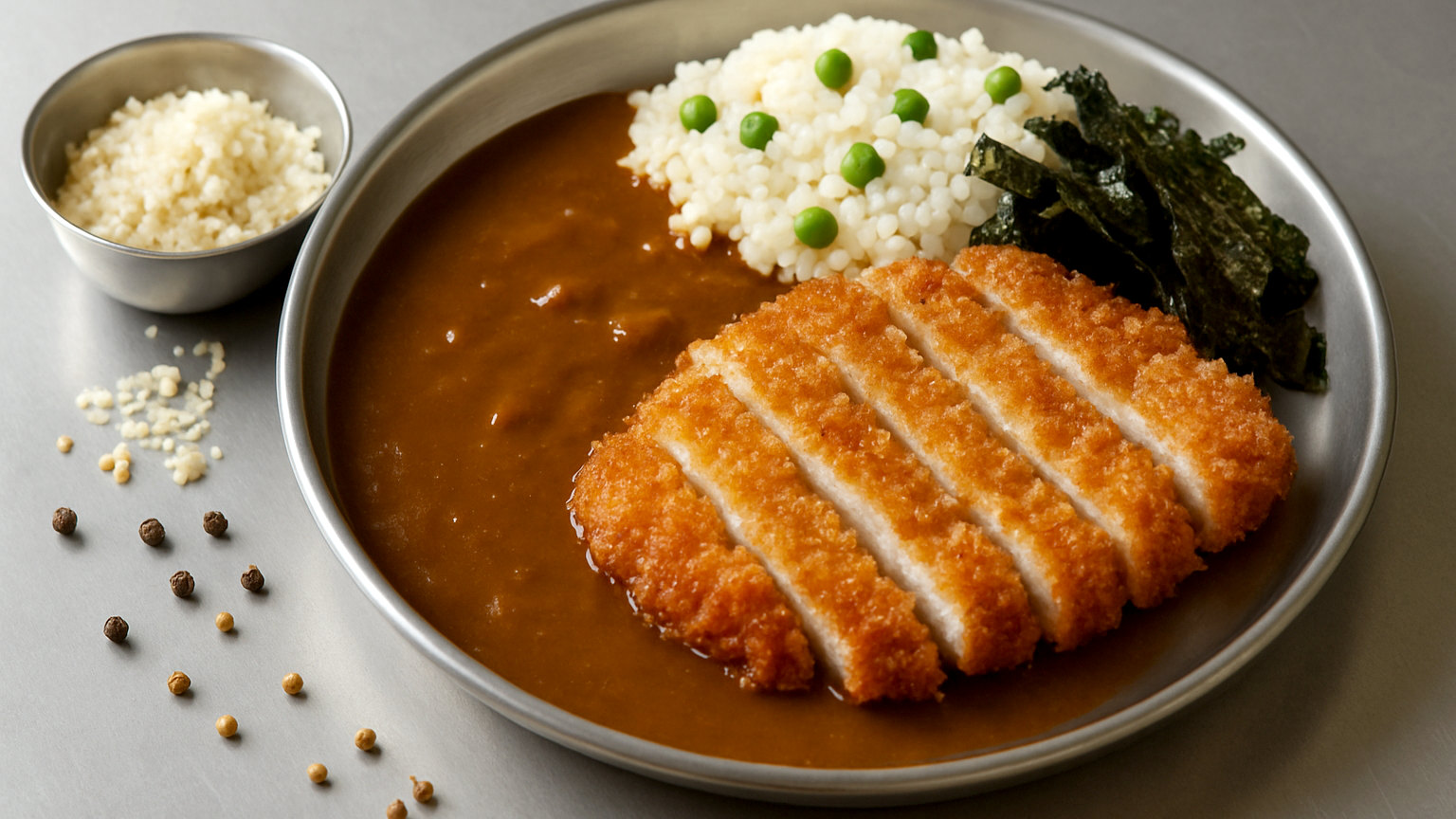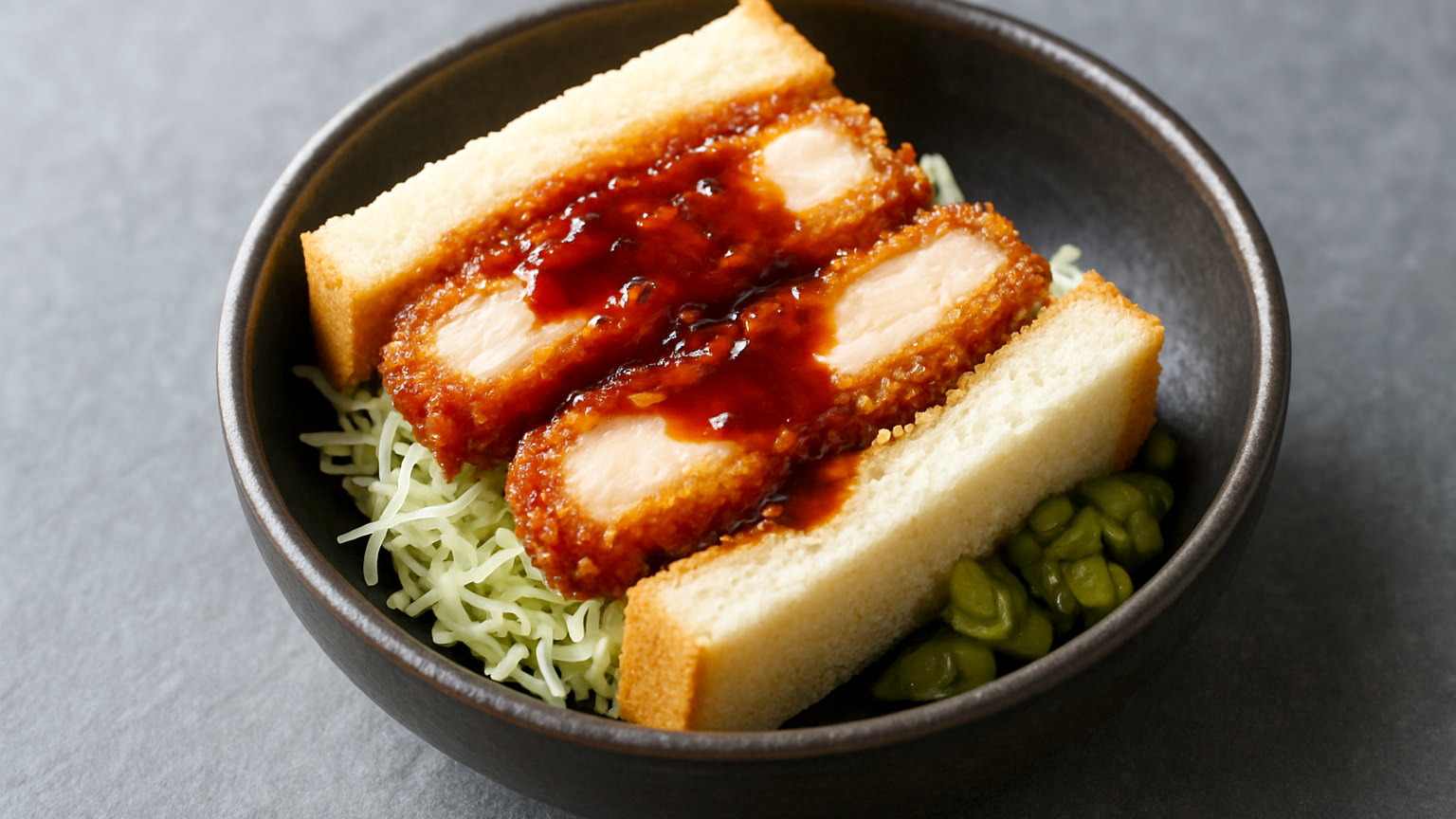
The katsu sando is a Japanese convenience-store and department-store staple, and it is one of the better things to do with a fried cutlet. Soft white bread, a thick layer of sauce, and the crusts removed.
Which bread?
Shokupan, the Japanese milk bread, cut thick at around 2cm. It is soft, slightly sweet and dense enough to hold a cutlet without collapsing, and it is sold in Japanese bakeries and some Asian grocers.
A good thick-cut white tin loaf is the practical substitute. What does not work is anything with a chewy crust or an open crumb, so sourdough and ciabatta are both wrong here.
Why remove the crusts?
Partly presentation, since a katsu sando is traditionally served as neat crustless rectangles with the cutlet visible in cross-section. Partly practicality, because a firm crust makes the sandwich difficult to bite through cleanly and the filling squeezes out.
Chicken katsu sando
Makes two sandwiches. Twenty minutes.
Ingredients
- 2 chicken breasts, butterflied and beaten to 1.5cm
- 50g plain flour, 1 egg beaten with 1 tsp water, 80g panko
- Salt and white pepper
- Vegetable oil for frying
- 4 thick slices of soft white bread
- Softened butter
- 4 tbsp tonkatsu sauce
- 1 tbsp Japanese mayonnaise
- A large handful of white cabbage, very finely shredded
Method
- Season the chicken and coat in flour, egg and panko, pressing firmly. Rest for 15 minutes in the fridge.
- Soak the shredded cabbage in iced water for 10 minutes, then drain and dry thoroughly.
- Heat the oil to 170C and fry the cutlets for 3 to 4 minutes a side until deep golden. Drain on a rack.
- Butter all four slices of bread right to the edges. The butter is a moisture barrier as much as a flavouring.
- Spread tonkatsu sauce generously on two slices and mayonnaise on the other two.
- Lay a cutlet on the sauced slice, add a thin layer of cabbage, and close the sandwich.
- Press gently, wrap tightly in greaseproof paper and leave for 3 minutes so it holds together.
- Trim off all four crusts with a sharp serrated knife, then cut across into two or three neat rectangles.
Why butter to the edges?
Because it forms a barrier that stops the sauce soaking straight into the bread. Without it the slice next to the sauce turns to paste within a few minutes, which matters if the sandwich is not eaten immediately.
Should the cutlet be hot or cold?
Warm rather than hot, and a katsu sando is perfectly good made with a cutlet that has cooled. Steam from a very hot cutlet softens the bread quickly. Convenience-store versions in Japan are sold chilled and are none the worse for it.
Can you use curry sauce instead?
It is too loose and will soak the bread. Tonkatsu sauce is thick enough to sit where you put it, which is why it is the sandwich sauce and curry sauce is the plate sauce.
Can you make it ahead?
Yes, and a katsu sando is arguably better after twenty minutes wrapped, which lets it settle and hold together for slicing. Convenience stores in Japan sell them chilled and they are none the worse for it. Wrap tightly in greaseproof paper and refrigerate for up to four hours.
Why Japanese mayonnaise?
It is made with egg yolks alone rather than whole eggs and seasoned with rice vinegar, which makes it richer, tangier and slightly sweeter than British mayonnaise. It is worth buying a bottle if you cook Japanese food, though ordinary mayonnaise with a squeeze of lemon is a reasonable stand-in.
Should the cabbage go in at all?
It is optional and it earns its place, adding crunch and freshness against a rich filling. Keep the layer thin, since a thick pile of cabbage makes the sandwich hard to bite through cleanly and pushes the cutlet out. Dry it thoroughly, or it wets the bread from the inside.
How should it be cut?
Into two or three neat rectangles rather than triangles, which is the Japanese convention and shows the cross-section of the cutlet. Use a sharp serrated knife and a sawing motion rather than pressing down, which squashes the sandwich and forces the filling out at the sides.