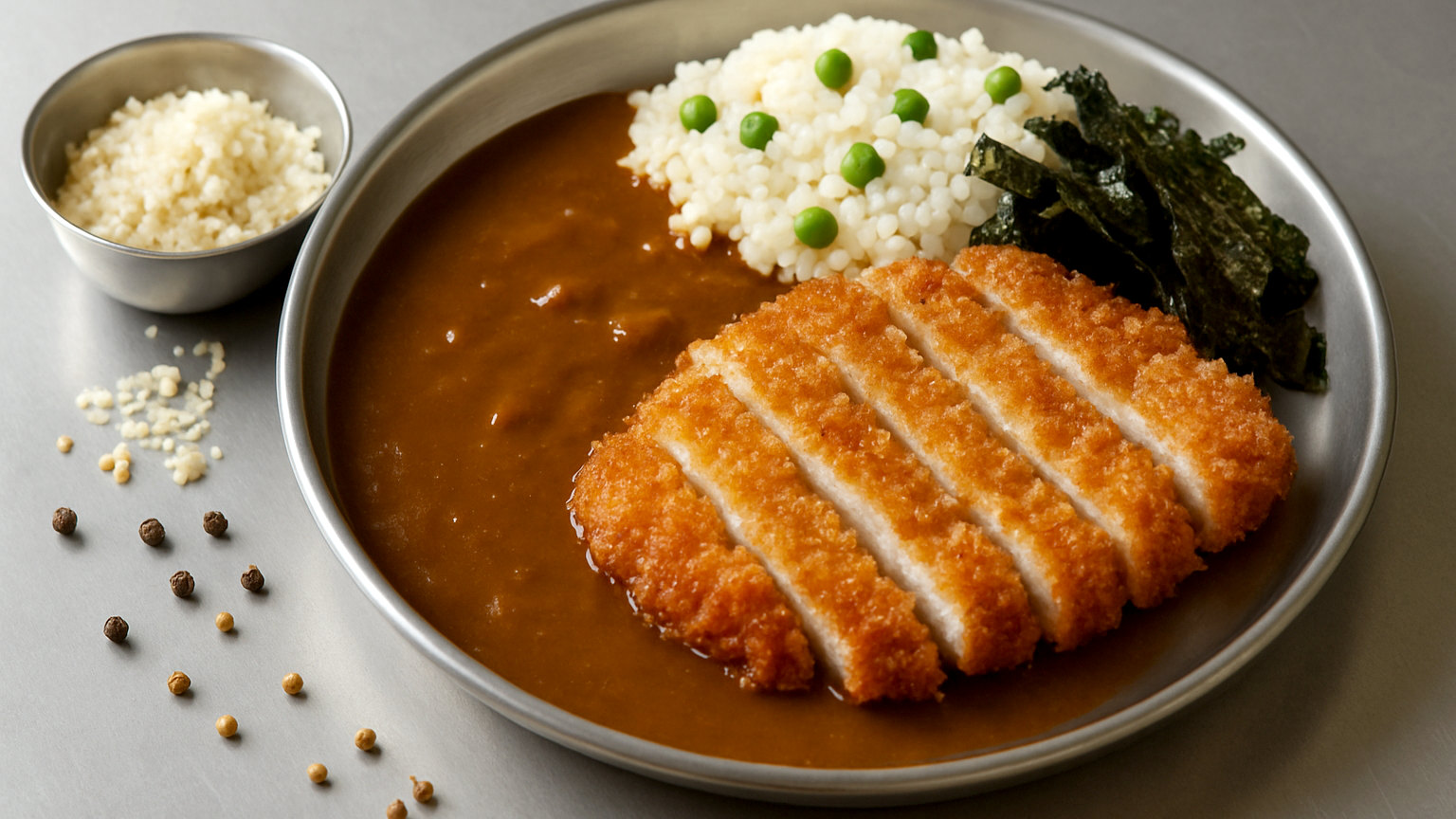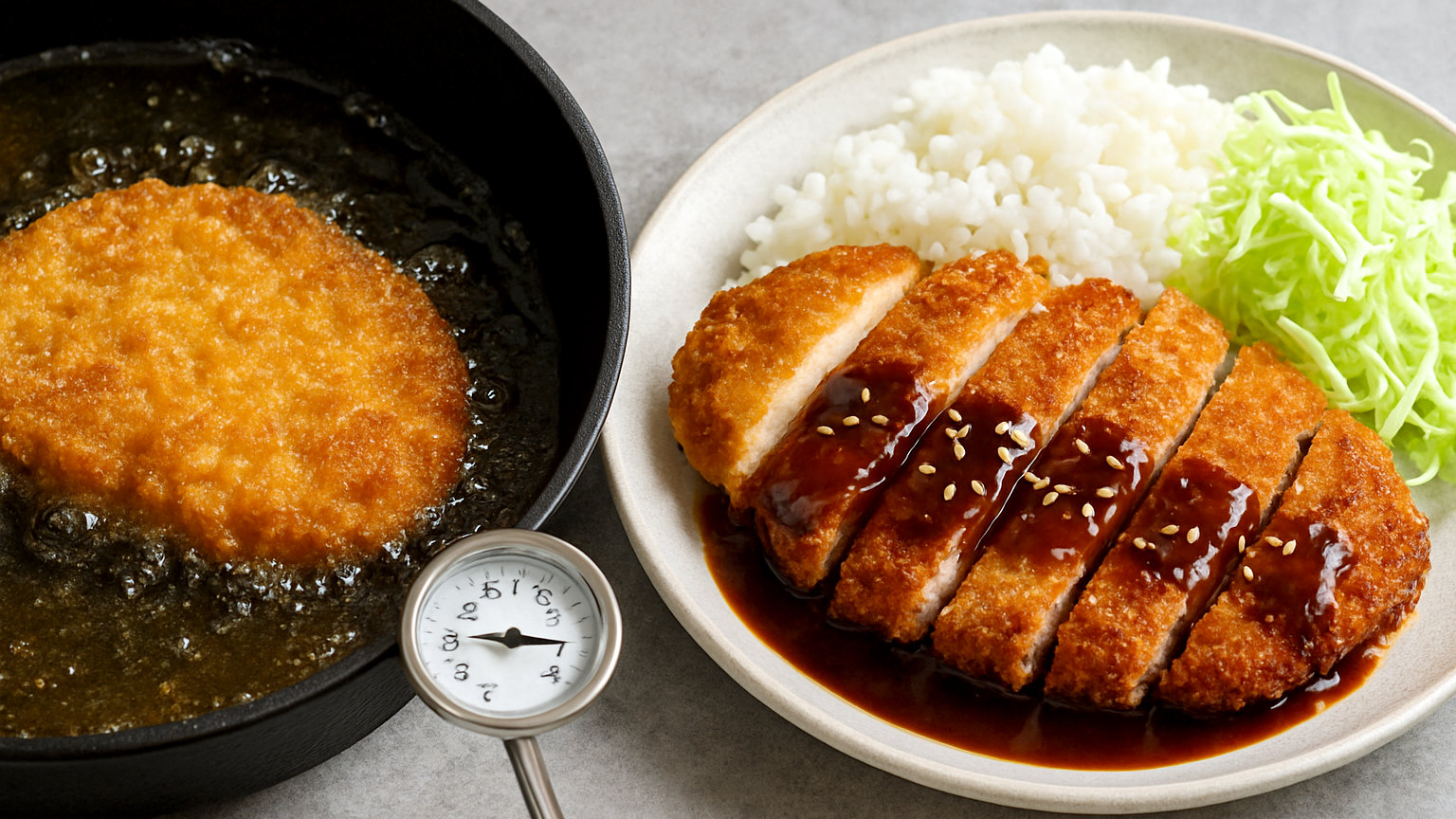
Oil temperature does more to determine the outcome of a chicken katsu than any other single variable. The window is narrower than most people expect, and both errors produce distinct and recognisable failures.
What is the target?
170C, held steadily. At that temperature a 1.5cm cutlet takes three to four minutes a side and the crust reaches a deep even gold exactly as the chicken finishes cooking.
That coincidence is not luck. The 1.5cm thickness and the 170C temperature are matched to each other, which is why both numbers matter together.
What happens if it is too cool?
The coating absorbs oil instead of sealing against it. Panko is porous, and at 150C it sits soaking for thirty seconds before the crust sets, ending up heavy, greasy and pale.
A greasy katsu is almost always a temperature problem rather than a technique one.
What happens if it is too hot?
The crust darkens in two minutes while the chicken is still raw in the middle. You then face a choice between undercooked chicken and a burnt crust, and neither is acceptable.
Above 190C the panko can go from golden to dark brown in under thirty seconds, so it is worth watching closely rather than relying on the clock.
How do you test without a thermometer?
Drop in a single panko crumb. At the right temperature it sizzles steadily and floats within about two seconds, browning gently over thirty. If it browns almost immediately the oil is too hot, and if it sinks and bubbles lazily it is too cool.
A wooden chopstick or the handle of a wooden spoon dipped in should produce a steady stream of small bubbles around it rather than a violent fizz.
How do you keep it steady?
- Fry two pieces at a time - each cold cutlet drops the temperature, and four at once can lose 30C.
- Use enough oil - a larger volume holds its heat far better than a shallow pan.
- Use a heavy pan - cast iron or thick steel recovers faster than thin aluminium.
- Let it recover between batches - a minute or two back at temperature before the next pieces go in.
- Bring the chicken to room temperature - twenty minutes out of the fridge means less of a temperature drop.
Which oil?
Something neutral with a high smoke point, so vegetable, sunflower, rapeseed or groundnut. All sit comfortably above 200C. Olive oil smokes and turns bitter well below the temperature needed, and butter burns almost immediately.
Is a thermometer worth buying?
For anyone who fries more than occasionally, yes, and a digital probe costs very little. It removes the guesswork entirely and doubles as the way to check the chicken is cooked, which is the other place a thermometer earns its keep.
How much does the temperature drop?
Around fifteen degrees for two room-temperature cutlets in a decent volume of oil, and considerably more for four straight from the fridge. That drop is why the first minute matters so much, since the coating is setting during it. A larger pan of oil and a heavier pan both reduce the effect.
Does it change for different cuts?
Thigh takes the same 170C and around thirty seconds longer a side, since it wants to reach a slightly higher internal temperature. Small pieces for katsu bites take a hotter oil at 175C, because the cooking time is so short that the crust would not colour otherwise.
How long can you hold the oil at temperature?
Indefinitely, within reason, provided you are frying regularly. Oil left sitting at 170C for an hour with nothing in it begins to degrade and will darken food faster. Turn the heat down between batches if there is a long gap, then bring it back up.
Does the oil quantity matter?
A great deal, and it is the cheapest way to hold a steady temperature. Three centimetres is the practical minimum for a cutlet, and a larger volume in a wider pan swings far less when cold food goes in. A shallow pan of oil loses heat sharply and never recovers between batches.
What if the oil starts smoking?
Take the pan off the heat immediately and let it cool for a few minutes before returning it. Smoking oil is above its safe working temperature and is beginning to break down, which taints the flavour of everything fried in it afterwards. If it has smoked heavily, replace it.