The same Japanese curry sauce appears across half a dozen dishes at quite different consistencies, and the adjustment is almost entirely a matter of how much roux goes into a given quantity of liquid.
What are the targets?
- Curry udon broth - 60g roux per litre. Drinkable from the bowl.
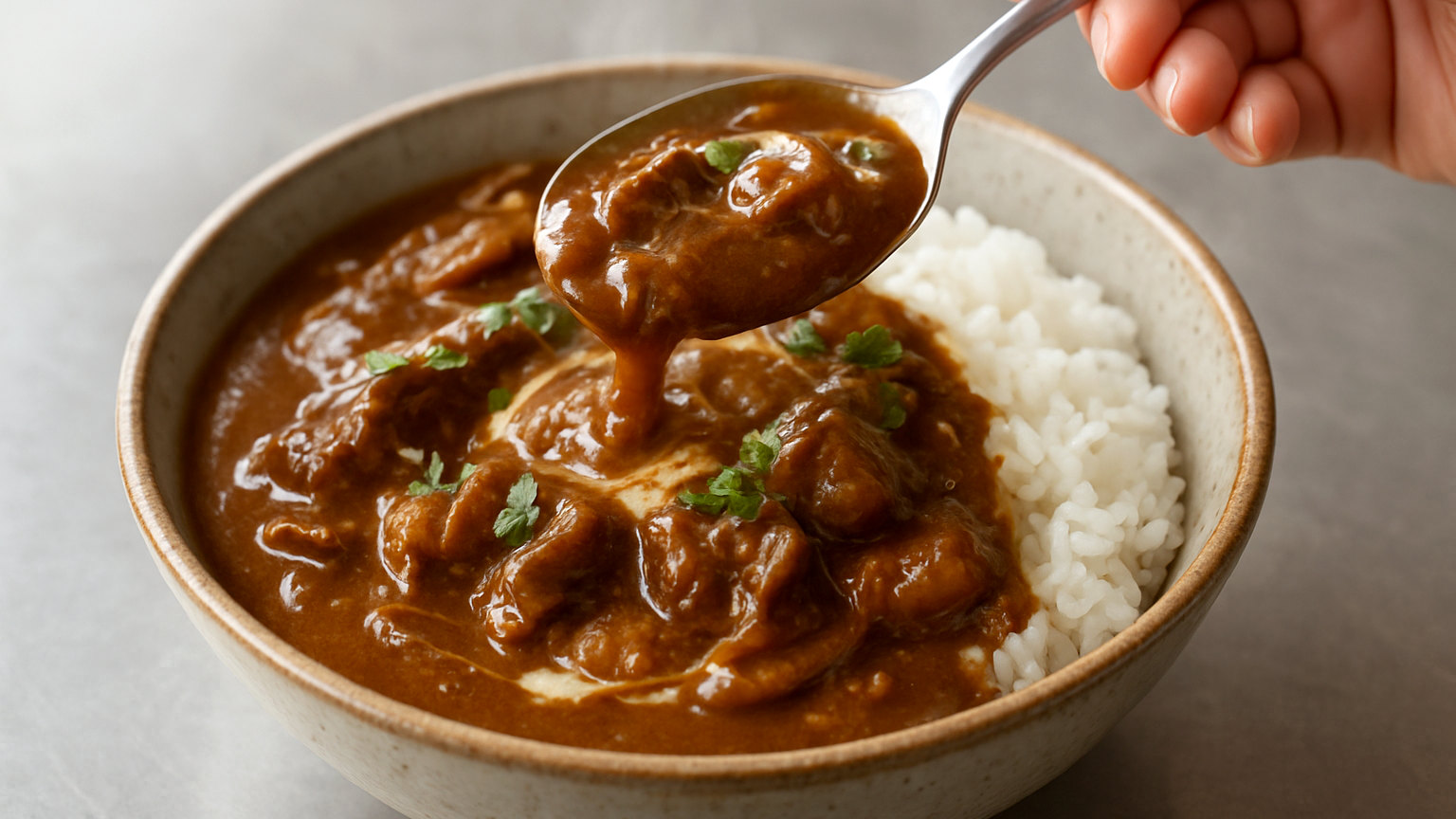
- Curry rice, standard - 100g per litre. Coats a spoon and flows.
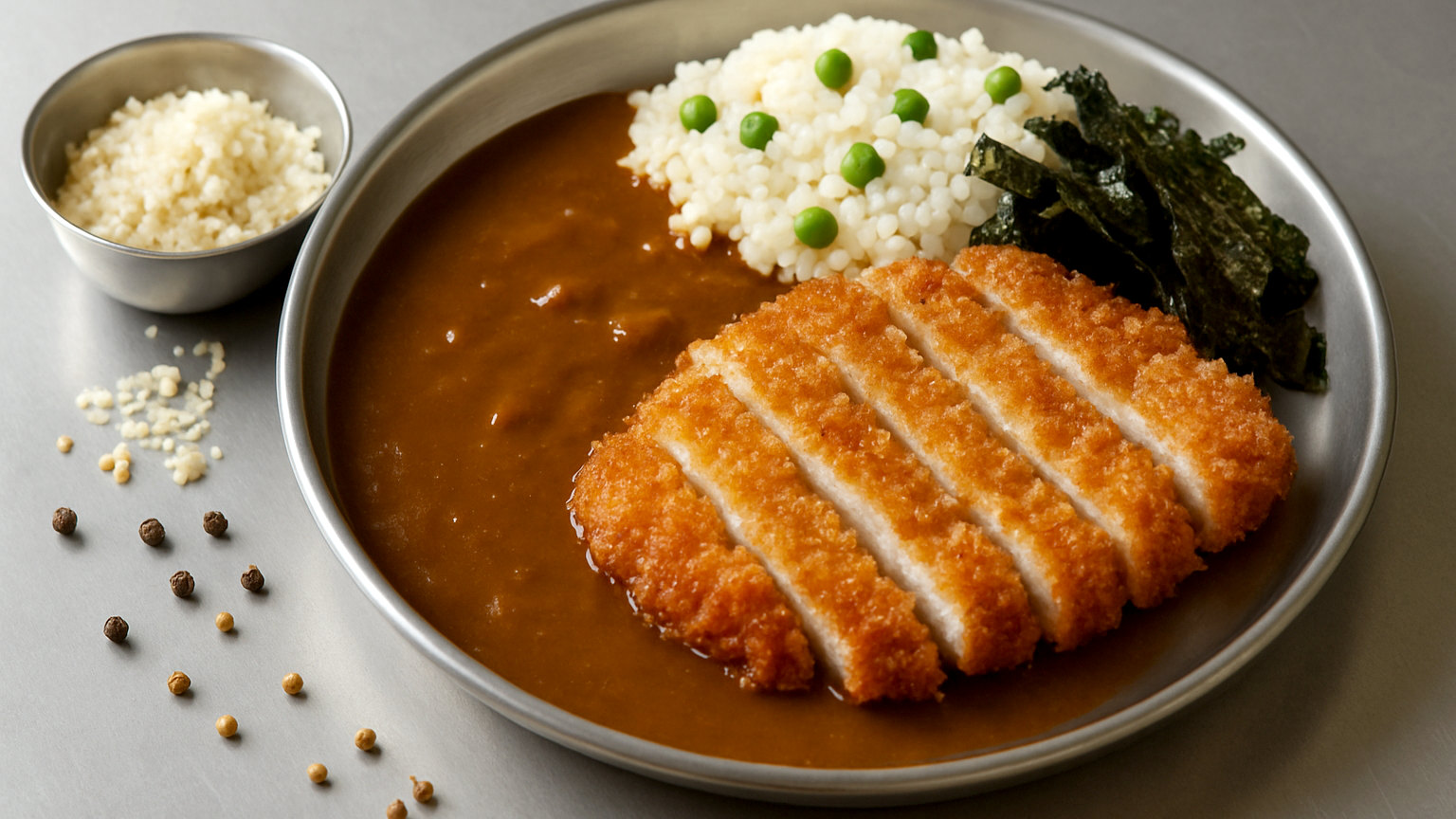
- Katsu curry - 130g per litre. Sits beside rice without running to the plate edge.
- Curry doria - 130g per litre. Thick enough to layer under cheese.
- Curry bread filling - 160g per litre. Almost solid when cold.
Why does katsu need it thicker?
Because a thin sauce runs across the plate and reaches the cutlet, which is exactly what you are trying to avoid. A thick sauce stays where it is poured, over the rice, and the crust stays crisp.
It also has to hold its shape against a plate that is already carrying a fried cutlet, where a loose sauce would look and eat like a puddle.
Why does udon need it thinner?
Because it is a broth rather than a sauce, and it is diluted with dashi as part of the dish. A thick sauce thinned with dashi and a broth built thin from the start end up in the same place, and building it thin is the cleaner route.
The starch slurry finish then adds the gloss and cling that the reduced roux quantity gives up.
Can you adjust after the fact?
In both directions, and this is what makes a batch of one sauce useful across several dishes.
To thin it, add stock or dashi and reseason, since dilution weakens everything. To thicken it, whisk in a little extra cooked roux and simmer for ten minutes, or use a potato starch slurry for a faster result with more gloss.
Does reducing work as well?
It thickens effectively and concentrates the seasoning at the same time, so a sauce reduced by a third can end up too salty and too sweet. Taste afterwards rather than assuming the balance held.
Adding roux thickens without concentrating anything, which is why it is the better tool when the seasoning is already right.
How much does cooling change it?
More than most people expect. A sauce at the right consistency in the pan will be noticeably thicker on the plate and thicker again from the fridge. For anything served immediately, pull it off the heat slightly looser than the target.
Is there a test?
Draw a spoon across the base of the pan. For a broth, the channel closes instantly. For a standard sauce, it closes in about a second. For katsu, it closes slowly. For a bread filling, it barely closes at all.
Does the dish change the seasoning too?
Slightly. A udon broth takes soy sauce and mirin to push it toward a noodle broth, where a katsu sauce stays sweeter and rounder. A doria wants it slightly saltier, since the white sauce and rice underneath are both mild. The roux quantity is the main variable and it is not the only one.
Can one batch serve all of them?
Comfortably, and it is the practical way to work. Make the batch at standard sauce consistency, then thin it with dashi for udon or thicken it with a little extra roux for katsu. Adjusting in either direction takes a few minutes and is easier than making two batches.
Does the protein change the target?
Slightly. A curry containing potato thickens further as the potato releases starch, so start looser than the target and let it arrive there. A curry with nothing starchy in it stays where you put it. That difference is worth allowing for before adding extra roux.
What about curry bread?
Kare pan needs the thickest version of all, at around 160g of roux per litre, because the filling has to be almost solid when cold so it can be enclosed in dough without leaking. Making it thick and then chilling it overnight is the practical route.
Does thinning weaken the flavour?
Directly, which is why a udon broth needs soy sauce and mirin added back after the dashi goes in. Any dilution reduces the seasoning in proportion, so tasting and correcting after thinning is not optional.