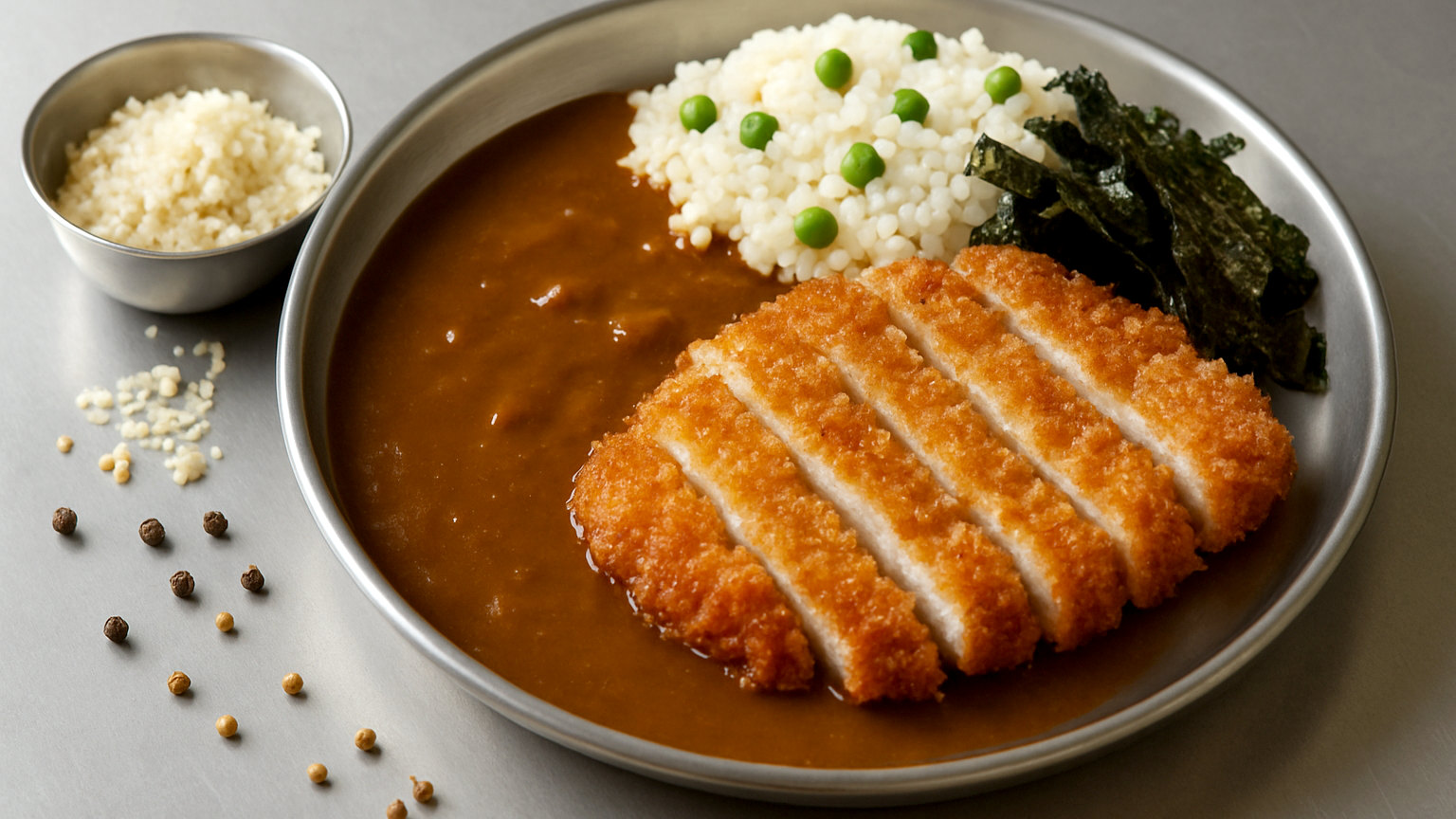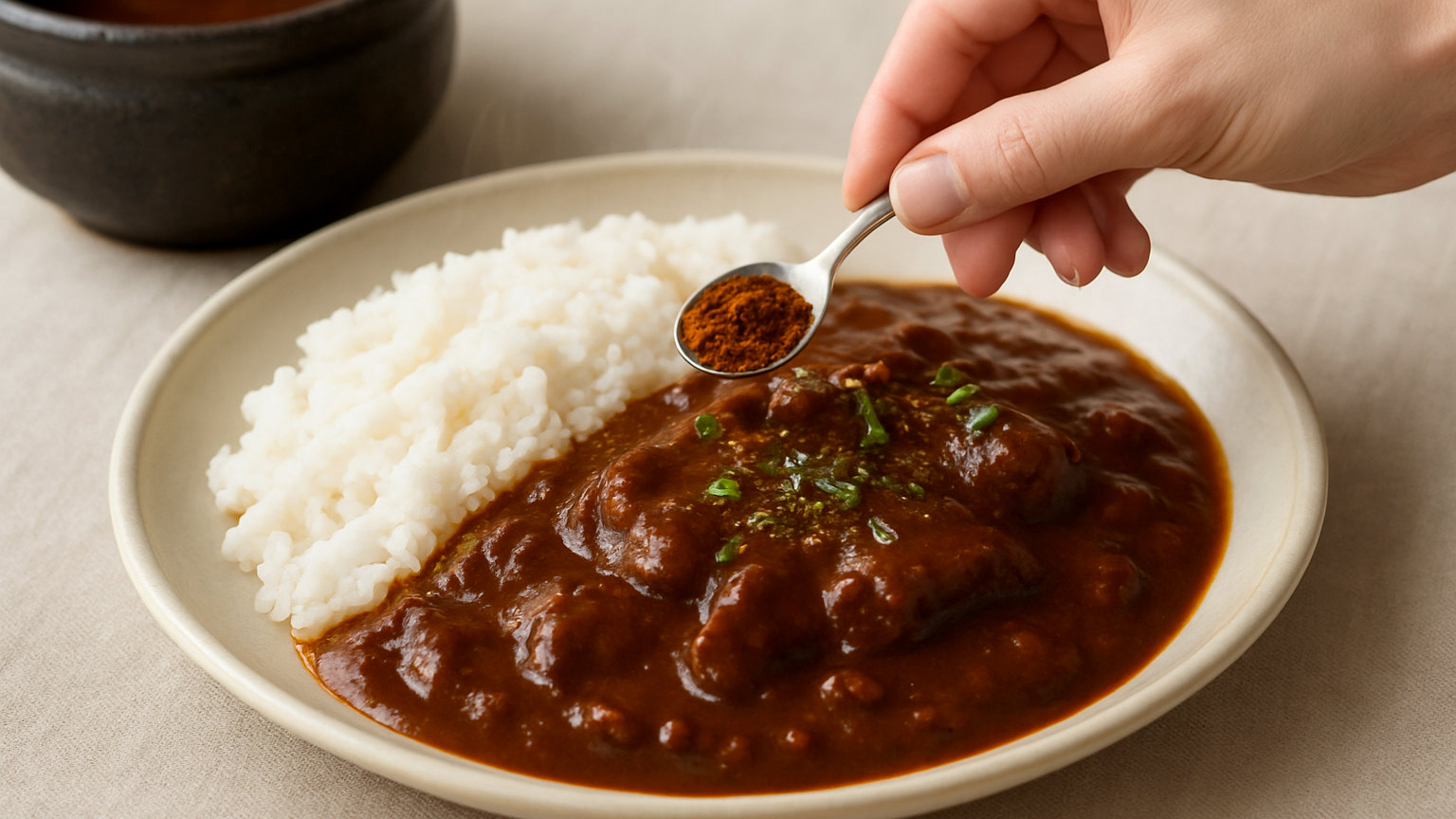
The argument for a shop-bought roux block is convenience rather than flavour. Making the roux yourself in quantity and freezing it in portions removes that argument entirely, since the effort happens once and the convenience is identical afterwards.
What is a roux base?
Fat and flour cooked together until the raw flour taste has gone, with curry powder worked in at the end. That is the whole of a commercial block minus the palm oil, the caramel colouring and the flavour enhancers.
Cooled, it sets firm enough to cut into squares, which is exactly how a block behaves.
How much does it thicken?
Around 60g of roux per litre of liquid gives a broth consistency for curry udon. Around 100g gives a standard curry sauce. Around 130g gives the thick sauce that sits beside rice without running.
Those figures assume a blond roux. A darker roux thickens less, so increase the quantity by roughly a quarter.
Japanese curry roux base
Makes around 400g, enough for four curries serving four. Twenty-five minutes.
Ingredients
- 170g unsalted butter
- 170g plain flour
- 5 tbsp Japanese curry powder
- 1 tbsp garam masala, optional
- 1 tsp salt
Method
- Melt the butter in a heavy pan over a low heat. Do not let it brown at this stage.
- Add the flour all at once and stir to a smooth paste.
- Cook over a low heat, stirring constantly, for 12 to 15 minutes. It will loosen, then thicken, then gradually darken.
- Stop when it reaches the colour of pale caramel or milk chocolate, depending on what you want it for, and smells distinctly nutty.
- Take the pan off the heat and stir in the curry powder, garam masala and salt. The residual heat is enough to bloom the spices without scorching them.
- Pour into a shallow container lined with greaseproof paper, spreading it to around 2cm deep.
- Cool completely, then refrigerate until firm, which takes around two hours.
- Turn out and cut into squares of roughly 25g each.
Why add the spices off the heat?
Because ground spices scorch quickly in hot fat, and curry powder is turmeric-heavy, which turns bitter faster than most. The pan holds enough residual heat to release the aromatics without any risk of burning them.
How do you use it?
Exactly as a shop-bought block. Build your onions, meat and stock as usual, take the pan off the heat, and stir the squares in one at a time until each dissolves. Return to a low heat for five minutes to thicken.
How long does it keep?
Two weeks refrigerated and three months frozen. Freeze the squares on a tray until solid, then bag them, and they drop straight into a hot pan from frozen without thawing.
How does it compare to a shop-bought block?
Better in flavour and identical in convenience once it is made. A commercial block uses palm oil or beef tallow for cost and shelf life, where butter gives a nutty richness neither can match. What a block has is caramel colouring, so a homemade roux produces a paler sauce.
Should you add anything else to the base?
A tablespoon of garam masala rounds it out, and some cooks work in a little tomato powder or dried onion. Keep salt modest, since the stock and soy sauce added later carry their own. Anything wet, such as grated apple, belongs in the pan rather than in the roux.
How much of a square do you need?
Around four 25g squares per litre of liquid for a standard sauce, or five for the thicker version that sits beside rice. That is roughly the same as a commercial block, so packet guidance translates directly if you are used to one.
Can you make it vegan?
Replace the butter with a neutral oil or a plant butter at the same weight, and the method is otherwise identical. Take it a shade darker to recover some of the depth the milk solids would have contributed. Check the curry powder, which is almost always plant-based but occasionally carries additives.
Does it set firm enough to cut?
A butter roux sets firmly in the fridge and cuts cleanly into squares. An oil roux stays softer and is better spooned into an ice cube tray and frozen, then popped out as portions. Both work and the handling differs.