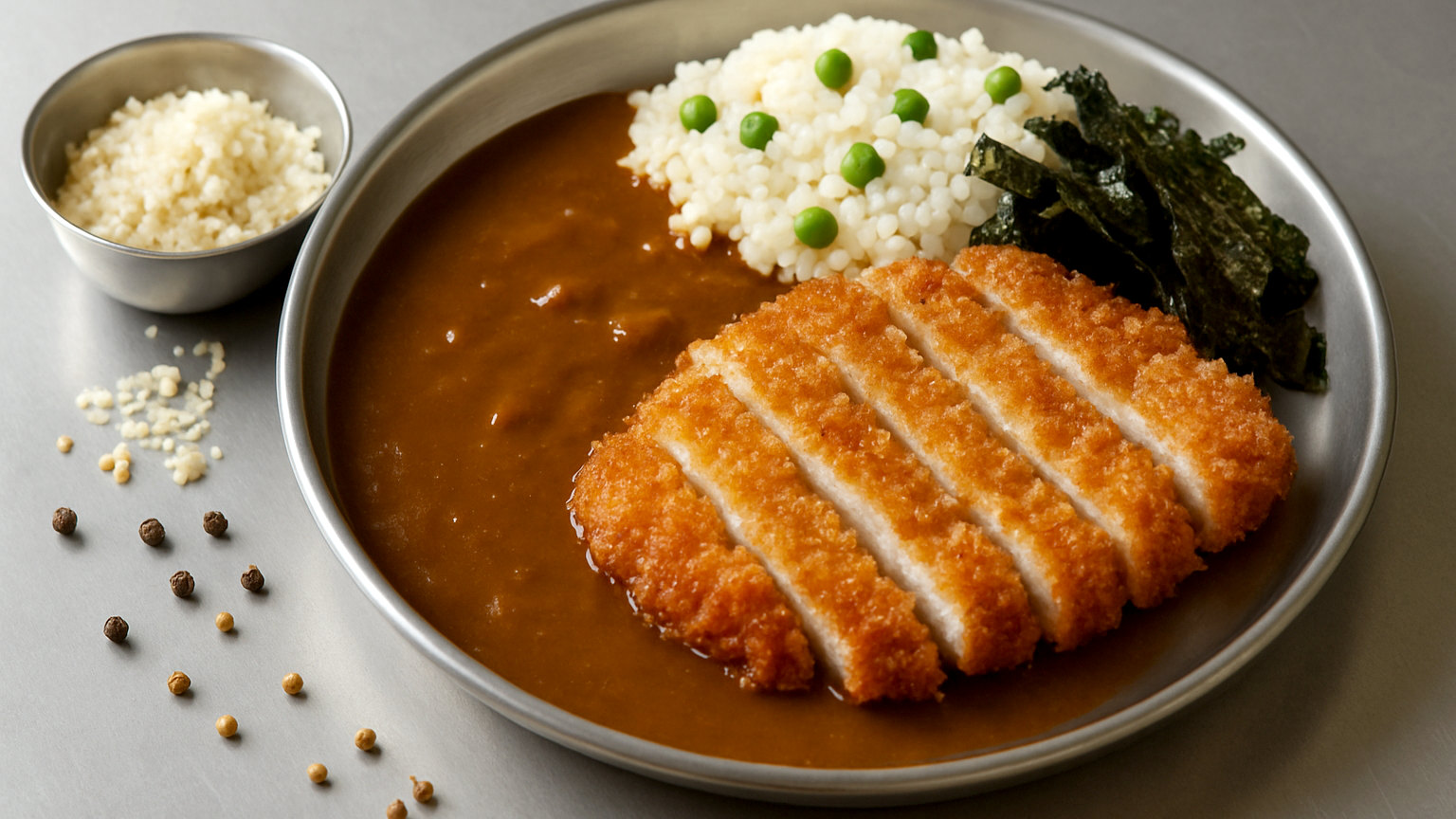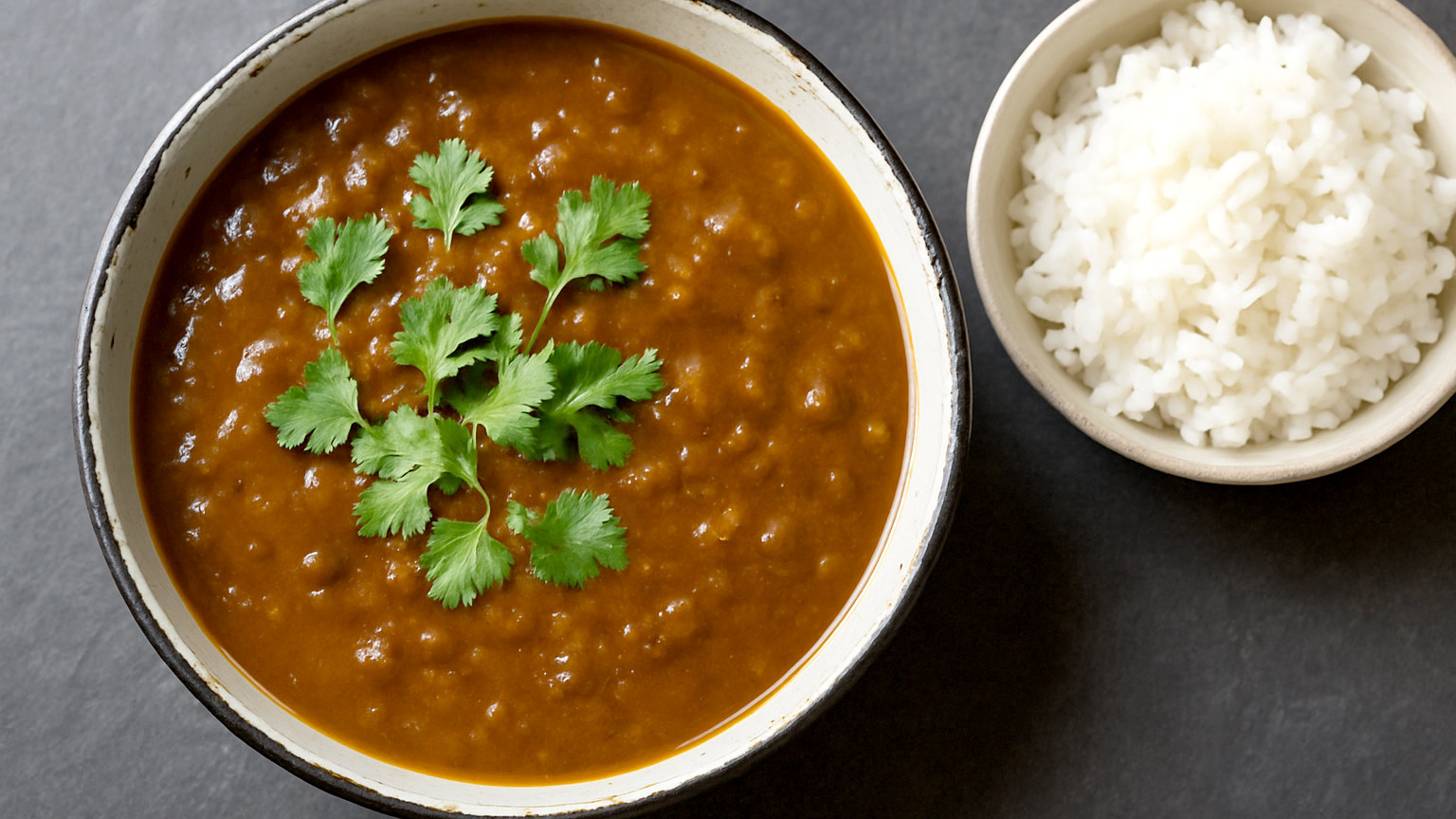
Japanese curry sauce is among the best things to batch cook. It freezes without any loss of quality, since a flour-thickened sauce has no emulsion to break, and having it in the freezer removes the slowest part of almost every dish in the category.
Why does it freeze so well?
Because there is nothing fragile in it. Coconut curries break their emulsion, dairy sauces split, and a starch-thickened broth thins out. A roux-based sauce thaws looking much as it went in, needing only a whisk as it warms.
Leave the potatoes out of anything destined for the freezer, since they turn grainy. Everything else survives.
Large batch curry sauce
Makes around 3 litres, enough for eight to ten portions. Forty-five minutes.
Ingredients
- 170g butter and 170g plain flour
- 5 tbsp Japanese curry powder
- 4 large onions, finely sliced
- 3 carrots, finely diced
- 6 garlic cloves and 6cm ginger, grated
- 2.8 litres chicken or vegetable stock
- 2 apples, grated
- 5 tbsp soy sauce, 2 tbsp honey, 3 tbsp tomato puree
- 2 tbsp Worcestershire sauce
- 2 tsp salt, adjusted at the end
Method
- Melt the butter in a large heavy pan, stir in the flour and cook over a low heat for 12 minutes until pale caramel. Scrape the roux into a bowl and set aside to cool.
- In the same pan, soften the onions and carrots in a little more butter for 18 minutes until sweet and golden.
- Add the garlic and ginger and cook for 3 minutes.
- Warm the stock in a separate pan, which makes the roux incorporate far more smoothly.
- Add a litre of warm stock to the vegetables, then whisk in the roux a large spoonful at a time until each dissolves.
- Add the remaining stock gradually, whisking continuously.
- Add the apple, soy sauce, honey, tomato puree and Worcestershire sauce.
- Simmer gently for 25 minutes, stirring often, until thickened and glossy.
- Blend smooth with a stick blender for the restaurant texture, or leave as it is.
- Cool quickly, spread across shallow containers, and refrigerate within two hours.
How should it be portioned?
In quantities you will actually use. Around 350ml serves two, which is the most useful unit. Freeze flat in bags so they stack and thaw quickly, and label each with the date.
How do you reheat it?
Thaw overnight in the fridge, then warm gently on a hob, whisking as it comes up to temperature. It will have thickened considerably, so loosen it with a splash of stock or water. Avoid a microwave, which heats unevenly and can catch.
How long does the batch take in total?
Around forty-five minutes of largely unattended work, most of it the eighteen-minute onion stage and the twenty-five-minute simmer. That produces eight to ten portions, so the time per meal is under five minutes, which is the whole argument for batching.
Should it be blended?
A stick blender gives the smooth glossy texture of a restaurant curry sauce and is the usual choice for a batch destined to be used across several dishes. Leaving the onion and carrot visible gives a more homely version. Blended sauce is the more versatile of the two.
Can you scale it further?
The roux and liquid scale linearly, so doubling both works. Seasoning does not, since salt and sweetness accumulate faster than volume, so taste rather than doubling the soy sauce and honey. Pan size becomes the practical limit before the arithmetic does.
How quickly should it be cooled?
Within two hours, and spreading it across shallow containers rather than leaving it in the pot is what makes that achievable. A deep pot of hot sauce takes hours to cool through, which is exactly the temperature range where problems arise with a large batch.
Is a stock cube acceptable?
For a batch this size, yes, and the sauce carries enough seasoning of its own that the difference is small. Use fewer cubes than the packet suggests, since three litres of strongly salted stock plus five tablespoons of soy sauce will be too much.