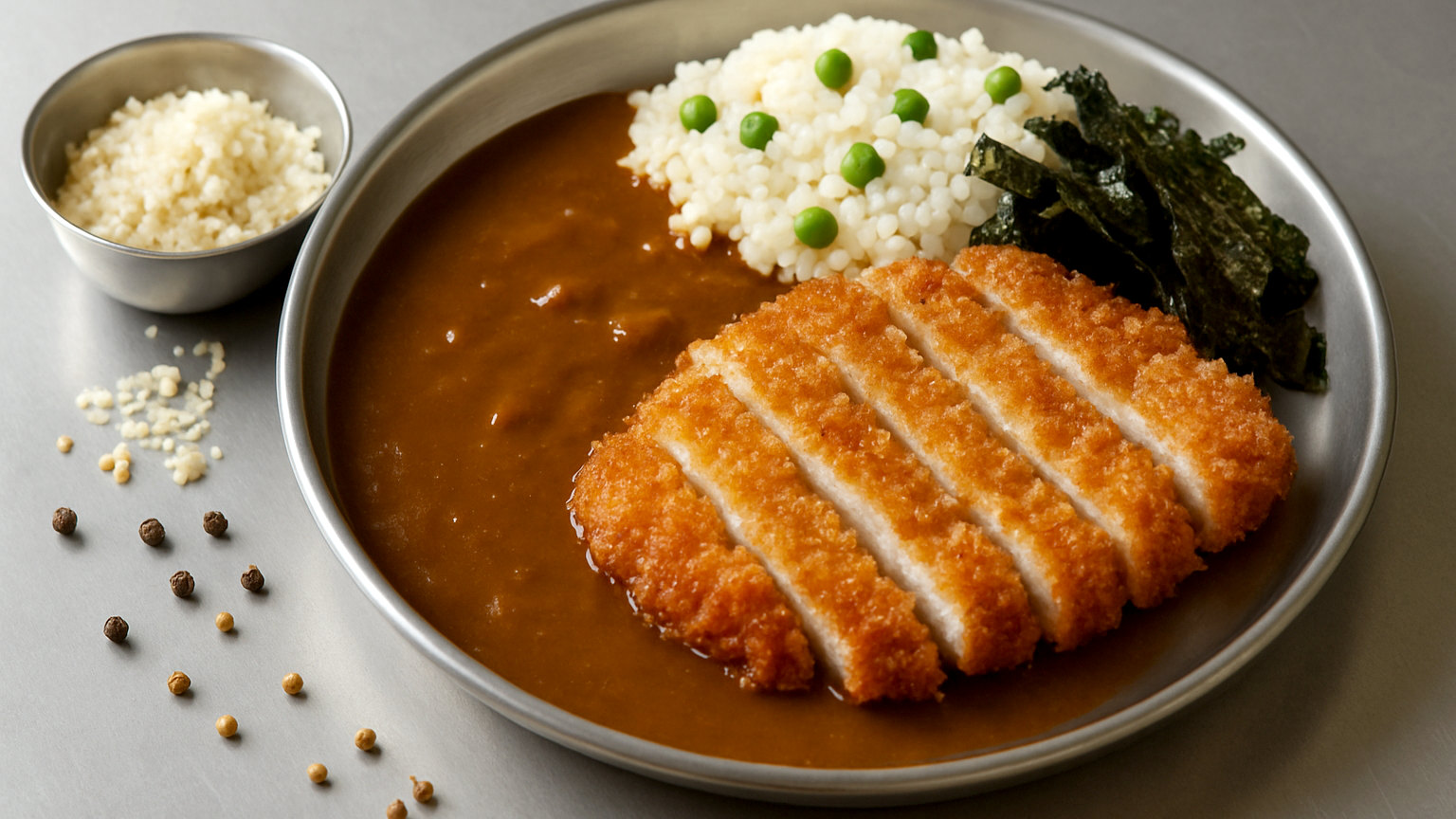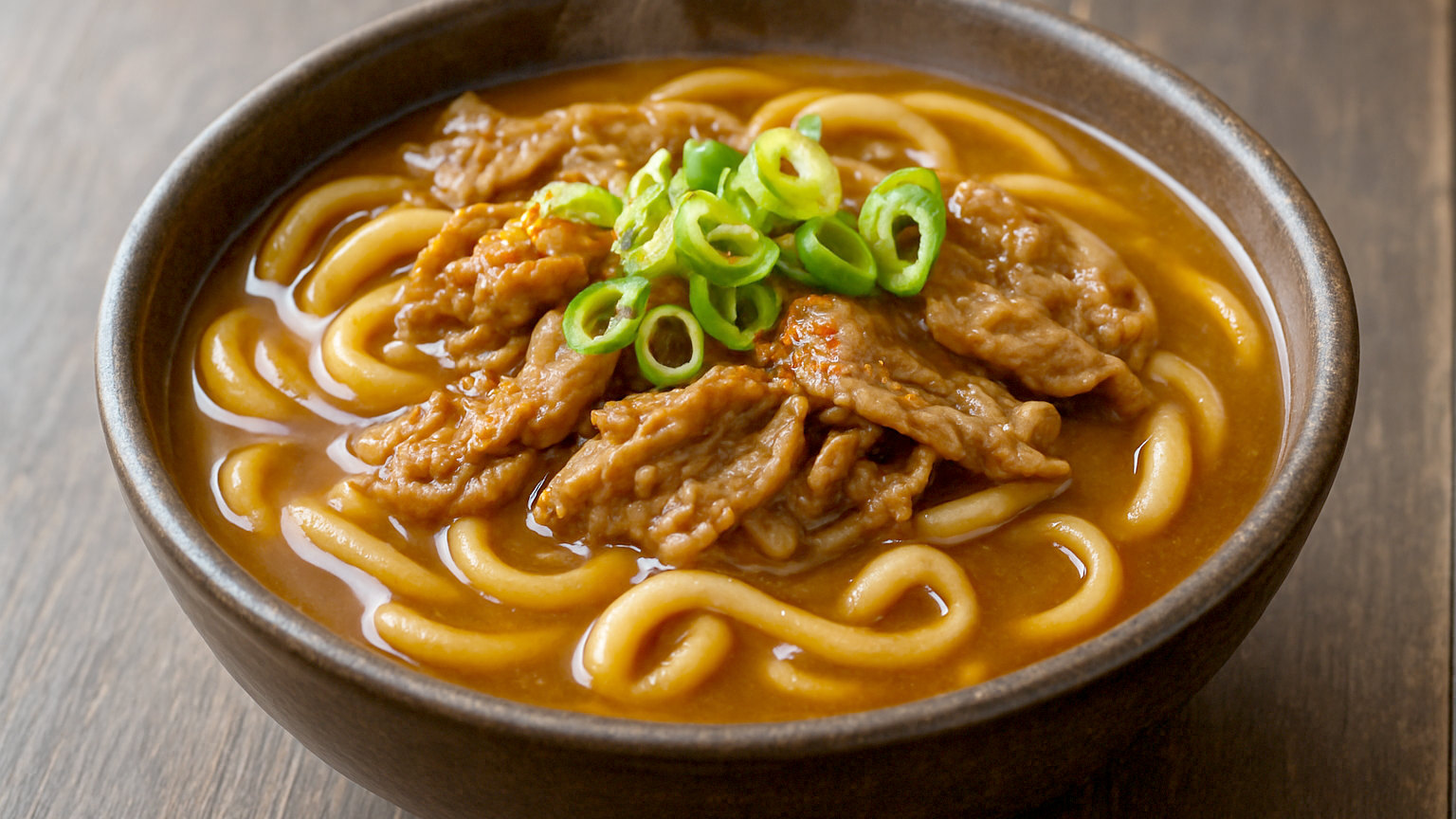
Beef curry udon uses thinly sliced beef cooked in the broth for a couple of minutes, not the braised chunks of a beef curry. The whole dish takes half an hour, and the beef is a topping rather than the foundation.
Which beef?
Sirloin, rump or any frying steak, sliced as thinly as possible across the grain. Beef sold pre-sliced for shabu-shabu or sukiyaki in Japanese grocers is ideal and saves the work entirely.
Freezing a piece for thirty minutes firms it up and makes very thin slicing considerably easier at home. Braising cuts such as shin are wrong here, since they need two hours and would be tough in three minutes.
How long does it need?
Two to three minutes in a simmering broth, added near the end. Sliced thin, beef cooks almost instantly, and leaving it longer makes it tough rather than tender.
Beef curry udon
Serves two. Thirty minutes.
Ingredients
- 250g beef sirloin or rump, sliced very thinly
- 2 tbsp butter and 2 tbsp plain flour
- 1 tbsp Japanese curry powder
- 1 onion, sliced thinly
- 1 garlic clove and 2cm ginger, grated
- 700ml dashi
- 3 tbsp soy sauce, 2 tbsp mirin, 1 tsp sugar
- 1 tsp potato starch mixed with 2 tsp cold water
- 2 portions of udon noodles
- 2 spring onions and shichimi togarashi to serve
Method
- Melt the butter in a saucepan, stir in the flour and cook over a low heat for 5 minutes until pale gold.
- Add the curry powder for a minute, then scrape the roux out.
- Soften the onion in the pan for 8 minutes, then add the garlic and ginger for 2 minutes.
- Add a third of the dashi and whisk in the roux gradually, then the rest.
- Add the soy sauce, mirin and sugar and simmer for 8 minutes.
- Stir in the potato starch slurry and simmer for a minute.
- Separate the beef slices and drop them into the simmering broth. Cook for 2 to 3 minutes only.
- Cook the udon separately, drain well, and divide between two deep bowls.
- Ladle the broth and beef over, and finish with spring onion and shichimi.
Why separate the slices before adding?
Because thin beef slices stick together in a block and cook as a lump, leaving the outside overdone and the middle raw. Pull them apart with your fingers and drop them in individually, spreading them across the surface.
Should you skim it?
Briefly, yes. Beef releases a grey scum in the first minute, and lifting it off with a spoon keeps the broth clean-looking. It is a thirty-second job and makes a visible difference.
What else can go in?
Sliced onion is standard and already in the recipe. Beyond that, aburaage tofu sheets absorb the broth well, a soft-boiled egg adds richness, and tenkasu tempura scraps give crunch. Keep it to two additions beyond the beef, since a crowded bowl loses definition.
Can you use leftover roast beef?
Sliced very thinly and added off the heat at the last moment, yes. It is already cooked, so simmering it toughens it. Lay the slices over the noodles and ladle the hot broth on top, which warms them through without cooking them further.
How thinly should it be sliced?
Two or three millimetres, thin enough to see light through. That is what allows it to cook in two minutes without toughening. Thicker slices need longer than the broth should be boiling, and by the time they are done the surface has tightened.
Which cut is best value?
Rump, since it is cheaper than sirloin and the difference disappears when sliced this thin and cooked for two minutes. Feather blade works too. What you are paying for in a premium cut is tenderness across a thick piece, which is irrelevant at three millimetres.
How much beef per person?
Around 125g raw, which looks generous in the pan and shrinks noticeably. It is a topping rather than the main event, and the noodles and broth carry the bowl. Doubling it makes a heavier dish without making a better one.