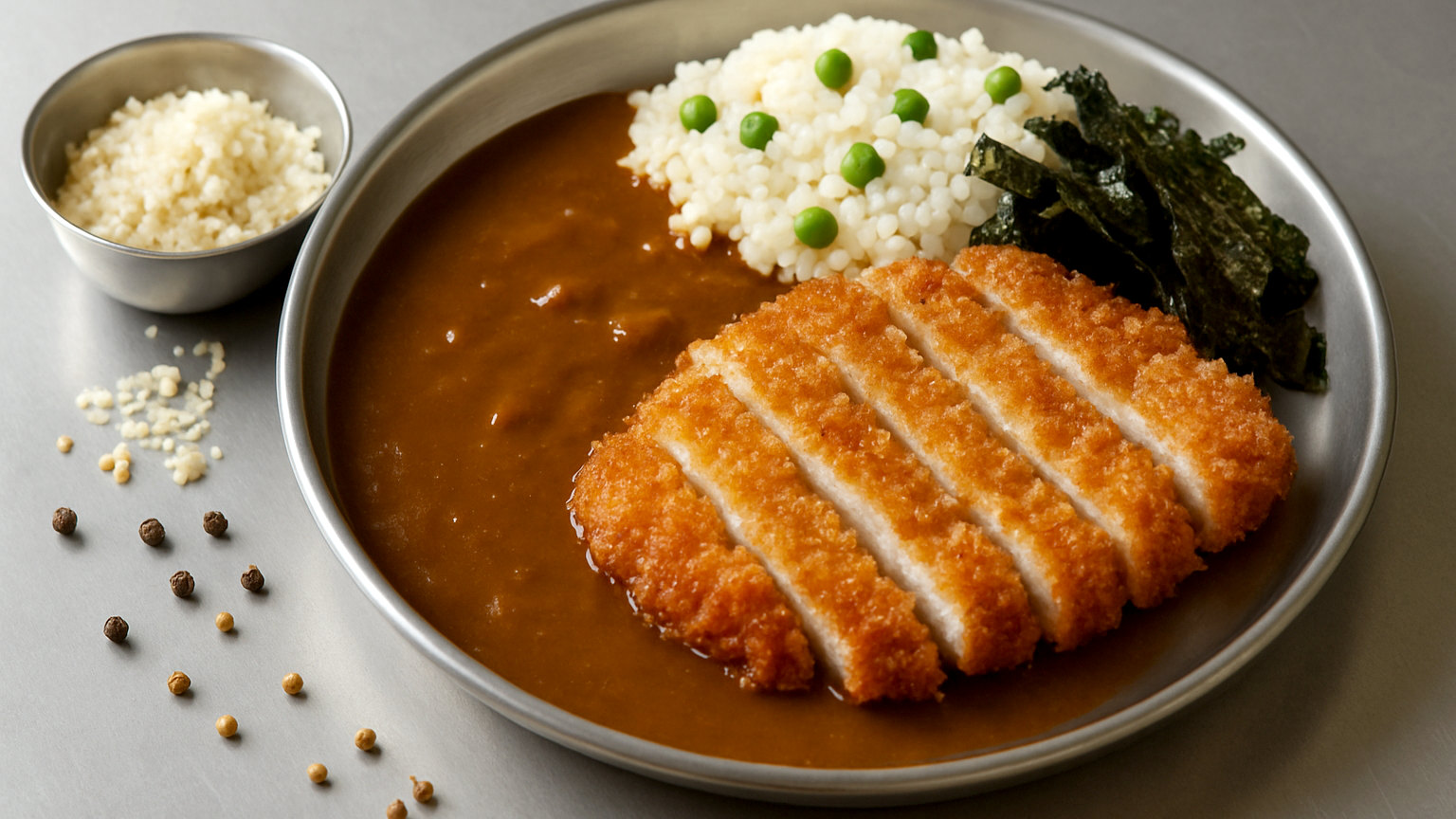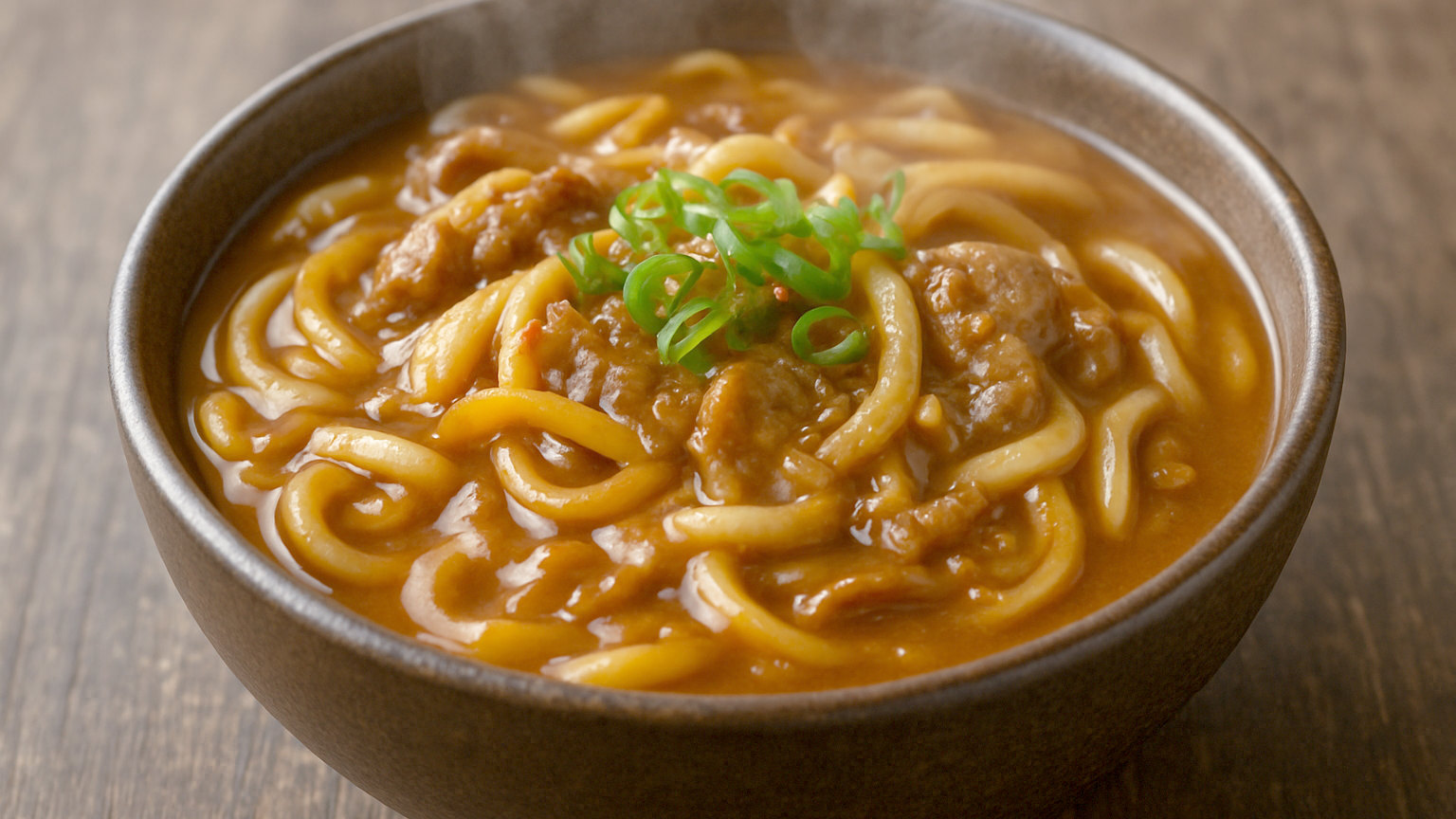
Curry udon does not require leftovers. Built from scratch it takes about twenty-five minutes, and the sauce is designed as a broth from the start rather than being a thick curry thinned down afterwards.
How does it differ from thinning leftovers?
The roux quantity is lower, since you want a broth rather than a sauce. Around two tablespoons of flour where a curry rice would use three or four for the same liquid.
The dashi also goes in as the main liquid rather than as a dilutant, so it carries through the whole dish rather than being added at the end.
Curry udon from scratch
Serves two. Twenty-five minutes.
Ingredients
- 2 tbsp butter and 2 tbsp plain flour
- 1 tbsp Japanese curry powder
- 1 onion, sliced thinly
- 1 garlic clove and 2cm ginger, grated
- 700ml dashi
- 2.5 tbsp soy sauce and 2 tbsp mirin
- 1 tsp caster sugar
- 200g thinly sliced pork or chicken, optional
- 1 tsp potato starch mixed with 2 tsp cold water
- 2 portions of udon noodles
- 2 spring onions and shichimi togarashi to serve
Method
- Melt the butter in a saucepan over a low heat, stir in the flour and cook for 5 minutes until pale gold.
- Add the curry powder and cook for a further minute, then scrape the roux into a bowl.
- Add a little more butter to the pan and soften the onion for 8 minutes, then add the garlic and ginger for 2 minutes.
- If using meat, add it now and cook for 3 minutes until it has changed colour.
- Pour in a third of the dashi and whisk in the roux a spoonful at a time until dissolved, then add the remaining dashi gradually.
- Add the soy sauce, mirin and sugar, and simmer gently for 8 minutes.
- Taste and adjust. It should be slightly stronger than you want the finished bowl to be.
- Stir in the potato starch slurry and simmer for a minute until glossy.
- Cook the udon separately in plenty of boiling water, drain well, and divide between two deep bowls.
- Ladle the broth over and finish with spring onion and shichimi.
Why so little roux?
Because the aim is a broth rather than a sauce. Two tablespoons of flour in 700ml of dashi gives something that coats the noodles and can still be drunk. Four tablespoons would produce curry rice sauce with noodles in it.
Why add starch as well as roux?
They do different things. The roux thickens and adds the nutty depth that makes it taste like Japanese curry. The starch slurry adds gloss and a slightly silkier body without further flouriness, and it is the standard finish for a Japanese noodle broth.
Can you use a roux block instead?
One square dissolved into the dashi works and is the quickest route of all. Use less than the packet suggests, since a block is formulated for a thick curry sauce rather than a broth, and add soy sauce and mirin afterwards to bring it back toward a noodle broth.
Does it need meat?
Not at all, and a plain curry udon with nothing but onion and spring onion is a standard noodle shop item. If you want substance without meat, fried tofu sheets soak up the broth better than anything else and cost very little.
How does it compare to the leftover version?
Cleaner and lighter, since the broth was designed as a broth rather than being a thick sauce diluted. What it lacks is the depth that comes from a curry having simmered with meat for two hours. Neither is better, and they are noticeably different dishes.
Can you make the broth ahead?
Up to three days refrigerated, without the starch slurry, which should go in fresh each time. Reheat gently, thicken at the last minute, and cook the noodles while it warms. That turns it into a ten-minute meal on a weeknight.
Should the onion be browned?
Softened rather than browned for this version, since eight minutes is what the timing allows and the broth is meant to taste clean rather than deeply caramelised. If you have longer, taking the onion to a proper gold adds a sweetness that suits the dish well.