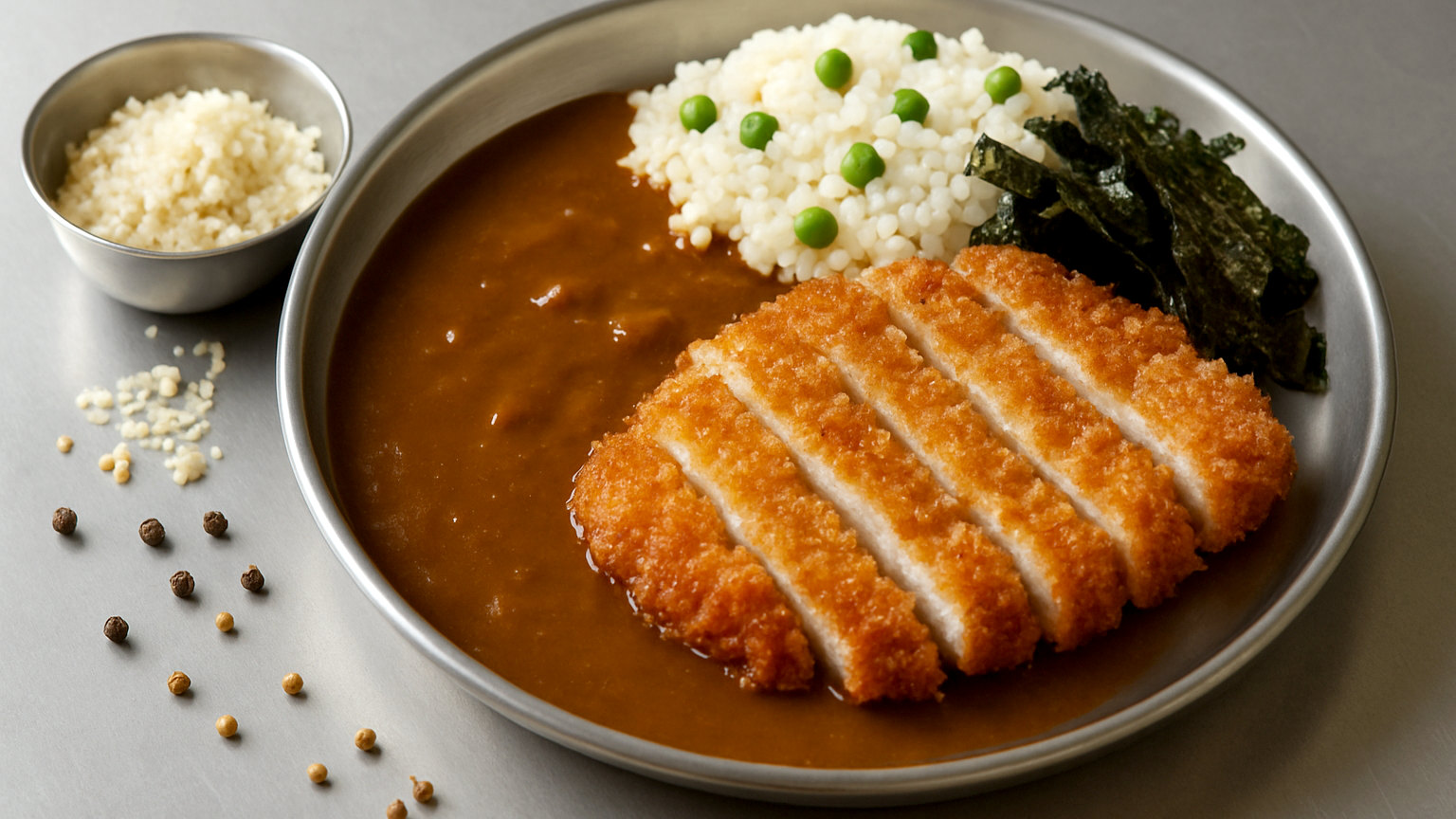
Tempura on top of curry udon is a standard combination in Japanese noodle shops, and it works on the same principle as a katsu beside curry sauce. The crisp element sits above the broth rather than in it, and is eaten before it gives way.
How long does the batter survive?
A minute or two on top of a hot broth, which is why it is placed rather than submerged. The lower edge softens immediately and the top stays crisp, and the intended experience is to eat it fairly quickly.
Some people eat the tempura first and then the noodles. Others let it soften deliberately, and both are entirely normal.
What makes tempura batter light?
Cold and undermixed. Ice-cold water slows gluten development, and deliberately leaving lumps means the batter has almost no elasticity, so it fries into a thin brittle shell rather than a bready coating.
Mix it for a few seconds only, with chopsticks rather than a whisk, and use it within minutes.
Curry udon with tempura
Serves two. Thirty-five minutes.
Ingredients
- One quantity of curry udon broth, from scratch or from leftovers
- 2 portions of udon noodles
- 6 raw king prawns, peeled with tails on, or a mixture of vegetables
- 100g plain flour and 1 tbsp cornflour
- 200ml ice-cold sparkling water
- 1 egg yolk, chilled
- Extra flour for dusting
- Vegetable oil for frying, 5cm depth
- Spring onion and shichimi togarashi to serve
Method
- Make three or four shallow cuts across the underside of each prawn and press flat, which stops them curling.
- Have the broth hot and ready, and the noodles cooked and drained, before you start frying.
- Heat the oil to 180C.
- Whisk the egg yolk into the ice-cold sparkling water, then tip in the flour and cornflour together and mix for 5 seconds only. Lumps are correct.
- Dust each prawn lightly in plain flour, dip into the batter, and lower into the oil.
- Fry for 2 minutes until pale gold and crisp. Tempura should not brown deeply.
- Drain on a wire rack for no more than a minute.
- Divide the noodles between two deep bowls, ladle the broth over, and balance the tempura on top.
- Scatter with spring onion and serve immediately.
Why sparkling water?
The bubbles introduce air into the batter and help it puff as it fries, giving a lighter result. It is not traditional and it works, and plain ice-cold water is perfectly acceptable.
Why should it not brown?
Tempura is meant to be pale gold rather than deep brown, which distinguishes it from most fried food. A deeply browned tempura has been in the oil too long and the batter has gone heavy. Two minutes at 180C is enough.
Can you buy tempura flour?
Yes, and it is sold in Japanese grocers as a pre-mixed blend containing flour, starch and a raising agent. It is reliable and removes the guesswork, and it is what many home cooks in Japan use. Mix it with ice-cold water exactly as you would a scratch batter, and just as briefly.
What vegetables work?
Sweet potato in thin rounds, kabocha in thin wedges, aubergine sliced and fanned, shiitake caps, green beans and shiso leaves are all standard. Cut everything thin, since tempura batter fries in two minutes and anything thick will still be raw inside.
Should the tempura be made first or last?
Last, with everything else already finished and the bowls ready. Tempura begins softening within a minute of leaving the oil, so the broth should be hot, the noodles drained and the bowls waiting before the batter is even mixed. It is the one component that cannot wait.
Can you reuse the oil?
Two or three times if you strain it warm through a fine sieve and store it away from light. Tempura leaves a good deal of loose batter behind, and those fragments burn and darken the next batch. Skim between items as well as straining afterwards.