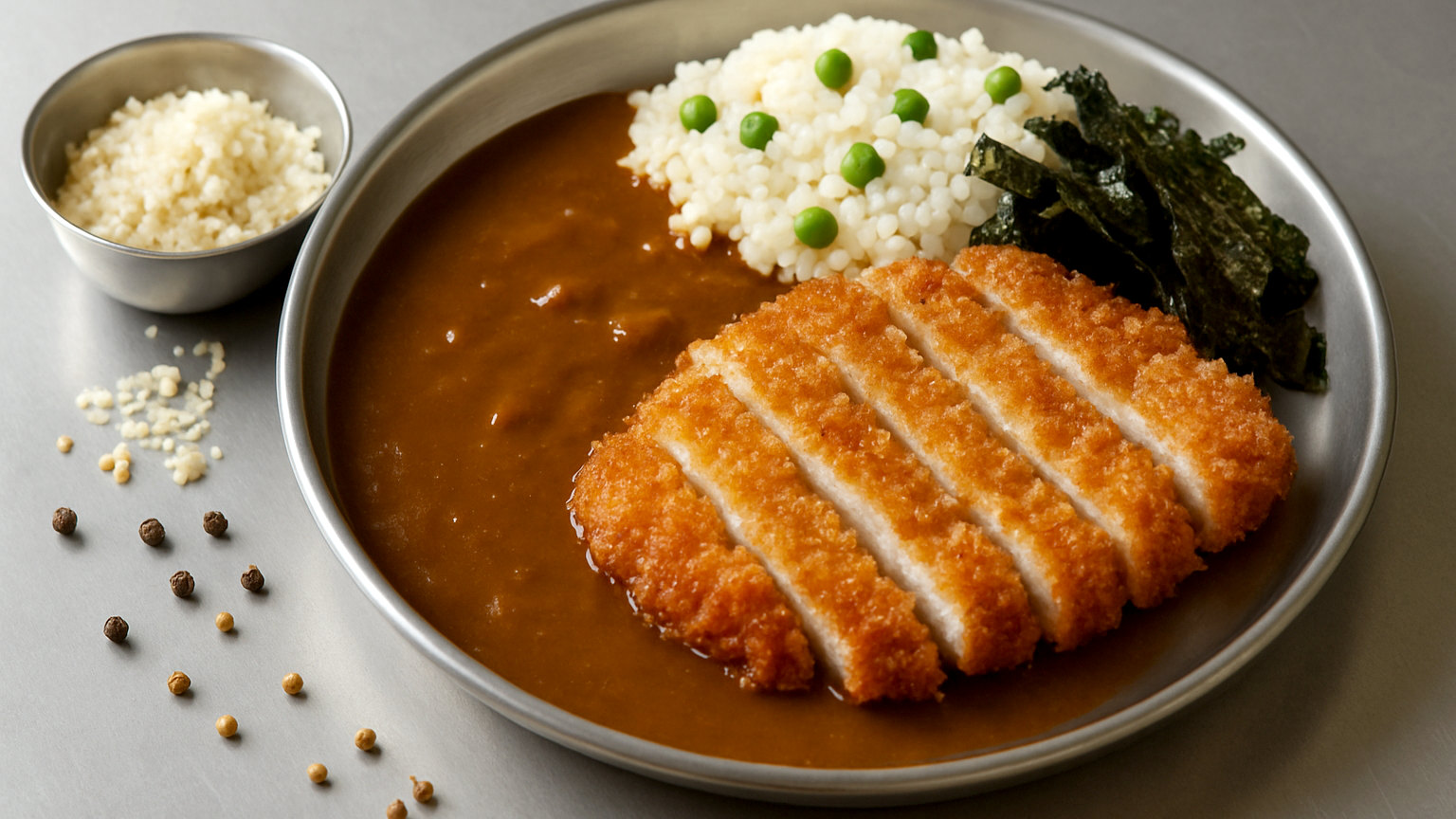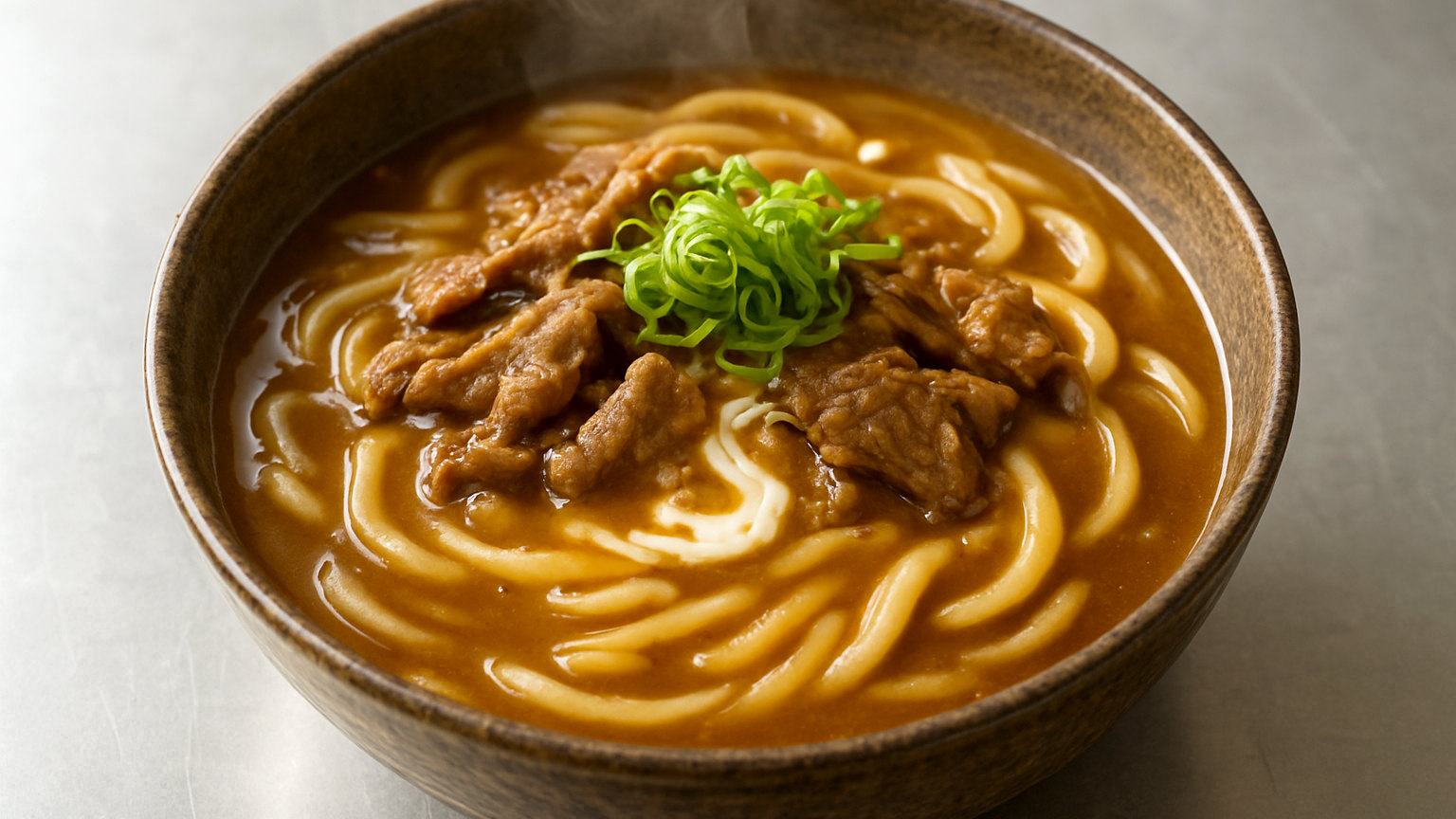
The claim that curry udon is better than the curry it came from sounds like the sort of thing said about leftovers to make them palatable. In this case it holds up, and there are specific reasons.
What does the dashi add?
A savoury dimension that Japanese curry does not otherwise have. Curry rice is built on stock, roux and fruit sweetness. Dashi brings kombu and bonito, which is a different kind of savoury altogether, and the combination is more complex than either alone.
It also pulls the dish back toward Japanese cooking. Curry rice is a borrowed Western form, and adding dashi, soy and mirin puts it into the same family as every other noodle broth in the cuisine.
Why do noodles suit it better than rice?
Because thick udon carry broth along their surface in a way rice does not. Each noodle arrives coated, and the broth clings rather than soaking in and disappearing.
Rice absorbs sauce and swells, which works with a thick curry and would be unpleasant with a thin one. The looser consistency needs something that holds it on the outside.
Does the curry improve overnight anyway?
It does, independently of anything to do with noodles. Japanese curry is widely understood to be better on the second day, since the meat continues absorbing the sauce, the starch settles into a more uniform thickness and the sharper edges of the soy and Worcestershire sauce soften.
So curry udon starts from an already improved base and then adds something to it.
Is there a textural advantage?
A considerable one. Udon are thick, soft and slippery with a distinct chew, and that texture against a warm broth is a large part of the appeal. Curry rice is soft throughout, and the plate has no textural contrast beyond whatever is on top.
What about the vegetables?
This is where it genuinely rescues something. Vegetables in a day-old curry have softened past their best, and in curry udon that matters far less, since the dish is soft by design and nothing is expected to hold its shape.
A curry whose potatoes have collapsed is a disappointing plate of curry rice and a perfectly good bowl of curry udon.
Is it faster?
Ten minutes from a container of leftovers, against forty-five to two hours for the original. Frozen udon cook in under two minutes. It is among the quickest hot meals in the Japanese repertoire.
Do people cook curry to get to it?
Plenty do, and it is a common enough habit to be unremarkable in Japan. Making a large batch of curry on one night with the explicit intention of having curry udon on the next is a normal way to plan two meals from one pot.
Does the thickening change anything?
Curry udon is usually finished with a potato starch slurry, which gives a gloss and a clinging quality the original sauce did not have. That is what lets a thinner broth still coat each noodle, and it is a different texture from a flour-thickened curry sauce.
Is it a restaurant dish or a home one?
Both, which is unusual. It appears on noodle shop menus across Japan as a dish in its own right, made from scratch rather than from leftovers, and it is simultaneously the standard domestic answer to a container of curry in the fridge. Few dishes occupy both positions so comfortably.
Does it suit a different time of day?
It works as a lunch in a way curry rice does not, being lighter and quicker to eat despite the same ingredients. Noodle shops in Japan serve it heavily at midday. A bowl of broth and noodles sits differently from a plate of rice and thick sauce even when the flavour is nearly identical.
Does everyone agree it is better?
Not universally, and people who want the thick sauce and the rice will say the original is the point. What is not disputed is that it is a genuine dish rather than a way of disguising leftovers, which is more than most second-day meals can claim.