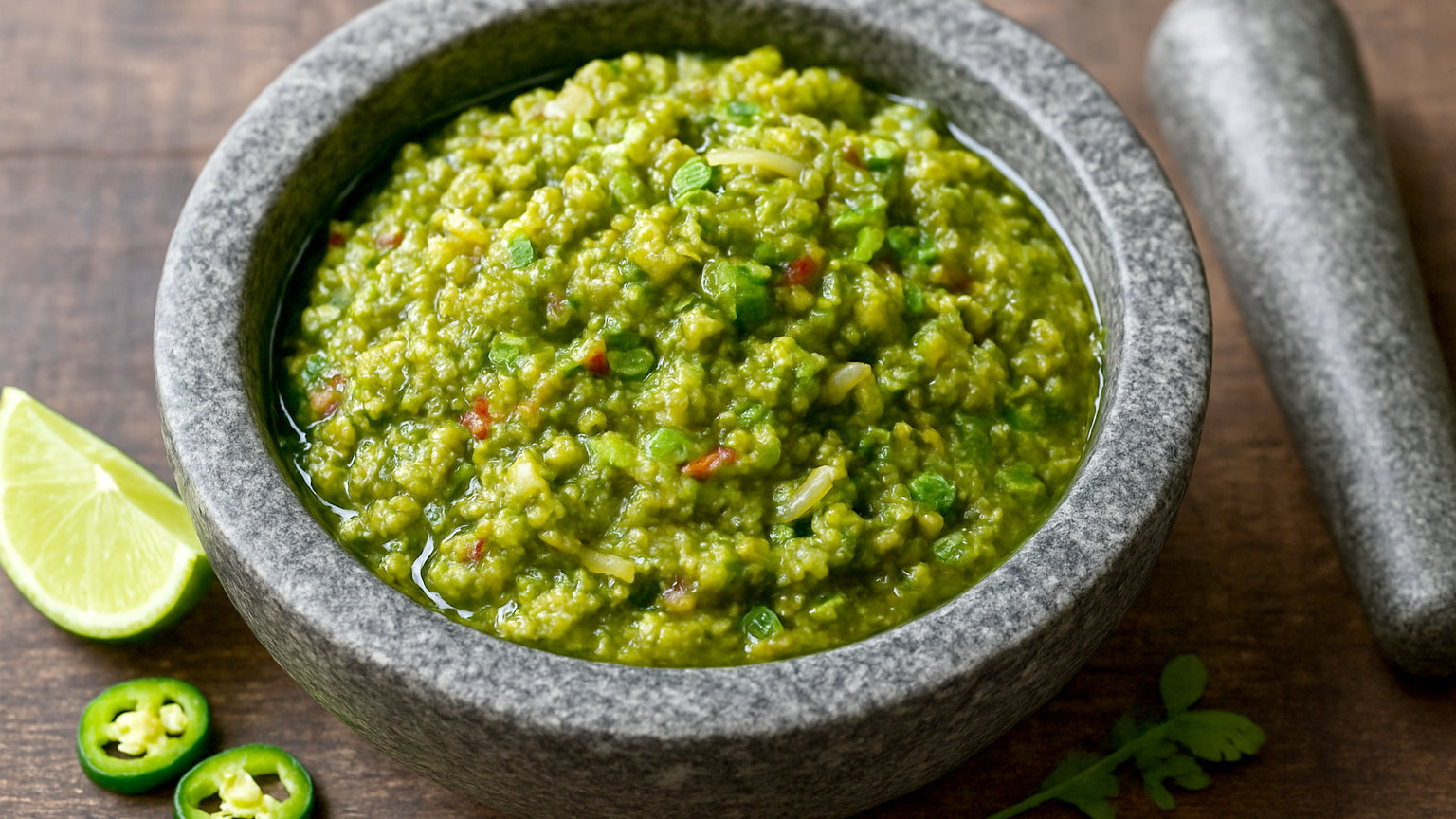
Green curry is usually the hottest of the standard Thai curries, which surprises people who assume red would be fiercer. The explanation is straightforward: green paste is built on fresh green bird eye chillies, and red paste on dried red ones.
How do fresh and dried chillies differ?
A green chilli is an unripe one. As chillies ripen to red they develop sugars and their flavour rounds out, and drying concentrates that sweetness further while adding smoky, raisin-like notes.
Green chillies have none of that. The heat arrives sharp and immediate with a grassy, vegetal quality behind it, and there is no sweetness to soften the edge. At identical capsaicin levels, green reads as hotter because there is nothing else competing for attention.
How many chillies go into a paste?
A traditional green paste uses fifteen to twenty green bird eye chillies for a batch serving eight, which is a great deal. Thai bird eye chillies sit around 50,000 to 100,000 Scoville units, well above a jalapeno and comparable to a cayenne.
Commercial pastes sold in Britain are usually pulled back substantially from that, which is why a jarred green curry is often milder than a restaurant one.
Where do the three main curries sit?
- Green - hottest, sharp and herbal, from fresh green chillies.
- Red - medium, rounder and slightly sweet, from dried red chillies.
- Panang - milder still, thicker and sweeter, with peanut.
- Massaman - mildest of the coconut curries, warm rather than hot.
- Yellow - gentle, turmeric-led.
- Jungle - hotter than green, and without coconut milk there is nothing to soften it at all.
Does the coconut milk mask the heat?
Substantially. Capsaicin is fat-soluble, and full-fat coconut milk binds it and carries it away from the receptors on the tongue. That is why a green curry can contain twenty chillies and still be eaten comfortably.
It also explains why jungle curry, which is essentially the same idea without coconut, is so much fiercer. Remove the fat and the same chilli quantity becomes brutal.
How do you make it milder without losing the character?
Deseed the chillies when making the paste, since a large proportion of the capsaicin sits in the pith around the seeds. You keep the fresh green flavour and lose much of the burn.
Beyond that, use more coconut cream and less thin liquid, since the fat does the buffering. Reducing the paste quantity is the worst option, because you lose the lemongrass, galangal and lime along with the heat and end up with a bland curry rather than a mild one.
How do you make it hotter?
Add fresh green chillies sliced into the pan for the last two minutes, or pound a few extra into the paste. Adding dried chilli or chilli powder is the wrong direction and pushes the flavour toward a red curry.
Is a hotter curry more authentic?
Generally yes, and restaurant versions in Britain are usually toned down considerably from what would be served in Thailand. That said, heat is a matter of preference rather than correctness, and a green curry adjusted to a level you actually enjoy is the right one to cook.
Does the heat build or hit immediately?
Green curry heat arrives fast and fades reasonably quickly, which is characteristic of fresh chilli. Dried chilli heat, as in a red curry, builds more slowly and lingers longer. That difference in timing is as noticeable as the difference in intensity, and it is why the two curries feel distinct even at matched heat levels.
What cools it at the table?
Rice, above all, which dilutes the heat per mouthful and gives the palate a break. Beyond that, anything with fat in it works, since capsaicin dissolves into fat and not into water. A spoonful of extra coconut cream on the plate helps, and so does eating slowly.
Does the paste get hotter with age?
The reverse. Capsaicin is stable but the aromatic compounds around it fade, so an old paste tastes proportionally hotter because there is less lemongrass and lime competing for attention. It has not gained heat, it has lost everything else, which is a useful thing to recognise in a jar that has been open for months.