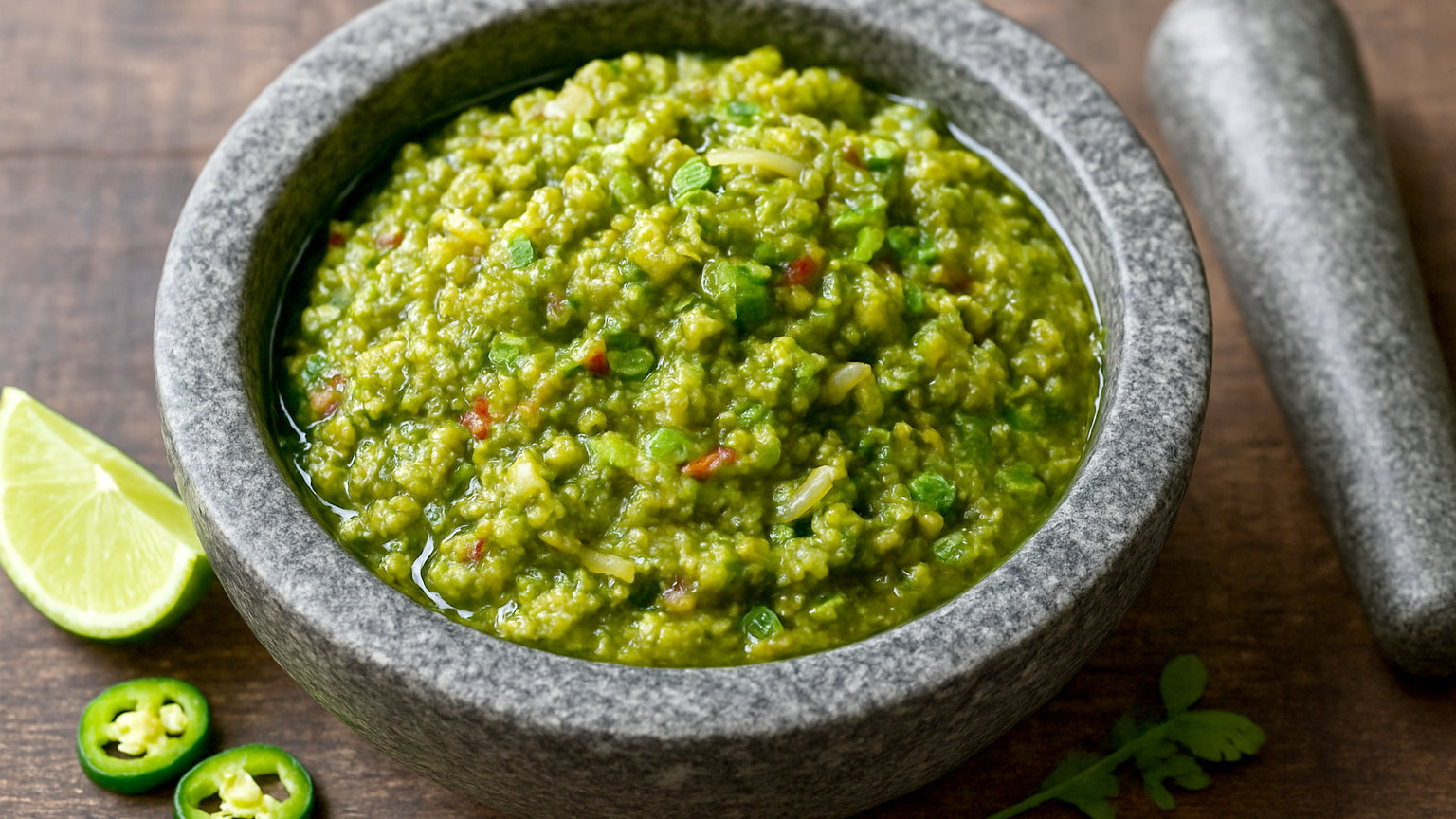
Jungle curry is reliably the hottest thing on a Thai menu, and it is not simply because more chilli goes in. The absence of coconut milk changes how the same amount of chilli behaves, and that is the larger part of the explanation.
What does fat do to chilli?
Capsaicin, the compound responsible for chilli heat, is fat-soluble and barely soluble in water at all. In a coconut curry it dissolves into the cream, which distributes it evenly and, more importantly, carries a good deal of it away from the receptors on the tongue rather than delivering it directly.
In a water-based broth there is nowhere for it to go. It stays suspended and hits the palate at full strength.
How big is the difference?
Substantial enough to catch people out badly. The same paste that makes a comfortable red curry will produce a jungle curry most people find genuinely difficult, and jungle curry uses more paste than a red one rather than less.
Anyone ordering one on the assumption that it will be similar to a green curry is in for a surprise.
Does it use more chilli as well?
Usually. A jungle paste typically carries more chilli than a red one, and the recipe then uses six to eight tablespoons of it where a red curry uses four to six, because there is no cream carrying flavour and the paste has to do everything.
So the heat is compounded: more paste, more chilli within it, and nothing to dampen either.
What about the peppercorns?
Fresh green peppercorns add a second kind of heat entirely. Piperine, the compound in pepper, is different from capsaicin and produces a brighter, sharper, more immediate burn that sits at the front of the mouth.
Having both at once is part of what makes the dish distinctive, and it is also why the heat feels more complex than a straightforwardly chilli-hot curry.
How do you make it manageable?
- Fewer chillies in the paste - the cleanest lever, keeping the aromatics intact.
- Deseed them - a large share of the capsaicin sits in the pith around the seeds.
- More stock - increases volume and dilutes the heat per mouthful.
- More vegetables - same effect, and they belong in the dish anyway.
- Plenty of rice - which is what a Thai table relies on.
What you should not do is add coconut milk, which solves the heat by making it a different dish.
What helps at the table?
Rice above all, and rather more of it than with a coconut curry. Anything with fat in it helps, so a spoonful of yoghurt or a glass of milk works where water does not.
Beer is the usual choice and is less effective than people hope, since the alcohol concentration is too low to dissolve much capsaicin and the carbonation spreads it around.
Is it worth ordering if you dislike heat?
Most kitchens will make it milder if you ask, and it is worth doing rather than avoiding the dish. The herbs, the krachai and the peppercorns are what make it interesting, and a version at half the usual chilli still tastes distinctly like itself.
Does the heat build or hit immediately?
Both at once, which is unusual. The green peppercorns hit fast and sharply at the front of the mouth, and the chilli builds more slowly behind them and lingers. Having two kinds of heat arriving on different timescales is a large part of what makes the dish memorable.
Does it get hotter overnight?
Less than a coconut curry does, since there is no fat for the capsaicin to migrate through. That is one small mercy. What does happen is that the herbs fade while the chilli does not, so the balance tips toward heat even though the total has not changed.
Is it hotter than a phall?
Usually not, since a phall is built to be extreme as a matter of novelty. What makes a jungle curry difficult is different: the heat is real but it sits alongside genuine flavour, so people keep eating it rather than stopping. That combination catches more people out than an obviously punishing dish does.