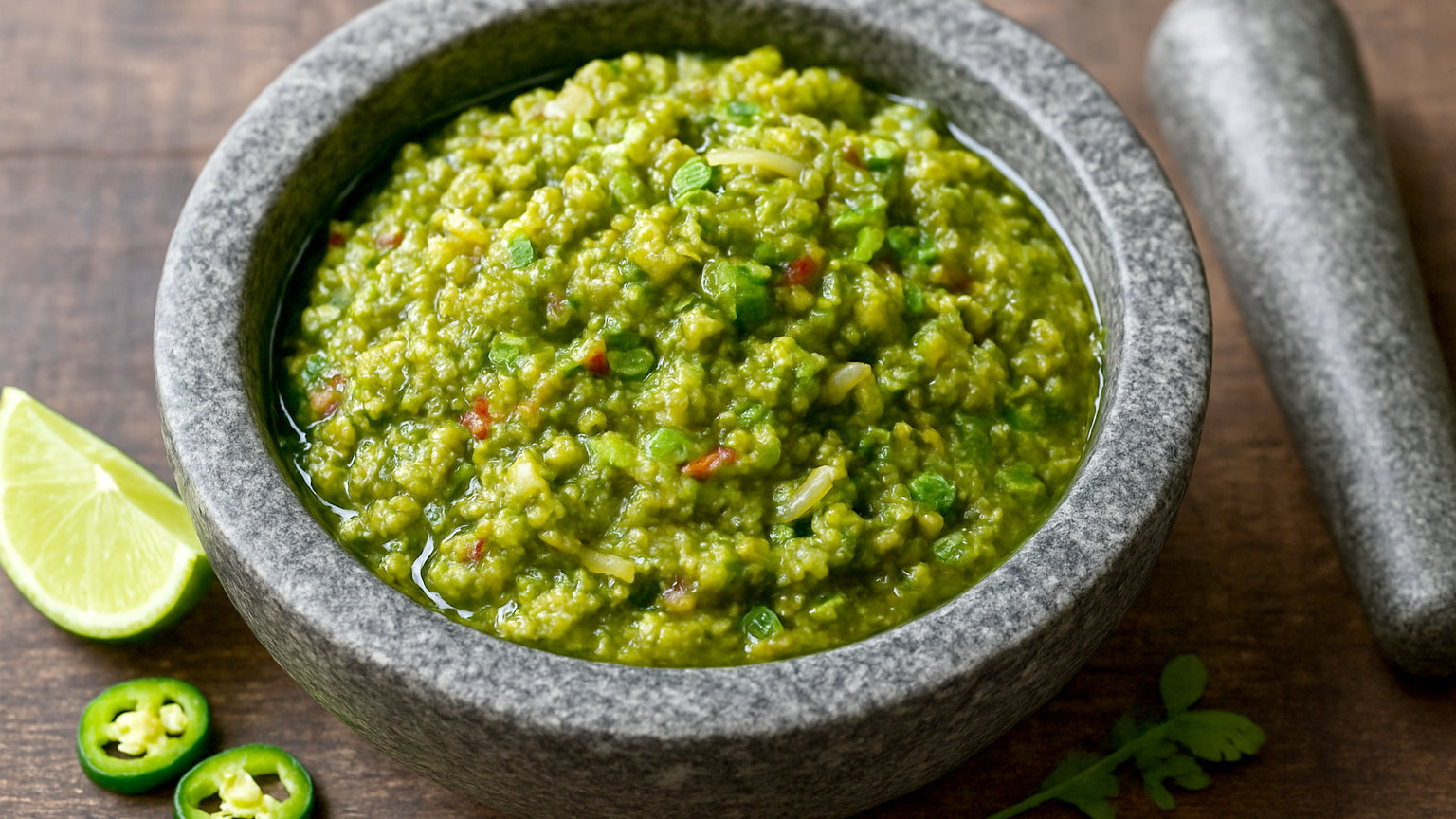
Panang paste is the easiest of the Thai pastes to make once you can make a red one, because it is a red paste with two changes. Roasted peanuts are pounded in, and the kaffir lime is increased while the chillies are pulled back.
What exactly is different?
The peanuts are the defining addition, contributing fat, starch and a roasted savoury depth. They also thicken the paste noticeably, which is where a large part of the finished curry consistency comes from.
Beyond that, fewer small hot chillies since panang should be milder than red, more kaffir lime zest and leaf, and often a little more coriander seed. Some versions include a few peppercorns and a pinch of cumin.
When do the peanuts go in?
Last, after everything else is smooth. Peanuts release oil as they break down, and adding them early makes the mortar slippery so the lemongrass and galangal never get properly crushed.
Grind them separately to a coarse powder if you prefer, then work that into the finished paste. It is easier and the result is much the same.
Panang curry paste
Makes around 240g, enough for two curries serving four. Thirty minutes of work.
Ingredients
- 10 large dried red chillies, deseeded and soaked 20 minutes
- 3 small dried red chillies, soaked with them
- 1 tbsp coriander seeds and 1 tsp cumin seeds
- 1 tsp white peppercorns
- 1.5 tsp salt
- 3 lemongrass stalks, finely sliced
- 30g galangal, finely chopped
- The zest of 2 kaffir limes and 6 lime leaves, finely shredded
- 10 garlic cloves and 5 Thai shallots, chopped
- 2 tbsp coriander roots and stems, chopped
- 1.5 tsp shrimp paste
- 60g roasted unsalted peanuts
Method
- Soak all the dried chillies in hot water for 20 minutes, then drain and squeeze dry. Discard the water, which carries bitterness from the skins.
- Toast the coriander and cumin seeds in a dry pan for 90 seconds until fragrant, cool completely, then grind with the peppercorns.
- Wrap the shrimp paste in foil and toast for 2 minutes a side.
- Pound the drained chillies with the salt until broken down.
- Add the lemongrass and pound until fibrous, which takes several minutes and is the hardest stage.
- Add the galangal, kaffir lime zest and shredded leaves, and pound to a paste.
- Add the garlic, shallots and coriander roots and continue until smooth.
- Work in the ground spices and the toasted shrimp paste.
- Grind the peanuts separately to a coarse powder, then pound them into the paste until fully incorporated.
Should the peanuts be fine or coarse?
Fine in the paste, since anything coarse will not dissolve into the sauce and leaves gritty fragments. Keep a separate handful roughly chopped to scatter over the finished curry, which gives the texture without the grit.
Can you shortcut it from red paste?
Genuinely well, and it is a reasonable weeknight approach. Take four tablespoons of good red curry paste, work in two tablespoons of finely ground roasted peanuts and the finely shredded zest of a kaffir lime or four shredded leaves. The result is close enough that most people would not distinguish it.
How long does it keep?
Ten days refrigerated under a film of oil, which is shorter than other Thai pastes because the peanut oil goes rancid faster than the rest. Frozen in an ice cube tray it keeps four months. Freezing is the better option here.
Why fewer chillies than a red paste?
Because panang is meant to be gentler, and because the concentration amplifies everything. The same chilli quantity in a third of the liquid tastes considerably hotter, so a paste calibrated for a red curry will produce a fierce panang. Three small hot chillies rather than six.
Does the peanut go rancid?
It is the limiting factor on how long the paste keeps. Peanut oil oxidises faster than the other ingredients, so a panang paste lasts around ten days refrigerated where a red one lasts two weeks. Freezing in cubes solves it entirely and is worth doing as a matter of routine.