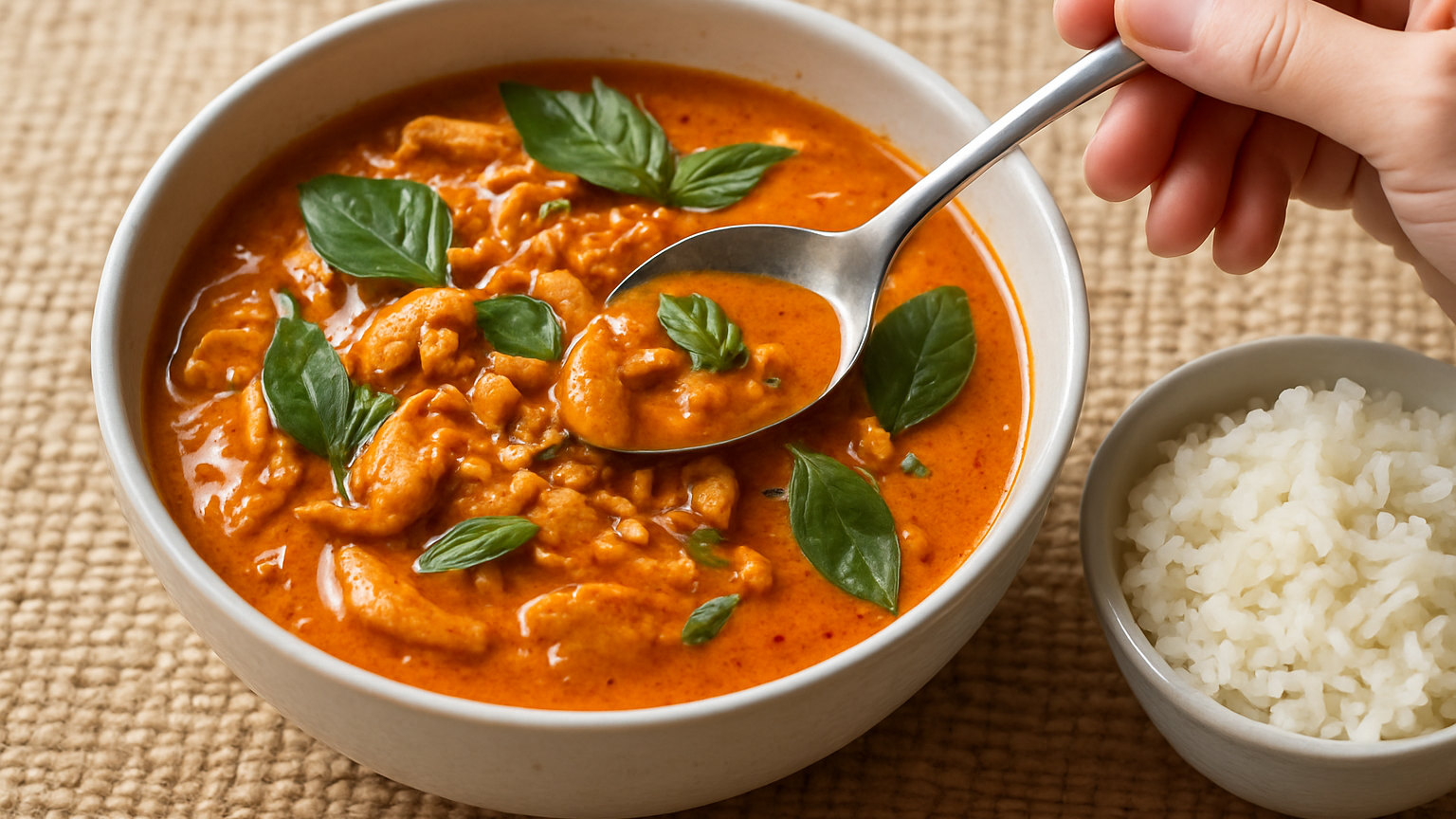
Panang sits between red and massaman on sweetness, and it is meant to be noticeably sweeter than a red curry. The difficulty is that three of its ingredients contribute sugar before you add any, so the palm sugar quantity needs adjusting downward rather than following a red curry recipe.
Where does the sweetness come from?
- Coconut cream - naturally sweet, and panang uses a high proportion of it.
- Roasted peanuts - mildly sweet alongside their savouriness.
- Palm sugar - added deliberately, around a tablespoon and a half for four.
- Red pepper - if used, it adds more than people expect.
- The paste - some commercial panang pastes are sugar-heavy.
Because the concentration is high, all of these register more strongly than they would in a looser curry.
How much palm sugar?
A tablespoon and a half for four portions, which is slightly less than a red curry takes despite panang being the sweeter dish. The peanut and the extra cream make up the difference.
Add it with the fish sauce early in the simmer so it dissolves and integrates, then taste at the end and adjust if needed.
What balances it?
Fish sauce above all, at two to two and a half tablespoons. Salt and sweetness suppress one another, and a panang that tastes cloying is very often under-salted rather than over-sugared.
Lime juice at the end is the second lever and the one most often forgotten. It cuts sweetness directly and lifts the whole dish, and it should go in off the heat so the aroma survives.
Does the kaffir lime help?
Considerably, and it is one of the reasons the shredded leaves matter so much here. Their sharp citrus perfume cuts across the richness in a way that no amount of adjusting the seasoning achieves, and a panang without them tastes noticeably heavier.
How sweet is too sweet?
When sweetness is the first thing you taste and the last thing you are left with. A well-balanced panang should read as rich and rounded, with the salt and the citrus clearly present and the sweetness sitting underneath rather than on top.
If you cannot identify saltiness as a separate sensation, add fish sauce before anything else.
How do British versions compare?
Usually sweeter, sometimes considerably. Restaurant panang in Britain is often made with extra sugar and additional coconut cream to suit local expectations, and jarred pastes tend to follow. A version made to Thai balance will taste sharper and saltier than the takeaway reference point.
Does it get sweeter overnight?
It reads that way, since the volatile citrus and basil notes fade in the fridge while the sugar does not. If you are cooking ahead, be more generous with the fish sauce than feels right at the time, and add fresh lime juice and shredded lime leaf when you reheat.
Which sugar should you use?
Palm sugar, which is less sweet than refined white and carries a caramel depth of its own. The hard disc form needs chopping or grating before it will dissolve. Soft light brown sugar substitutes at around three quarters of the quantity, and white sugar works while contributing nothing but sweetness.
How does it compare to massaman?
Less sweet, and the difference is instructive. Massaman stacks palm sugar, coconut, onion, peanut and potato and relies on tamarind to hold the line. Panang has fewer sweet elements and no tamarind at all, using lime and kaffir lime leaf for its acidity instead.
Can you fix it at the table?
A wedge of lime does more than anything else, cutting the sweetness immediately on a portion-by-portion basis. A bowl of cucumber relish on the table serves the same purpose and lets each person adjust. Both are better than reworking a pan that is otherwise correct.
Does the peanut quantity change it?
Noticeably. Peanuts carry a mild natural sweetness alongside their savouriness, so a panang with five tablespoons in it needs less palm sugar than one with two. If yours tastes cloying, reducing the sugar is the better first move rather than cutting the peanut that defines the dish.