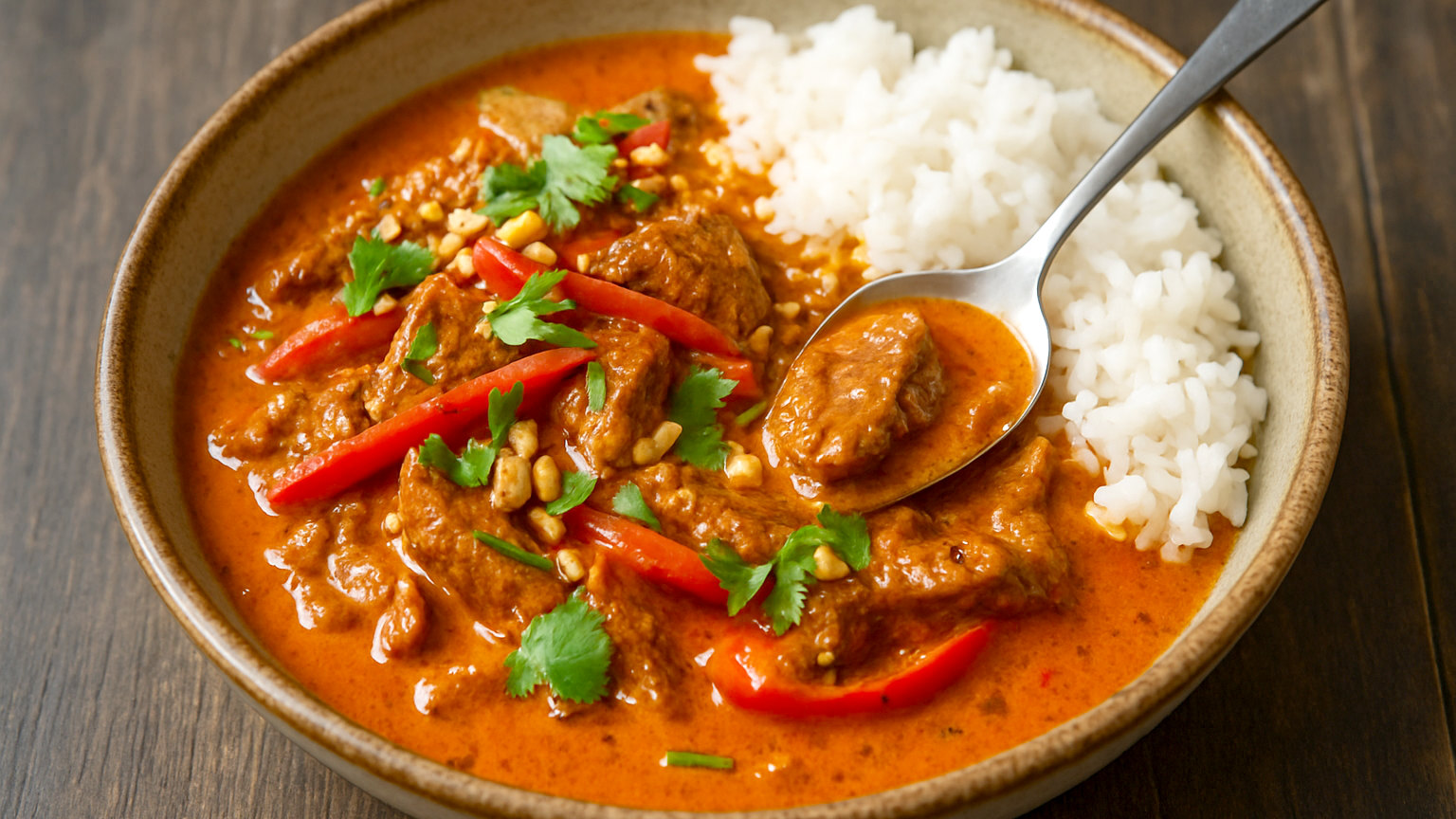
Panang uses fewer vegetables than any other Thai curry, and that restraint is part of the dish. It is meat-led with a modest vegetable element, not a mixed vegetable curry, and the thick sauce makes the choice matter more than usual.
Why does the choice matter more here?
Because a panang uses about a third of the liquid a red curry does, so any water a vegetable releases represents a much larger proportion of the total. A courgette that would go unnoticed in a loose curry can visibly thin a panang.
The dish is also concentrated, which means a strongly flavoured vegetable competes rather than blending in.
Which work best?
- Green beans - the traditional choice, firm, quick and releasing almost nothing.
- Thai aubergine - holds its shape and adds a bitterness that cuts the sweetness.
- Red pepper - colour and sweetness, cut into thick strips.
- Bamboo shoots - texture, and already drained so they add no liquid.
- Long beans - if you can find them, cut into 5cm lengths.
- Kaffir lime leaves - not a vegetable, but the one non-negotiable green element.
Which should you avoid?
Courgette, mushroom and broccoli, all of which release a great deal of water. Spinach and soft greens collapse and add liquid at the same time. Tomato is wrong here in a way it is not in an Indian curry, adding acidity that fights the sweetness.
If you want to use any of them, sear them hard in a separate pan first so the water leaves there rather than in the curry, then fold them in at the end.
How many should you use?
One or two, and that is genuinely enough. A traditional panang might contain nothing but green beans and shredded lime leaves, with the meat and the sauce doing everything else.
British restaurant versions tend toward three or four, and the dish becomes less focused as a result. If you want a vegetable-heavy Thai curry, red or green suits the purpose better.
When should they go in?
After the sauce has reduced and before the protein, which is the reverse of the order in a looser curry. The sauce needs its six to eight minutes of concentrating first, and the vegetables then take three or four minutes in the thickened sauce.
Green beans need four minutes, peppers three, bamboo shoots two, and Thai aubergine eight, which means aubergine goes in earlier than the rest.
Should they be cut large or small?
Large. A thick sauce clings heavily, and small pieces disappear under it entirely. Beans halved rather than chopped, peppers in thick strips rather than dice. The vegetables should be identifiable on the plate.
Can you make it vegetable-only?
Yes, and roasted squash or cauliflower work particularly well because roasting removes water before they meet the sauce. Add them in the last three minutes so they take on the coating without breaking up, and increase the peanut slightly to compensate for the missing meat.
Should they be seasoned separately?
No, and salting them early is counterproductive. Salt draws water out of vegetables by osmosis, which is exactly what a panang cannot afford. The fish sauce in the concentrated sauce seasons them thoroughly in the few minutes they spend in it.
What about adding them raw at the table?
Thinly sliced raw vegetables scattered over work well and are common practice. Raw shredded carrot, sliced spring onion or a few strips of raw red pepper add freshness and crunch without contributing any liquid to the sauce, which solves the problem entirely.
Do any vegetables suit it better than meat?
Roasted squash and cauliflower both work unusually well, because roasting drives off water before they meet the sauce and adds browned surfaces that supply the savoury depth meat would have. Fold them in for the last three minutes so they take the coating without breaking up.
How much vegetable per portion?
Around 75 to 100g of prepared vegetable per person, which is roughly half what a red curry would take. The dish is meat-led and the sauce is concentrated, so a large volume of vegetables both dilutes the sauce and shifts the balance away from what the dish is meant to be.