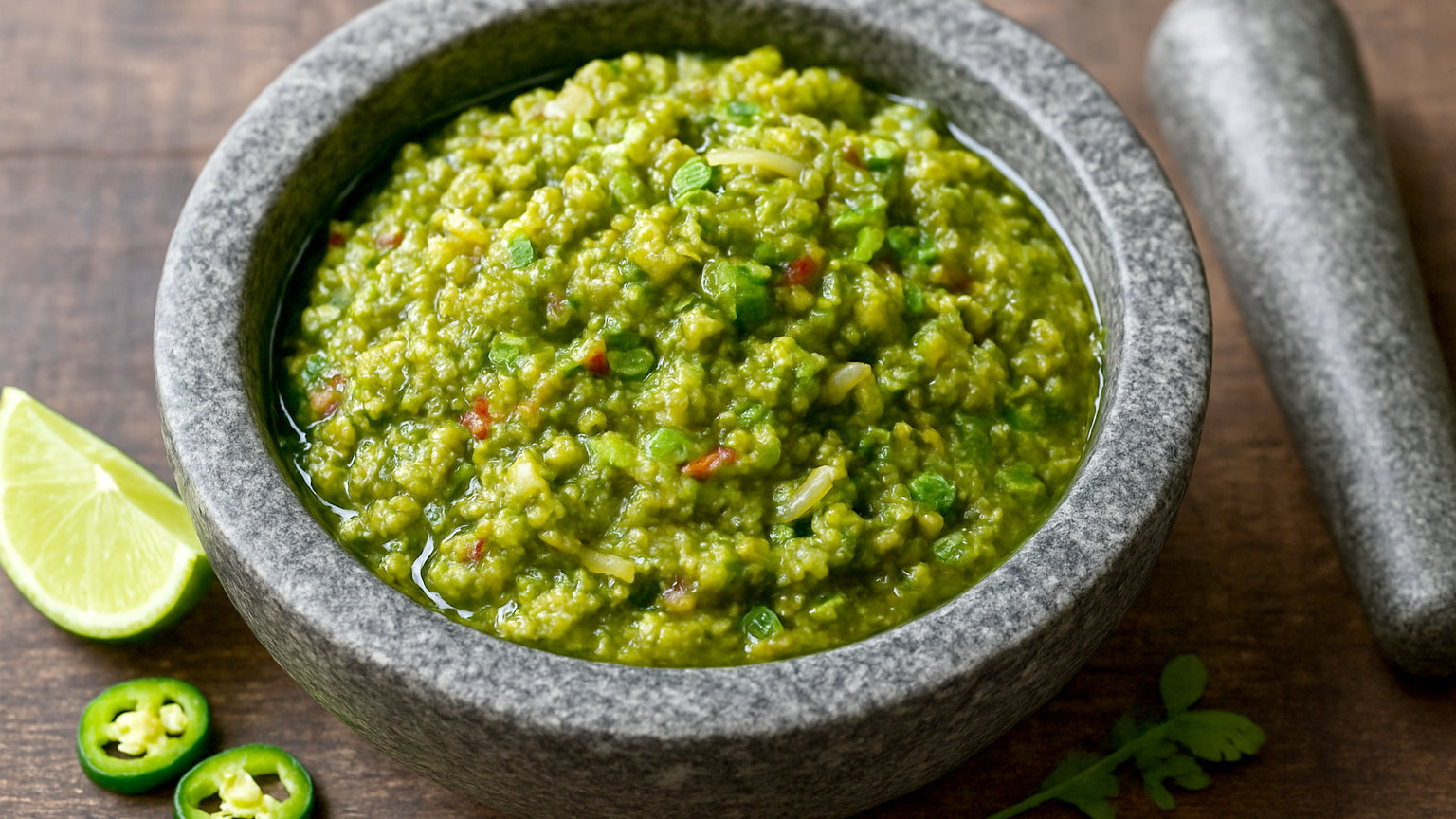
Homemade red curry paste is a different ingredient from a jarred one rather than a better version of the same thing. It is deeper, fruitier and considerably more aromatic, and a single session of pounding gives you enough for two curries.
Why soak the dried chillies?
Because dried chillies are leathery and will not break down properly in either a mortar or a blender. Twenty minutes in hot water softens them completely and lets them collapse into a smooth paste.
Discard the soaking water rather than using it. A good deal of bitterness leaches out of the skins, and adding it back makes the paste harsh.
Mortar or blender?
A heavy granite pestle and mortar gives the better result. Pounding ruptures cell walls and releases oils where a blade cuts and bruises, and the paste comes out drier, smoother and more intensely aromatic.
A small blender works and is far quicker. Chop everything finely first, and expect a wetter, coarser paste that may need a splash of water to get the blades moving.
Red curry paste
Makes around 220g, enough for two curries serving four. Twenty-five minutes of work.
Ingredients
- 12 large dried red chillies, deseeded and soaked 20 minutes
- 6 small dried red chillies, soaked with them, adjusted to taste
- 1 tbsp coriander seeds and 1 tsp cumin seeds
- 1 tsp white peppercorns
- 1.5 tsp salt
- 3 lemongrass stalks, tough outer layers removed, finely sliced
- 30g galangal, peeled and finely chopped
- The zest of 2 kaffir limes, or 6 lime leaves finely shredded
- 10 garlic cloves and 5 Thai shallots, chopped
- 2 tbsp coriander roots and stems, finely chopped
- 1.5 tsp shrimp paste
Method
- Soak all the dried chillies in hot water for 20 minutes, then drain and squeeze dry. Discard the water.
- Toast the coriander and cumin seeds in a dry pan for 90 seconds until fragrant, cool completely, then grind with the peppercorns.
- Wrap the shrimp paste in foil and toast for 2 minutes a side, which mellows it considerably and contains the smell.
- Pound the drained chillies with the salt first, since salt acts as an abrasive and helps everything break down.
- Add the lemongrass and pound until fibrous and broken. This is the hardest stage and takes several minutes.
- Add the galangal and kaffir lime zest and pound to a paste.
- Add the garlic, shallots and coriander roots and continue until smooth.
- Work in the ground spices and toasted shrimp paste until you have a uniform paste with no visible fibres.
Why that order?
Hardest and driest first, softest and wettest last. Lemongrass and galangal are woody and need the most work, and doing them while the mortar is still relatively dry gives the friction to break them down. Add the wet shallots early and everything slides around instead of being crushed.
How do you know when it is finished?
When there are no visible fibres of lemongrass and the paste holds together as one mass. Rub a little between finger and thumb, and it should feel smooth rather than stringy. Under-pounded paste leaves woody threads in the finished curry that are unpleasant to eat.
How long does it keep?
Two weeks in the fridge under a film of oil, and six months frozen. Freeze it in an ice cube tray and two or three cubes is a portion for four, which turns one session of pounding into several dinners.
Can you make it without shrimp paste?
Yes, and a teaspoon of light miso or a tablespoon of fermented bean curd stands in reasonably. Both supply the fermented savoury depth that shrimp paste provides. The paste is slightly lighter as a result and the difference is hard to identify without a direct comparison.
Why toast the shrimp paste?
Raw shrimp paste is pungent to the point of being difficult, and toasting mellows it into something rounded and savoury. Wrapping it in foil first contains the smell, which is otherwise considerable and lingers in a kitchen for hours afterwards.