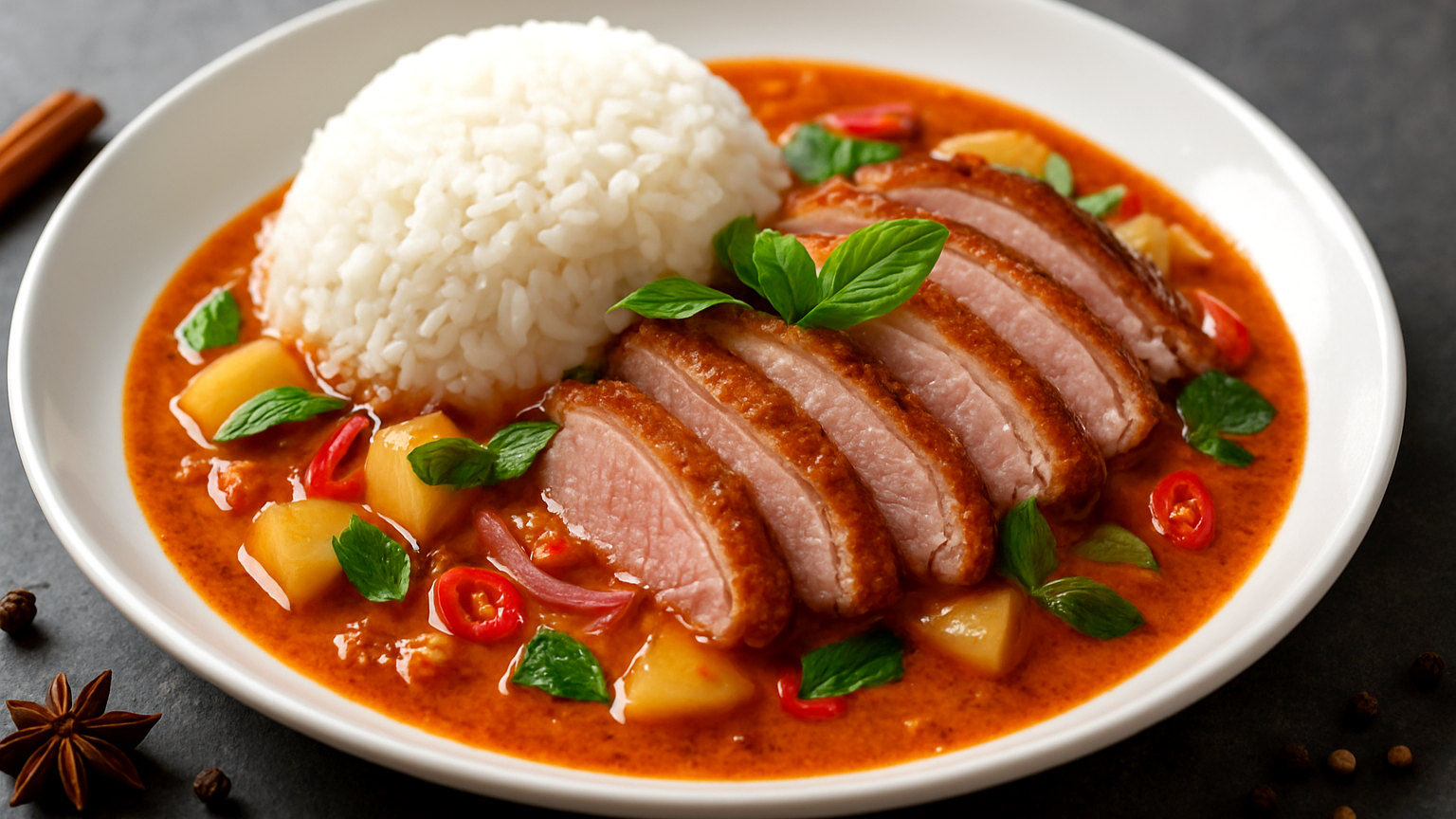
Red curry with duck is one of the great Thai combinations. The paste is deep and fruity enough to stand up to a rich meat, and the traditional addition of pineapple or lychee cuts through the fat in a way that vegetables would not.
Why use cooked duck?
Because duck breast simmered raw in a coconut sauce goes grey and tough, and the skin turns flabby. In Thailand the dish is generally made with roast duck bought from a shop, added to the finished sauce at the end.
At home you can roast or pan-fry the breasts separately, rest them, slice them, and add them for the final two minutes. The skin stays crisp for a while and the meat stays pink.
Pineapple or lychee?
Either, and both are traditional. Pineapple is sharper and more assertive, cutting the richness firmly. Lychee is floral and gentler, adding perfume alongside the sweetness. Cherry tomatoes appear in some versions and do a similar job.
Whichever you use, add it late. Ten minutes of simmering turns pineapple mushy and strips lychee of its perfume entirely.
Thai red duck curry
Serves four. Fifteen minutes of preparation and thirty minutes of cooking.
Ingredients
- 3 duck breasts, skin on, around 550g total
- Two 400ml tins of full-fat coconut milk, unshaken
- 5 tbsp red curry paste
- 2.5 tbsp fish sauce and 1.5 tbsp palm sugar
- 6 kaffir lime leaves, torn
- 250g fresh pineapple, in 2cm chunks, or a 400g tin of lychees, drained
- 150g cherry tomatoes, halved
- 80g bamboo shoots, drained
- 2 long red chillies, sliced on the diagonal
- A large handful of Thai basil
- Juice of half a lime
Method
- Score the duck skin in a diamond pattern without cutting into the meat, and season with salt.
- Put the breasts skin down in a cold dry frying pan and turn the heat to medium. Cook for 8 to 10 minutes as the fat renders out, pouring it off as it collects.
- Turn and cook for 3 to 4 minutes on the flesh side, then rest on a board for 10 minutes.
- Meanwhile spoon the thick cream from the unshaken tins into a wide pan, reserving the thin liquid.
- Heat the cream for 4 to 6 minutes until it splits and clear oil separates at the edges.
- Add the curry paste and fry hard for 3 to 4 minutes, stirring constantly, until it darkens and smells strongly aromatic.
- Add the reserved coconut liquid, fish sauce, palm sugar and lime leaves, and simmer gently for 8 minutes.
- Add the pineapple or lychees, the cherry tomatoes and the bamboo shoots, and cook for 4 minutes.
- Taste and adjust the balance now, since the duck goes in last.
- Slice the rested duck 1cm thick and add it with any resting juices. Warm through for 2 minutes only.
- Off the heat, stir in the chilli, Thai basil and lime juice, and serve.
Why start the duck in a cold pan?
Because duck skin carries a thick fat layer that needs time to render, and a cold start gives it that time before the meat overcooks. Dropping duck into a hot pan seizes the skin and traps the fat underneath, leaving it flabby.
What should you do with the rendered fat?
Keep it. Strained into a jar it lasts months in the fridge and makes the best roast potatoes available. Do not add it to the curry, which already has plenty of coconut oil in it.
Can you use other duck?
Shop-bought roast duck is the traditional route and by far the easiest, and a Chinese roast duck bought whole gives excellent results. Strip the meat, add it at the end, and use the carcass for stock. Confit duck leg also works well, shredded and warmed through in the sauce.
Does the skin stay crisp?
Not for long in a wet sauce, which is worth accepting. Some cooks serve the sliced duck on top of the curry rather than stirred in, which keeps the skin crisp until it is eaten. It is a presentation choice rather than a traditional one, and it works.