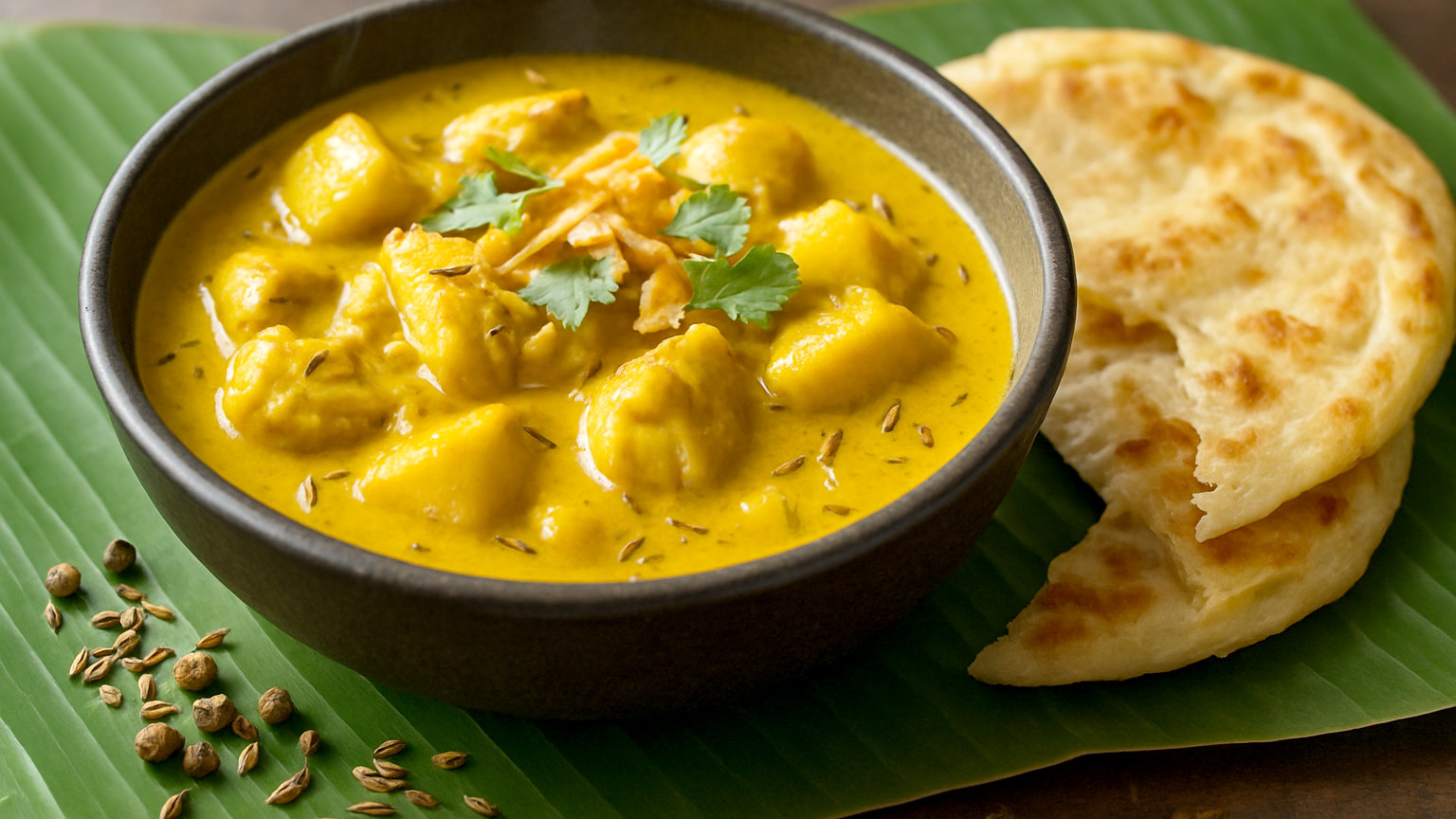
Yellow curry already contains potato and onion, which changes what belongs beside it. It needs less starch than a green or red curry and rather more in the way of sharpness, since there is little heat or acidity in the dish itself.
How much rice?
Around 60 to 75g of dry jasmine rice per person, which is less than the 75 to 90g a sauce-only curry would take. The potato is supplying part of what rice normally does, and a full portion of both makes for a heavy plate.
Jasmine rather than basmati, since its softer grain suits a coconut sauce better than a dry separate one.
Does bread work?
Better than with most Thai curries, and roti is eaten with yellow curry in southern Thailand and Malaysia. The flaky slightly sweet flatbread suits the gentle spicing, and this is one of the few Thai curries where bread is genuine rather than an import.
An Indian paratha substitutes closely enough if roti is unavailable.
What sharp thing should be on the table?
Ajad, the Thai cucumber relish, and it matters more here than with a hot curry. A mild, sweet, gently spiced dish has nothing internal to cut through it, so the contrast has to come from the side.
Thinly sliced cucumber, shallot and red chilli in rice vinegar with a little sugar and salt, left to sit for fifteen minutes. It takes five minutes to make and transforms the plate.
What else suits it?
- Cucumber relish - the traditional and most useful accompaniment.
- Stir-fried greens - morning glory or pak choi with garlic, for bitterness and crunch.
- A sharp green salad - dressed with lime, fish sauce and a little sugar.
- Fried shallots - scattered over the curry for texture.
- Sliced fresh chilli - on the table so adults can adjust their own heat.
What should you avoid?
A massaman alongside, which gives you two mild potato curries and no contrast whatever. Anything else built on coconut cream duplicates rather than complements.
Extra potato in any form is unnecessary. If you are cooking a second dish, make it thin, sharp and hot.
Is it a good curry for a mixed table?
One of the best, since the mildness suits children and cautious eaters while a bowl of sliced chilli or a bottle of sriracha lets everyone else adjust upward. That is standard practice in Thailand rather than a compromise.
What should you drink?
Something with acidity to lift a gentle dish. A dry riesling works well, as does a crisp sauvignon blanc. Cold lager is the everyday choice.
Because it is mild, tannic red wine is far less of a problem than with a hot curry, and a light low-tannin red is a reasonable match. Iced tea with lime does the same job without alcohol.
Does it work as a leftover?
Better than most Thai curries, since the flavour rests on ground spices rather than volatile fresh herbs. It keeps three days refrigerated and thickens as the potato continues absorbing. Loosen it with a splash of coconut milk when reheating and add fresh lime.
What makes a good full menu?
A yellow curry, a cucumber relish, a stir-fried green vegetable and a modest quantity of jasmine rice. That covers mild against sharp and soft against crisp. Add a clear soup if you want a fourth dish, and keep anything else off the coconut.
How does it suit a shared table?
Well, since its mildness means it does not overwhelm anything served alongside it. A yellow curry, a hot sharp dish and a stir-fried vegetable gives every eater somewhere to go, and the gentle one anchors the table rather than competing with the rest.
Does it need a starter?
Something sharp if anything. A green papaya salad or a light clear soup prepares the palate better than anything fried or creamy, since the curry that follows is gentle and rich. Prawn crackers and satay both add fat before a dish that already has plenty.