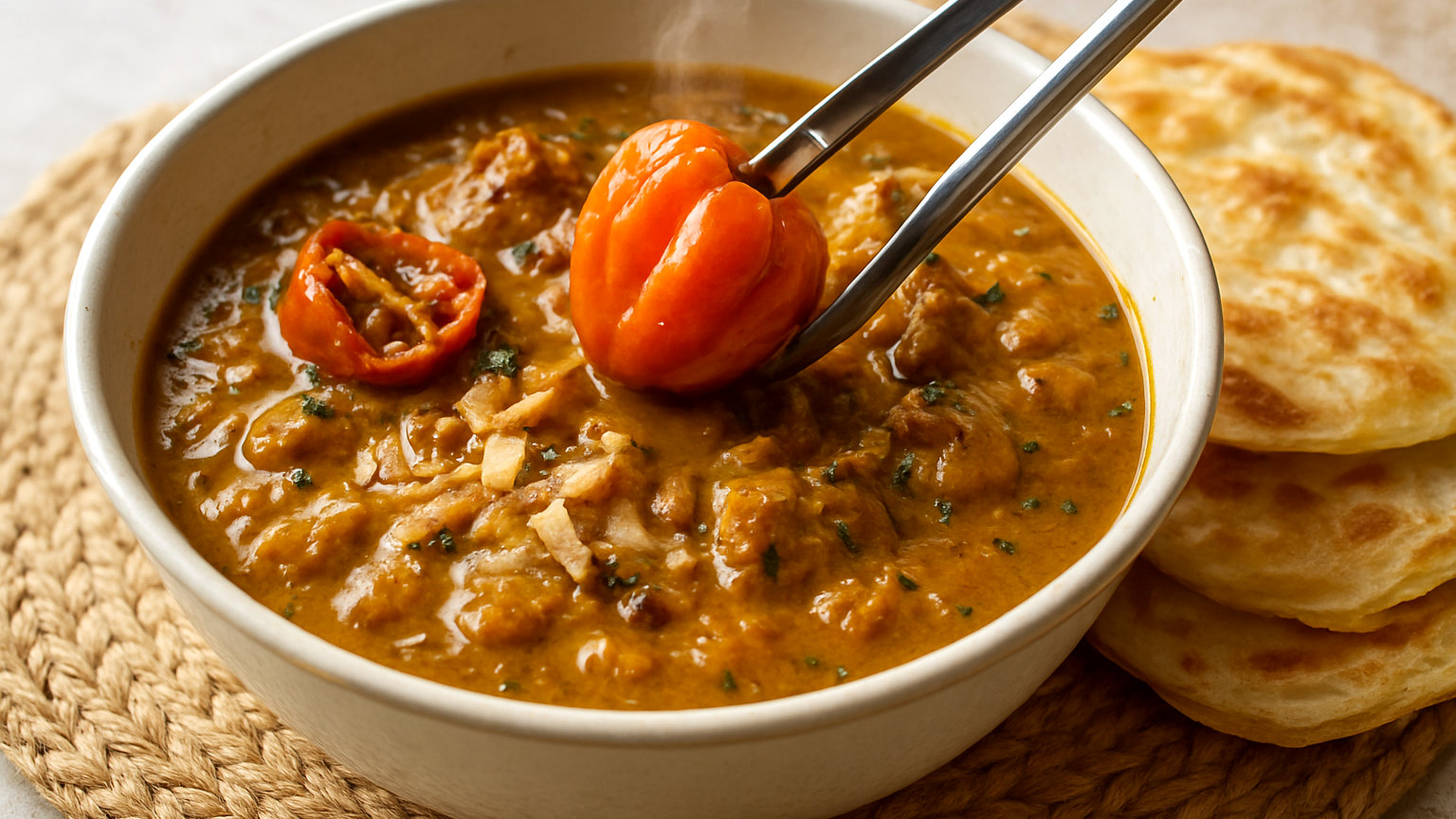
The Swahili coast running from Somalia down through Kenya and Tanzania has its own curry tradition, shaped by a thousand years of Indian Ocean trade. It uses coconut and tamarind heavily and is lighter and sharper than South African cooking.
How does it differ from South African curry?
Coconut milk is central rather than absent, which immediately separates it from Durban cooking. Tamarind and lime provide sourness. The spicing is moderate, closer to a coastal South Indian curry than to anything from the Cape.
The word for curry along the coast is mchuzi, which simply means sauce or gravy in Swahili.
Which fish?
Firm white fish in large pieces, since the sauce is loose and offers no support. Kingfish and red snapper are traditional. Monkfish, cod loin or any firm fish works, and delicate flat fish falls apart.
Kenyan coconut fish curry
Serves four. Fifteen minutes of preparation and twenty-five minutes of cooking.
Ingredients
- 700g firm white fish, in 4cm pieces
- Juice of 1 lime and 1 tsp salt for the fish
- 3 tbsp vegetable oil
- 1 tsp cumin seeds and 1 tsp mustard seeds
- 2 onions, finely sliced
- 5 garlic cloves and 3cm ginger, crushed
- 2 green chillies, split
- 1.5 tsp ground coriander, 1 tsp ground cumin, 1 tsp turmeric
- Half tsp chilli powder and half tsp ground cinnamon
- 3 tomatoes, chopped
- 1.5 tbsp tamarind paste
- 400ml coconut milk
- Fresh coriander and lime wedges to serve
Method
- Toss the fish with the lime juice and salt and set aside for 15 minutes.
- Heat the oil and fry the cumin and mustard seeds until the mustard pops.
- Add the onions and cook for 10 minutes until soft and golden.
- Add the garlic, ginger and green chillies and cook for 3 minutes.
- Add the ground spices and fry for 60 seconds with a splash of water.
- Add the tomatoes and cook for 8 minutes until collapsed.
- Add the tamarind and coconut milk and simmer gently for 6 minutes. Do not boil hard.
- Taste and adjust the salt fully now.
- Lower the heat so the surface barely moves, lay the fish in a single layer and cook for 6 minutes without stirring.
- Finish with fresh coriander and serve with lime wedges.
Why marinate the fish in lime?
It seasons the fish directly rather than relying on the sauce, and the acidity firms the surface slightly so the pieces hold together better. Fifteen minutes is enough, and longer begins to cure the fish rather than season it.
What is it served with?
Coconut rice, chapati or ugali. The coast has a strong chapati tradition inherited from the same Indian Ocean trade that brought the spices.
Should you use tinned or fresh coconut milk?
Coastal cooking traditionally presses fresh coconut and produces both thick and thin milk, in the same way Sri Lankan cooking does. A tin works perfectly well. Look for a high coconut percentage and avoid light versions, which lack the fat the sauce depends on.
What is mchuzi mix?
A commercial curry powder sold across East Africa and used constantly in home cooking. It is a straightforward blend of coriander, cumin, turmeric and chilli, closer to a mild Indian curry powder than to a Durban masala, and it is a reasonable shortcut for this dish.
Can you use prawns instead?
Very well, and prawn curry is at least as common on the coast. Add them for three or four minutes at the end, until they form a loose C. Crab is traditional too, cooked in the shell, and is worth doing if you can get it.
How thick should the sauce be?
Loose and pourable, closer to a soup than to a thick gravy. Swahili coast curries are generally thinner than South African or Indian ones, and the sauce is meant to be spooned over rice and absorbed rather than to coat. If it has reduced too far, loosen it with water.
Is tamarind essential?
The sourness is, and lime juice covers most of it if tamarind is unavailable. Use the juice of a whole lime added off the heat in place of the tamarind paste. What you lose is a little depth, since tamarind carries a fruity darkness lime does not.