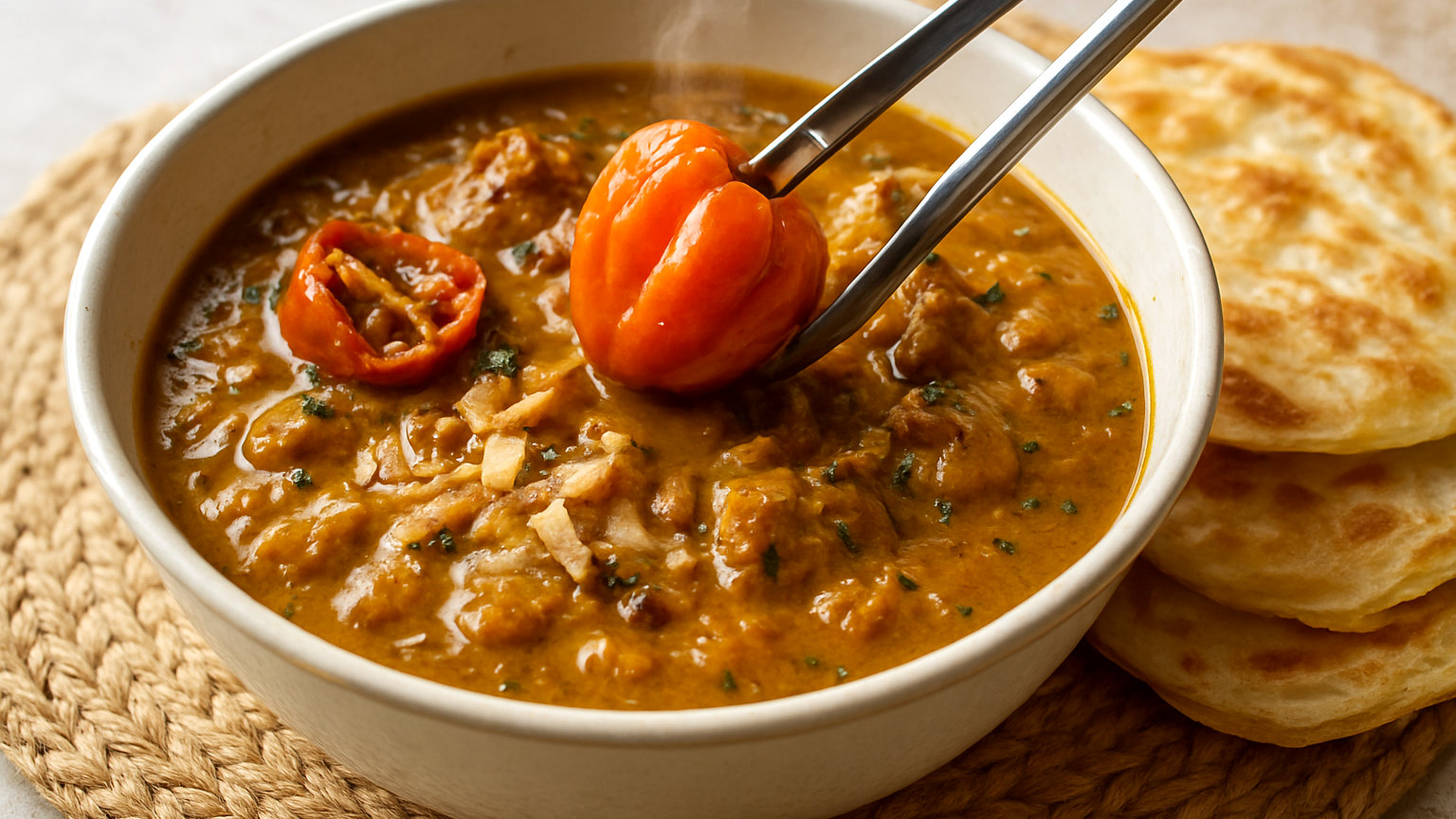
Dried apricots, sultanas and a spoonful of jam appear in a great many South African curries, which surprises people who associate fruity curry with British restaurant cooking. The origin here is quite different and considerably older.
Where does the sweetness come from?
The Cape Malay tradition, brought by people from the Indonesian archipelago and Malaysia from the seventeenth century onward. South East Asian cooking works on a sweet-sour balance, and that habit travelled with them.
What changed at the Cape was the ingredients available. Palm sugar and tamarind gave way to orchard fruit, cane sugar and vinegar.
Why dried fruit specifically?
The Western Cape grows stone fruit in quantity and has done for centuries, and drying was the standard way of keeping it. Dried apricots, peaches and raisins were the pantry staples available year round.
They also break down in a long-cooked dish, thickening the sauce as well as sweetening it.
What balances it?
Vinegar, which is the crucial partner and the thing most often left out by people cooking these dishes for the first time. Brown vinegar in a bobotie or a Cape Malay curry does the job tamarind does in Indonesian cooking.
Without it the dish is merely sweet. With it, the sweetness sits inside a proper sweet-sour structure.
Is it the same as British fruity curry?
No, and the difference matters. British curry-house sweetness comes largely from sugar and cream added to appeal to local taste, arriving in the twentieth century. Cape Malay sweetness is structural, inherited from a tradition that has always balanced sugar against acid.
Which dishes carry it?
- Bobotie - apricots, sultanas and jam in the mince.
- Cape Malay chicken curry - dried apricots cooked into the sauce.
- Denningvleis - a sour lamb stew balanced with sugar.
- Yellow rice - cooked with raisins and cinnamon.
- Fruit chutney - served alongside almost everything.
Does Durban cooking use it?
Barely, and this is one of the clearest lines between the two traditions. Durban curry is savoury, hot and sour with no deliberate sweetness at all. Fruit chutney may appear on the table as a condiment rather than in the pot.
How much is right?
Around 100g of dried apricots and 50g of sultanas in a curry serving four, with a tablespoon of jam. Enough to be clearly present without the dish tasting like a dessert, and always with vinegar alongside it.
Does it appear in Durban cooking at all?
Almost never in the pot. Fruit chutney appears on the table as a condiment alongside a Durban curry, which is a different thing from cooking apricots into the sauce. The two traditions are quite clear about this and a Durban cook would find fruit in the curry itself strange.
Which fruit works best?
Dried apricots above all, since they hold their shape while partly dissolving and their sharpness carries some acidity of its own. Sultanas and raisins add sweetness without body. Dried peaches are traditional in the Cape and harder to find in Britain.
Is fresh fruit ever used?
Rarely in the curry itself, since fresh fruit releases water and collapses. Where it appears is alongside, as sliced banana among the sambals, which is standard with a Cape Malay meal and serves the same sweet cooling purpose.
Does the sweetness make it a beginner dish?
It makes it approachable for anyone cautious about heat, which is a fair reason to start there. It is not simplified cooking, and the sweet-sour balance takes as much judgement as a hot curry does. Getting the vinegar right is the difficult part rather than anything to do with spice.
Does the sugar go in as well?
Often a spoonful alongside the fruit, and the jam does much the same job. What matters is that the total sweetness is judged against the vinegar rather than added to a fixed recipe quantity. Dried apricots vary enormously in sweetness, so tasting is more reliable than measuring.
Is chutney part of the same thinking?
Directly. South African fruit chutney is sweeter and smoother than an Indian mango chutney and appears on tables constantly, including alongside Durban curries that contain no sweetness themselves. The taste for sweet against savoury runs well beyond the Cape Malay pot.