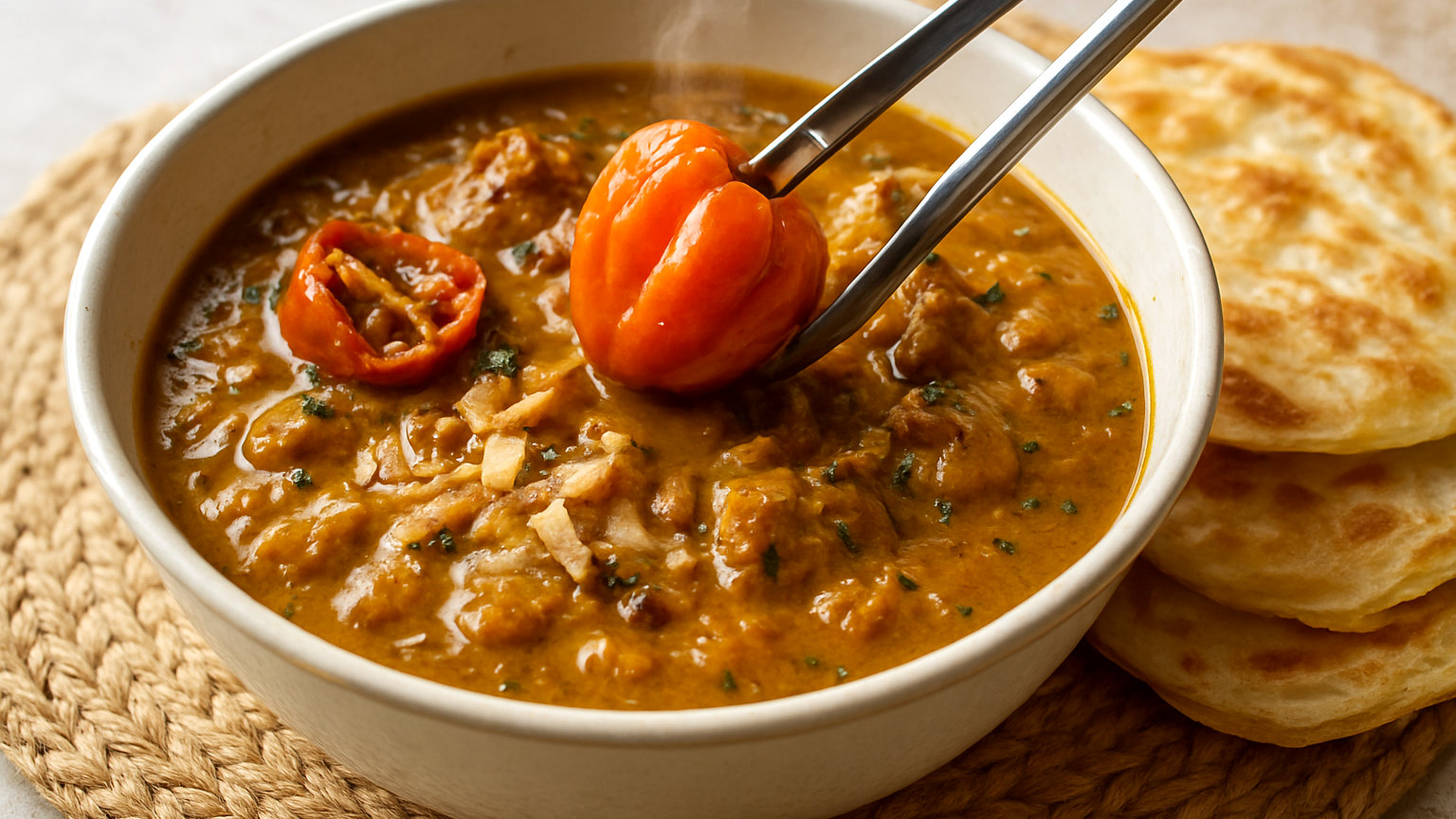
Dhansak on a British menu is a sweet and sour lentil curry, usually with pineapple. It shares a name and a lentil base with the Parsi original and very little else, and it is one of the most ordered dishes in the country.
What makes it sweet and sour?
Sugar or pineapple on one side and lemon juice on the other, in deliberate balance. Neither should dominate, and a dhansak that is merely sweet has been badly made.
Curry house dhansak
Serves one generously or two modestly. Twelve minutes, plus the lentils.
For the lentils
- 150g red lentils, rinsed
- 500ml water and half tsp turmeric
For the curry
- 3 tbsp vegetable oil
- 1 tsp garlic and ginger paste
- 1 tbsp tomato paste, thinned
- 1 tbsp mix powder and 1 tsp Kashmiri chilli powder
- Half tsp ground cumin
- 300g pre-cooked chicken or lamb
- 350ml base gravy, hot
- 200g cooked lentils from above
- 2 tbsp tinned pineapple, chopped small, plus 1 tbsp of its juice
- 1 tsp sugar and 2 tsp lemon juice
- Half tsp salt, half tsp garam masala, fresh coriander
Method
- Simmer the lentils in the water with the turmeric for 18 minutes until collapsed. Set aside.
- Heat the oil in a wide pan over a high heat until shimmering.
- Add the garlic and ginger paste for 20 seconds, then the tomato paste, mix powder, chilli powder and cumin. Fry for 30 seconds with a splash of water.
- Add half the base gravy and reduce hard for 2 minutes.
- Add the meat and turn through for 1 minute.
- Add the lentils, the remaining gravy and the salt. Cook for 3 minutes, stirring, until thick.
- Add the pineapple, its juice and the sugar. Cook for 1 minute.
- Take off the heat, add the lemon juice, garam masala and coriander, and taste.
- Adjust with more lemon or sugar until the two are in balance.
How thick should it be?
Thick, since the lentils are doing a good deal of the work. It should mound on a spoon rather than running, which is one of the things that distinguishes it from a standard curry.
Is pineapple traditional?
Not in the Parsi dish, and it is entirely standard in the British one. Some restaurants leave it out and use sugar and lemon alone, which is arguably closer to a sweet and sour balance without the fruit.
Which meat suits it?
Lamb traditionally, and chicken is more commonly ordered. The lentils give the dish enough body that either works. Prawn dhansak exists and the sweetness sits slightly awkwardly against shellfish, which is a matter of taste.
Can you make it ahead?
The lentils yes, several days ahead or frozen. The dish itself is a ten-minute proposition once the lentils and the gravy are ready, so there is little to gain from cooking it in advance. It reheats acceptably and thickens considerably.
How sweet should it be?
Present rather than dominant, and always matched by the lemon. Taste at the end and adjust in both directions. If it reads as a sweet dish, add more lemon rather than reducing the sugar, since the balance matters more than the absolute level of either.
Which lentils?
Red lentils, which collapse in under twenty minutes and give the thick body the dish needs. The Parsi original uses three or four kinds including toor and chana. For the curry-house version, red alone is what almost every kitchen uses.
Why is it so popular?
It occupies a useful position on the menu, being substantial and mild-to-medium with a distinct sweet-sour character that nothing else offers. The lentils make it filling. For anyone who finds a korma cloying and a madras too hot, it is the obvious middle option.
How thick is too thick?
If it holds a peak like mashed potato it has gone too far. It should mound briefly on a spoon and then settle. Lentils continue thickening off the heat, so stop while it still looks slightly loose in the pan.