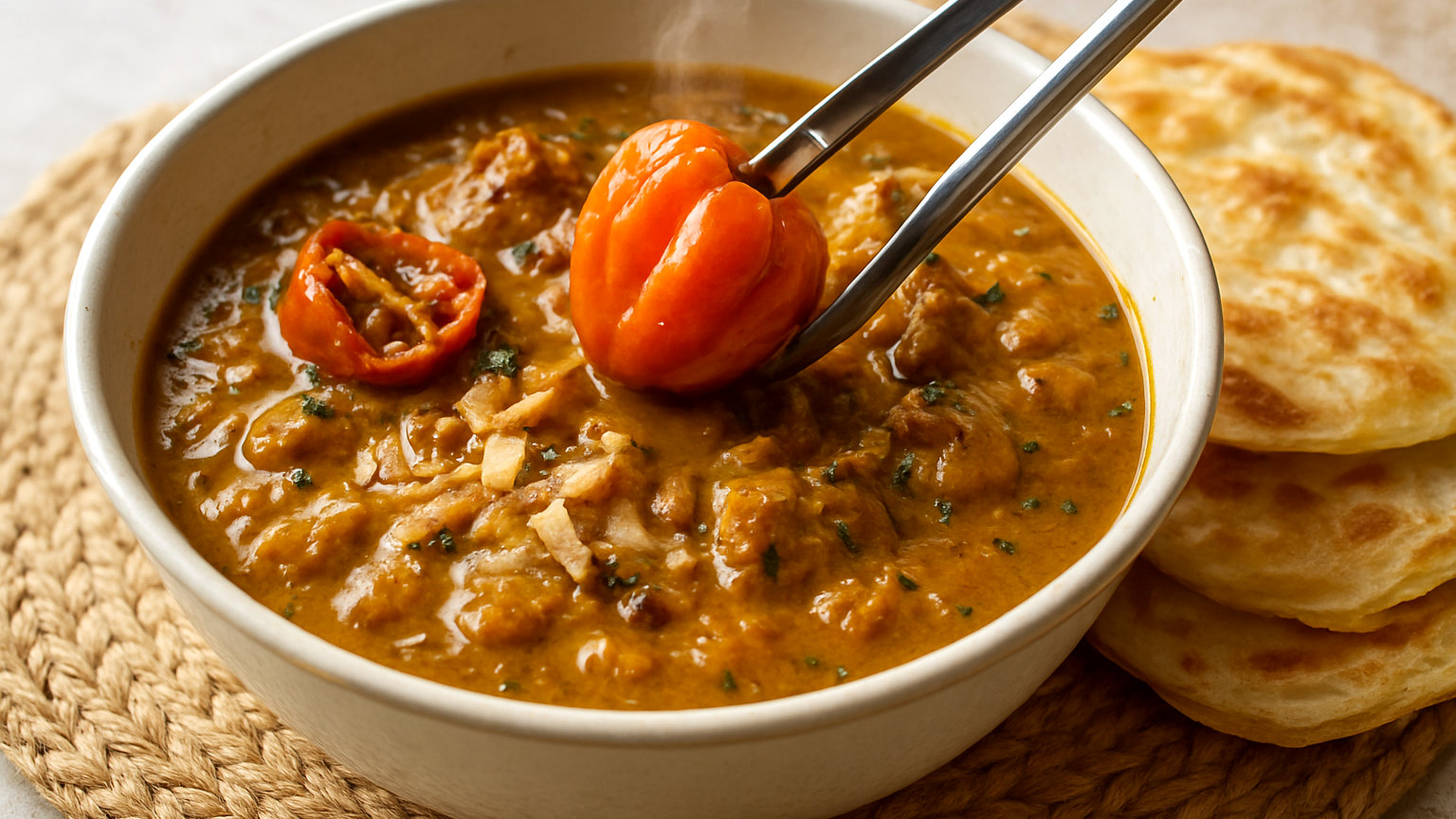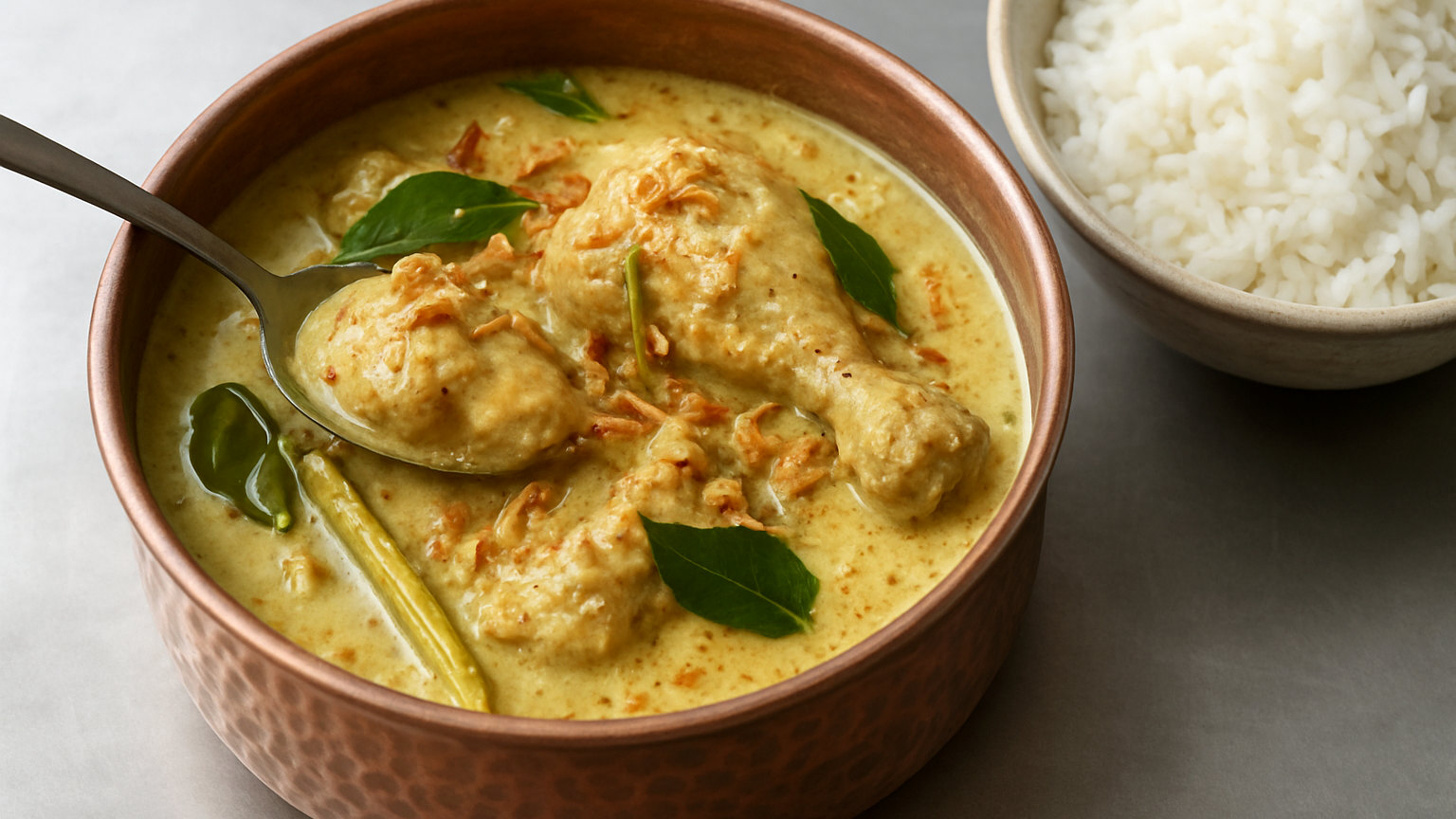
Opor ayam is the pale cousin of gulai. There is no chilli and no turmeric, so it stays creamy white, and the flavour comes from white pepper, coriander, galangal and candlenut. It is mild, fragrant and rich, and it is the dish most associated with Eid celebrations in Java.
Why is it white?
Because everything that would colour it has been deliberately left out. No turmeric, no chilli, no tomato. White pepper replaces black, and the bumbu contains only pale ingredients.
The coconut milk is also never allowed to boil hard, since splitting would make it look curdled rather than smooth.
Opor ayam
Serves four to six. Twenty minutes of preparation and forty minutes of cooking.
For the bumbu
- 10 shallots and 6 garlic cloves
- 6 candlenuts
- 2 tsp coriander seeds, toasted
- 1 tsp white peppercorns
- 3cm galangal and 2cm ginger
- Half tsp ground cumin
For the curry
- 1.2kg bone-in chicken pieces, skin removed
- 4 tbsp vegetable oil
- 2 lemongrass stalks, bruised
- 3 salam leaves, or 2 bay leaves
- 4 kaffir lime leaves
- 400ml thin coconut milk and 300ml thick coconut milk
- 2 tsp salt and 1.5 tsp palm sugar
- Fried shallots to finish
Method
- Blend the bumbu ingredients to a smooth paste, adding a splash of water if needed.
- Heat the oil in a heavy pot and fry the bumbu over a medium heat for 12 to 15 minutes, stirring often, until the oil separates. It should not brown much.
- Add the lemongrass, salam leaves and lime leaves and fry for 2 minutes.
- Add the chicken and turn it through the paste for 6 minutes without letting it colour.
- Add the thin coconut milk, salt and palm sugar. Bring to a gentle simmer.
- Cook uncovered for 20 minutes, stirring occasionally.
- Add the thick coconut milk and simmer very gently for 10 minutes. Never let it boil.
- Check the salt and finish with fried shallots.
How do you keep it pale?
Fry the bumbu over a moderate heat until the oil separates without letting it darken, which is a different target from a gulai where browning is welcome. Do not brown the chicken either, and keep the coconut below a simmer throughout.
What is it served with?
Ketupat, the compressed rice cakes, at Eid, and plain rice or nasi kuning otherwise. Sambal on the side supplies whatever heat the eater wants, since the dish itself has none.
Why no chilli at all?
Because the dish is defined by being pale, and chilli would colour it. The heat comes from white pepper, which contributes warmth without the red. Anyone wanting more adds sambal at the table, which is standard across Indonesian eating.
Can you use ground white pepper?
Yes, at around a teaspoon in place of the whole peppercorns. Grinding it fresh gives noticeably more aroma, since white pepper loses its volatile compounds quickly once ground. Either works and the fresh-ground version is better.
Why is it eaten at Eid?
It is mild, rich and can be made in quantity, which suits feeding a large gathering. It is traditionally served with ketupat, the compressed rice cakes, and the pairing is strongly associated with the holiday across Java.
How thick should it be?
Thicker than a gulai, coating the chicken rather than pooling around it, and still pourable. The high proportion of thick coconut milk does most of the work. If it has reduced too far, loosen it with a little more coconut milk off the heat.
Does it keep?
Three days refrigerated, and reheat it very gently since the coconut will split if pushed. It thickens noticeably in the fridge and loosens again with a splash of coconut milk. It is one dish where a hard reheat is genuinely visible in the result.
What is ketupat?
Rice compressed into woven palm-leaf pouches and boiled until it forms a dense cake, then sliced. It holds its shape in a sauce far better than loose rice and is the traditional partner to opor at Eid. Lontong is the similar version made in banana leaf.