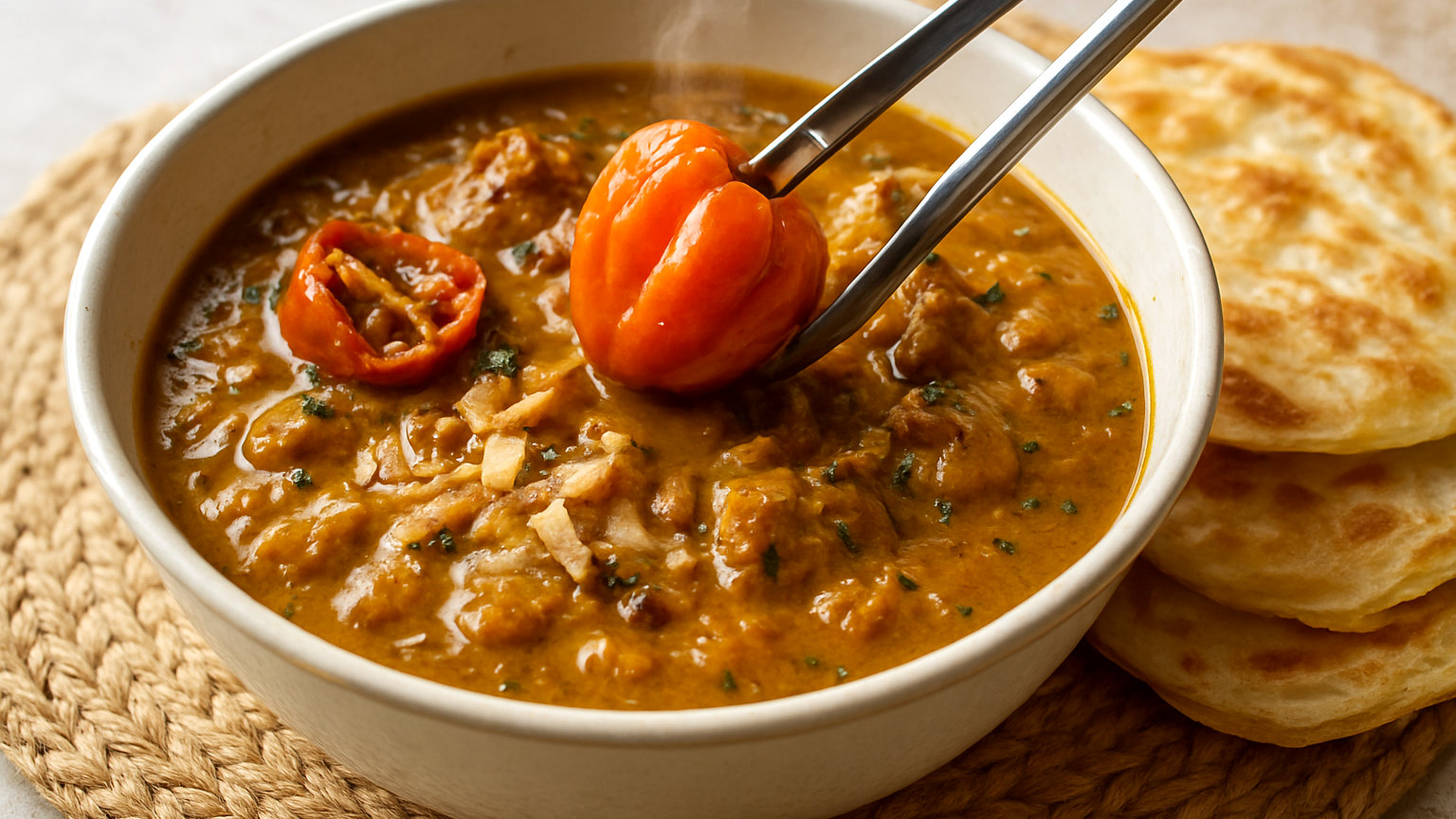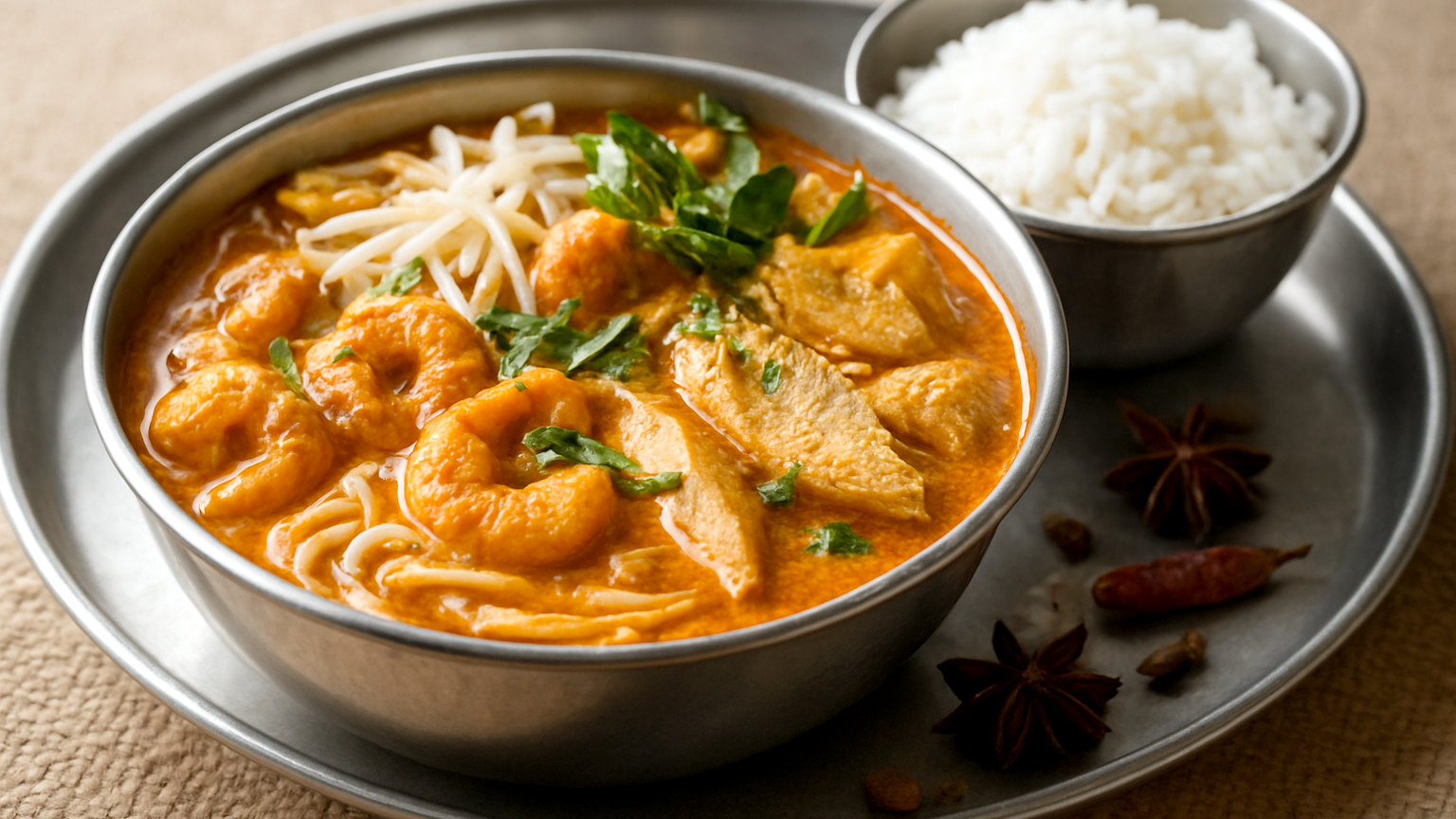
Curry laksa is a coconut curry noodle soup, rich and mildly sweet, loaded with toppings. It is sometimes called laksa lemak or curry mee depending on where you are, and it is a completely different dish from the sour tamarind-based asam laksa of Penang.
What distinguishes the two laksas?
Curry laksa is built on coconut milk and a rempah, giving a rich orange broth. Asam laksa is built on tamarind and poached mackerel, giving a thin sour fish broth with no coconut at all.
Ordering laksa in Malaysia gets you whichever the region defaults to, which causes regular confusion.
Curry laksa
Serves four. Thirty minutes of preparation and thirty minutes of cooking.
For the rempah
- 10 dried red chillies, soaked and drained
- 8 shallots and 5 garlic cloves
- 3 lemongrass stalks, tender parts only
- 3cm galangal and 2cm fresh turmeric
- 5 candlenuts
- 1.5 tsp belacan, toasted
For the soup
- 4 tbsp vegetable oil
- 1 tbsp Malaysian meat curry powder
- 1.2 litres chicken stock
- 400ml coconut milk
- 300g chicken thigh, poached and shredded
- 300g raw prawns, peeled
- 8 tofu puffs, halved
- 2 tsp palm sugar and 2 tsp salt
- 400g fresh yellow noodles and 200g rice vermicelli
- Bean sprouts, sliced cucumber, halved boiled eggs, mint and sambal to serve
Method
- Blend the rempah ingredients to a smooth paste.
- Heat the oil in a large pot and fry the rempah over a medium heat for 15 minutes, stirring often, until darkened and the oil separates.
- Add the curry powder and fry for 90 seconds more.
- Add the stock, bring to a simmer, and cook for 12 minutes.
- Add the coconut milk, tofu puffs, palm sugar and salt. Simmer gently for 8 minutes without boiling hard.
- Add the prawns and cook for 3 minutes until they form a loose C.
- Blanch the noodles briefly in boiling water and divide between four deep bowls.
- Ladle the soup over, then add the shredded chicken, bean sprouts, cucumber and egg.
- Finish with mint and serve with sambal on the side.
Why two kinds of noodle?
Because the combination is traditional and the textures work together. Thick yellow wheat noodles give body and thin rice vermicelli soaks up the broth. Either alone is fine, and both together is how it is usually served.
What are tofu puffs?
Deep-fried tofu cubes, hollow and spongy, sold in bags in Asian grocers. They absorb the broth completely and are one of the best things in the bowl. Halve them so they soak up more.
Which noodles should you buy?
Fresh yellow wheat noodles from the chilled section of an Asian grocer, and dried rice vermicelli. Both need only a brief blanch. Avoid instant noodles, which are too soft and carry their own seasoning, and avoid anything egg-rich which turns claggy in a coconut broth.
Can you make the broth ahead?
The base without the coconut milk keeps three days refrigerated and freezes for three months. Add the coconut milk, prawns and tofu puffs when you reheat, which takes ten minutes. Never reheat a finished laksa containing prawns, since a second cooking toughens them.
How hot should it be?
Moderately, with the coconut milk buffering the ten dried chillies in the rempah. The sambal on the side is where the real heat lives, letting each person adjust. That division is standard, and a laksa that arrives fiercely hot has usually been over-chillied in the pot.
What is the sambal for?
Adjusting the heat and adding sharpness at the table. A spoonful of sambal belacan stirred into the bowl transforms it. Serving a laksa without one leaves people no way to correct it toward their own preference.
Can you make it vegetarian?
Leave out the belacan and the prawns, use vegetable stock, and lean harder on the tofu puffs and fried tofu. A teaspoon of miso covers some of the savoury depth the belacan gave. The broth is otherwise unchanged and the result is genuinely good.
How thick should the broth be?
Soupy rather than thick, since it is a noodle soup rather than a curry with noodles in it. There should be enough liquid to drink from the bowl once the noodles have gone. If it has reduced too far, loosen it with stock rather than more coconut milk.