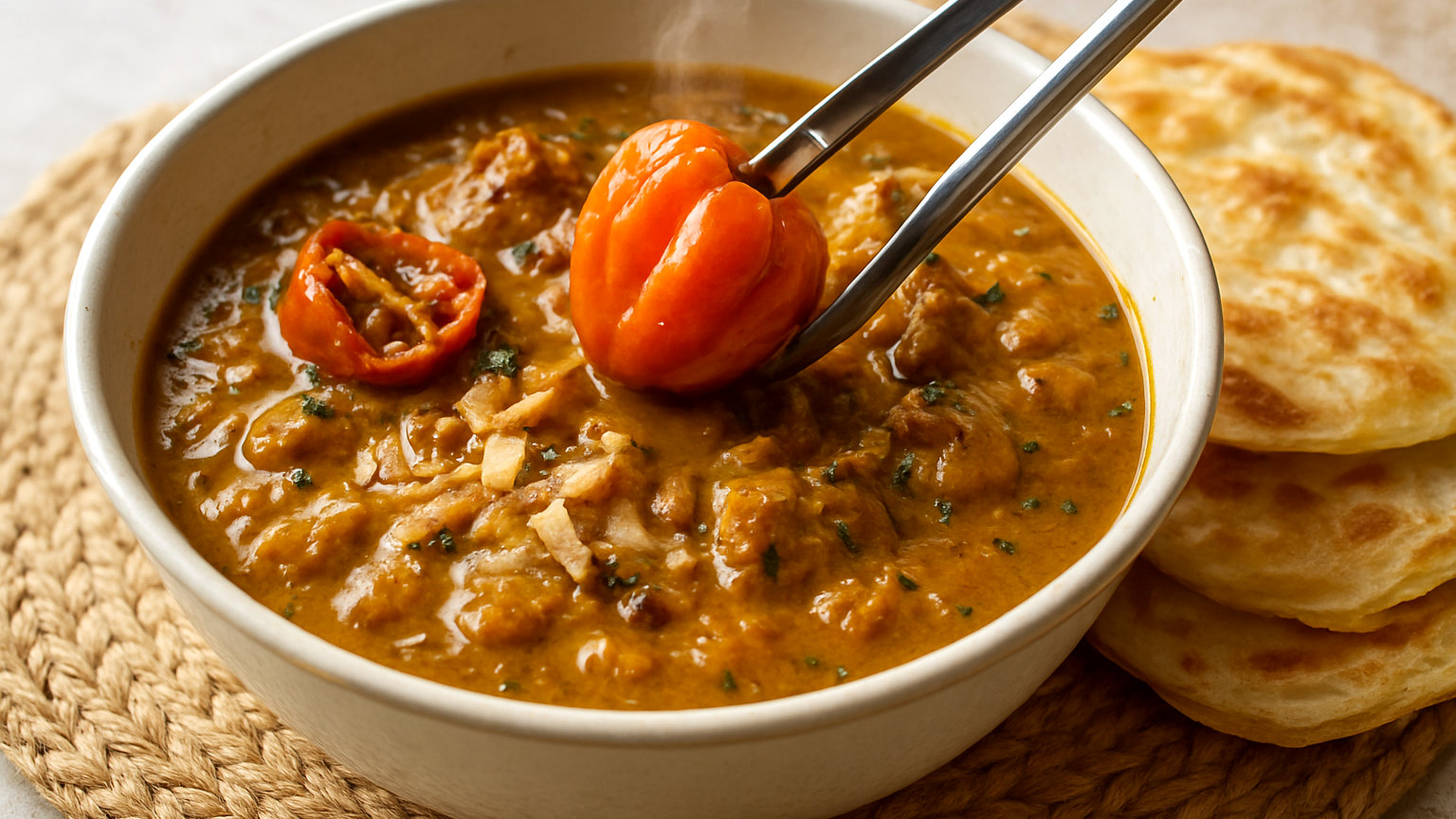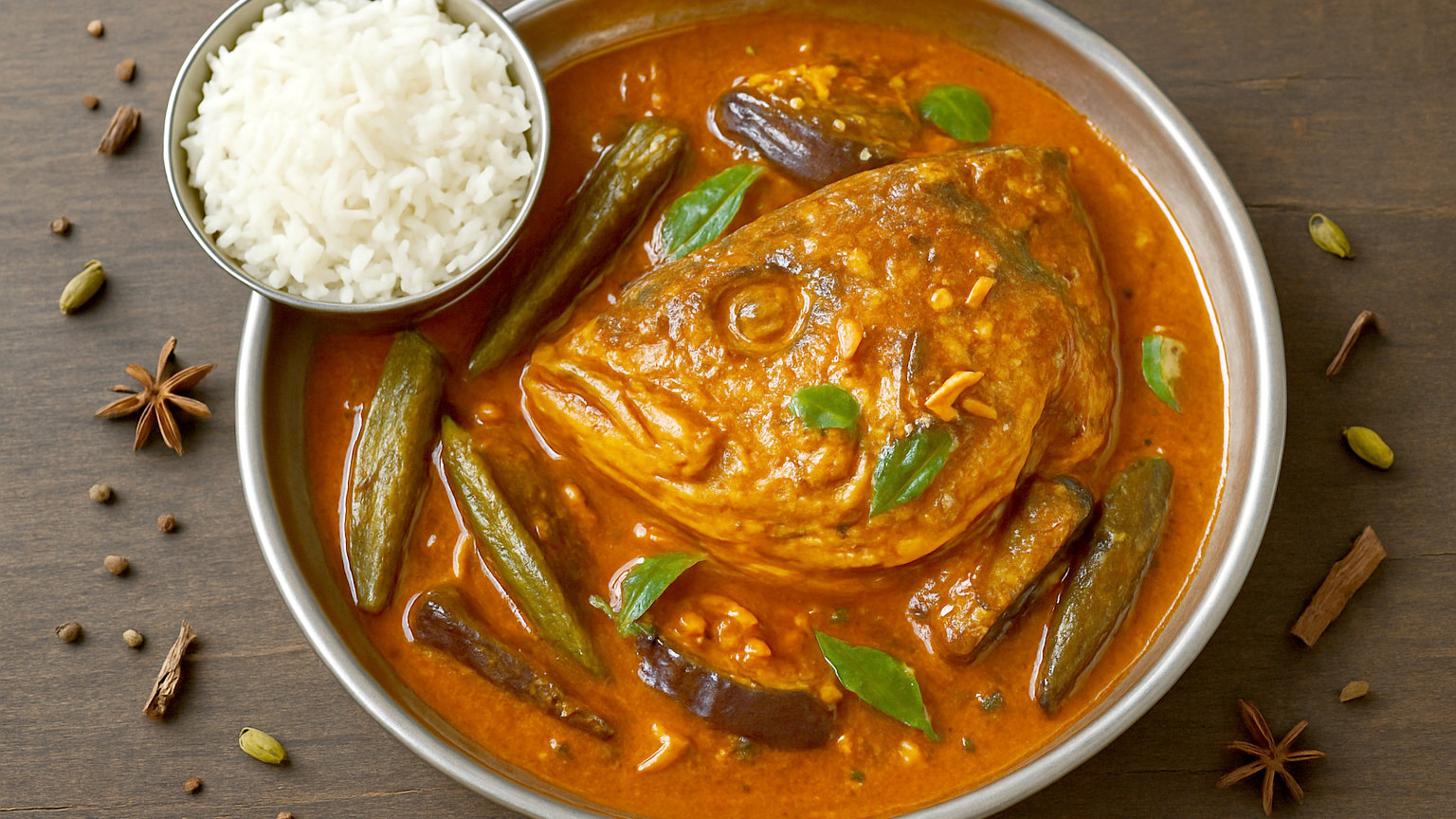
Fish head curry is a Singapore and Malaysia speciality, generally credited to South Indian cooks in Singapore adapting a Kerala-style curry for local tastes. It is sour with tamarind, moderately hot, and built around a whole fish head.
Why use the head?
Because it is the best part of the fish for a curry. The cheeks are the sweetest meat on the animal, the collar is rich and fatty, and the bones and skin release gelatine that gives the sauce body.
It is also inexpensive, since most Western fishmongers sell heads cheaply or give them away.
Which fish?
Red snapper is traditional. Sea bass, grouper, salmon or cod heads all work. Ask the fishmonger to split the head lengthways, which helps it cook evenly and makes it easier to eat.
Fish head curry
Serves four. Twenty minutes of preparation and thirty minutes of cooking.
Ingredients
- 1 large fish head, around 1kg, split and cleaned
- 4 tbsp vegetable oil
- 1 tsp fenugreek seeds and 1 tsp mustard seeds
- 20 curry leaves
- 2 onions, sliced
- 6 garlic cloves and 4cm ginger, crushed
- 4 tbsp Malaysian fish curry powder mixed with 6 tbsp water
- 3 tomatoes, quartered
- 10 okra, trimmed, and 1 aubergine, in wedges
- 3 tbsp tamarind paste in 400ml water
- 200ml coconut milk
- 2 green chillies, split, and 2 tsp salt
Method
- Rinse the fish head thoroughly and rub with a little salt and turmeric. Set aside.
- Heat the oil and fry the fenugreek and mustard seeds until the mustard pops, then add the curry leaves.
- Add the onions and cook for 10 minutes until golden, then the garlic and ginger for 3 minutes.
- Add the curry powder slurry and fry for 5 minutes until the water has gone and the oil separates.
- Add the tamarind water and bring to a simmer. Cook for 8 minutes.
- Add the aubergine and cook for 5 minutes, then the okra and tomatoes for 3 minutes.
- Lower the fish head into the sauce, spooning it over. Cover and simmer gently for 10 to 12 minutes.
- Add the coconut milk and green chillies and warm through for 3 minutes without boiling.
- Check the salt and serve straight from the pan with rice.
Why fish curry powder rather than meat?
Because Malaysian fish curry powder contains more fennel and fenugreek and less of the warm spices, which suits seafood and stands up to the tamarind. Using meat curry powder gives a heavier result.
How do you eat it?
With your hands, working the cheeks out first, then the collar. It is not a tidy dish and it is not meant to be.
Can you use fillets instead?
The curry works and it becomes a different dish. Firm fish steaks in large pieces added for six minutes at the end is the sensible approach. What you lose is the gelatine from the bones and skin, which gives the sauce its body, so expect it thinner.
How do you clean the head?
Ask the fishmonger to remove the gills, which are bitter, and to split it. Rinse thoroughly under cold water, checking inside the gill covers, and rub with salt and turmeric. That last step is traditional and reduces any muddiness.
Where did the dish come from?
Generally credited to a South Indian cook in Singapore in the 1940s, adapting a Kerala-style fish curry to use a cut that local Chinese customers valued and Indian customers had not been using. It is a genuinely hybrid dish and both communities claim it.
How large a head do you need?
Around a kilogram for four people, which is a large snapper or sea bass head. There is less meat on it than the weight suggests, so it is usually served as part of a spread with rice and other dishes rather than as a single main course.
What vegetables belong in it?
Okra and aubergine are standard, with tomato for acidity. Both hold their shape in a sour sauce and both absorb it well. Long beans appear in some versions. Anything that collapses quickly is a poor choice, since the sauce simmers for a while before the fish goes in.