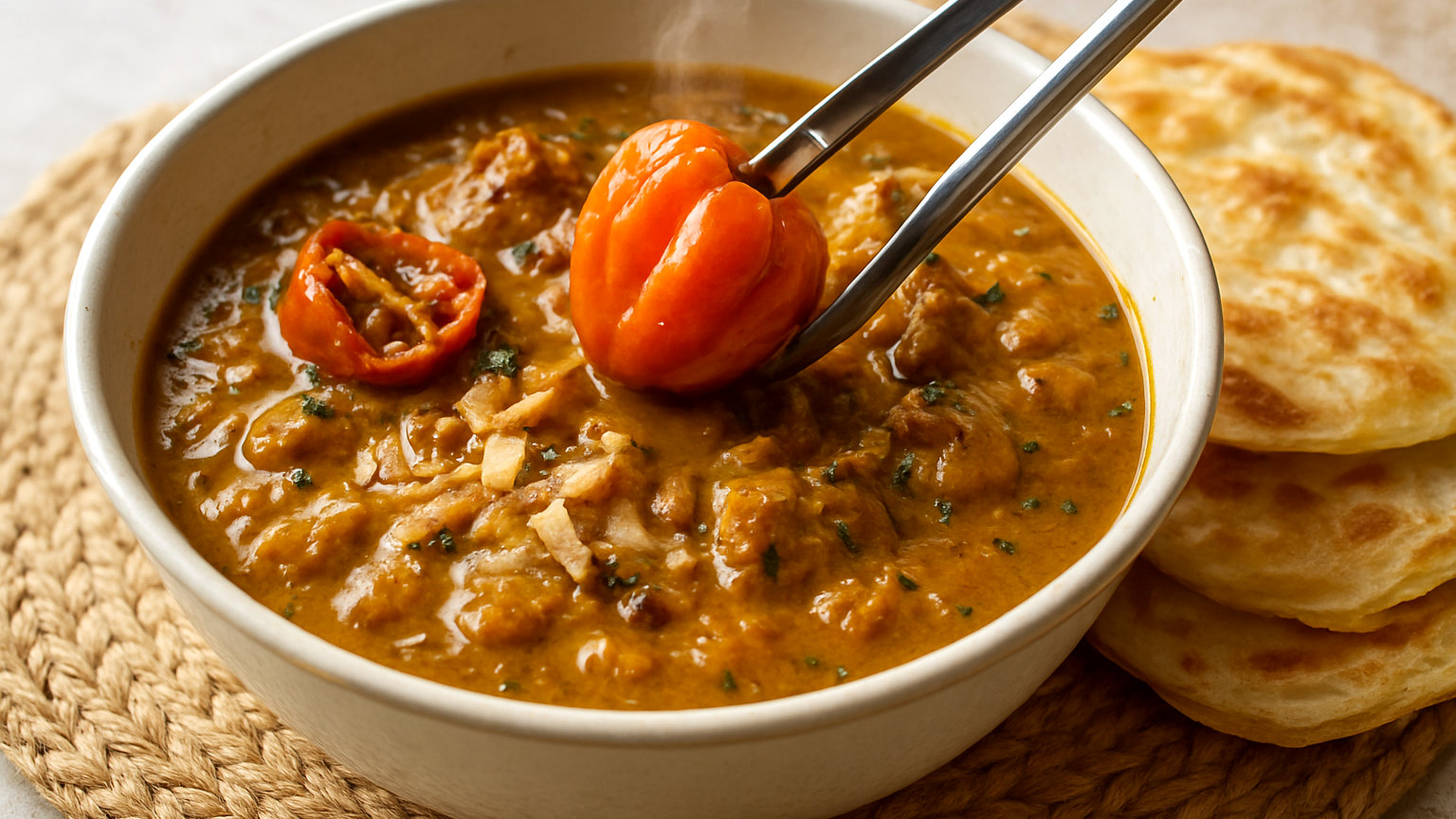
Malaysian curry is built on a rempah, a wet paste of fresh aromatics pounded or blended together. It is the equivalent of a Thai curry paste rather than of an Indian spice powder, and understanding it is most of understanding the cuisine.
What goes into one?
- Shallots - in quantity, often the largest single ingredient.
- Garlic - generously.
- Dried or fresh chillies - for heat and colour.
- Lemongrass - tender lower stalk only.
- Galangal and ginger - both, doing different jobs.
- Fresh turmeric - where available, for colour and earthiness.
- Candlenuts - as a thickener.
- Belacan - toasted fermented shrimp paste, in most savoury rempah.
How does it differ from a Thai paste?
Shallots dominate in a Malaysian rempah where a Thai paste leans harder on lemongrass and galangal. Candlenuts appear here and not in Thai cooking. And Malaysian rempah is often supplemented with a dry curry powder as well, which Thai cooking never does.
Does the pounding order matter?
Yes, and it follows the same logic as a Thai paste. Hardest and driest first, softest and wettest last.
- Dried chillies with a pinch of salt, until broken down.
- Lemongrass, which is fibrous and takes the longest.
- Galangal, turmeric and ginger.
- Candlenuts, which release oil and make the mortar slippery.
- Garlic and shallots, which are wet and would otherwise stop anything else breaking down.
- Toasted belacan, worked in at the very end.
Can you use a blender?
Most Malaysian home cooks do, and it is a practical choice. A blender chops where a mortar crushes, so it releases slightly less aromatic oil, and the difference is smaller than purists suggest.
Add a splash of water or oil to get it moving, and stop to scrape down the sides several times.
How much does a recipe need?
Considerably more than a Thai curry uses. A rendang for six takes a rempah built from ten shallots and eight garlic cloves, which produces a substantial quantity of paste. This is the body of the dish rather than a seasoning added to it.
Can you make it ahead?
A week refrigerated under a film of oil, or three months frozen in portions. Freezing in an ice cube tray gives useful quantities, and it is worth making a double batch since the pounding is the slow part.
What if you cannot find everything?
Galangal and lemongrass are the two hardest to replace, and both freeze well so buy them when you see them. Macadamias substitute for candlenuts. Ground turmeric replaces fresh at around a third of the weight.
How wet should the finished paste be?
Thick enough to hold its shape on a spoon rather than pouring. If it is loose, it will take considerably longer to fry down. Add water sparingly during blending, since every millilitre added has to be driven off again later in the pan.
Does it vary by dish?
Considerably. A rendang rempah is heavy on galangal and turmeric, a laksa rempah leans on candlenut and belacan, and a kapitan rempah carries far more lemongrass. The core structure is the same and the emphasis shifts, in the same way Thai pastes do.
Is it worth pounding by hand?
The result is marginally better, since crushing ruptures cells more thoroughly than chopping and releases more aromatic oil. For a large rempah it is twenty minutes of hard work. Most Malaysian home cooks use a blender and nobody considers it a compromise.
Should you salt the paste?
A pinch of salt with the dried chillies at the start of pounding helps as an abrasive, giving the pestle something to grip. Beyond that, the seasoning goes into the dish rather than the paste, since a rempah is a component rather than a finished item.
Does it freeze well?
Very well for three months, raw or already fried. Freezing it fried is the more useful option, since the slow work is already done. An ice cube tray gives roughly one tablespoon per cube, and cubes go straight into a hot pan without thawing.