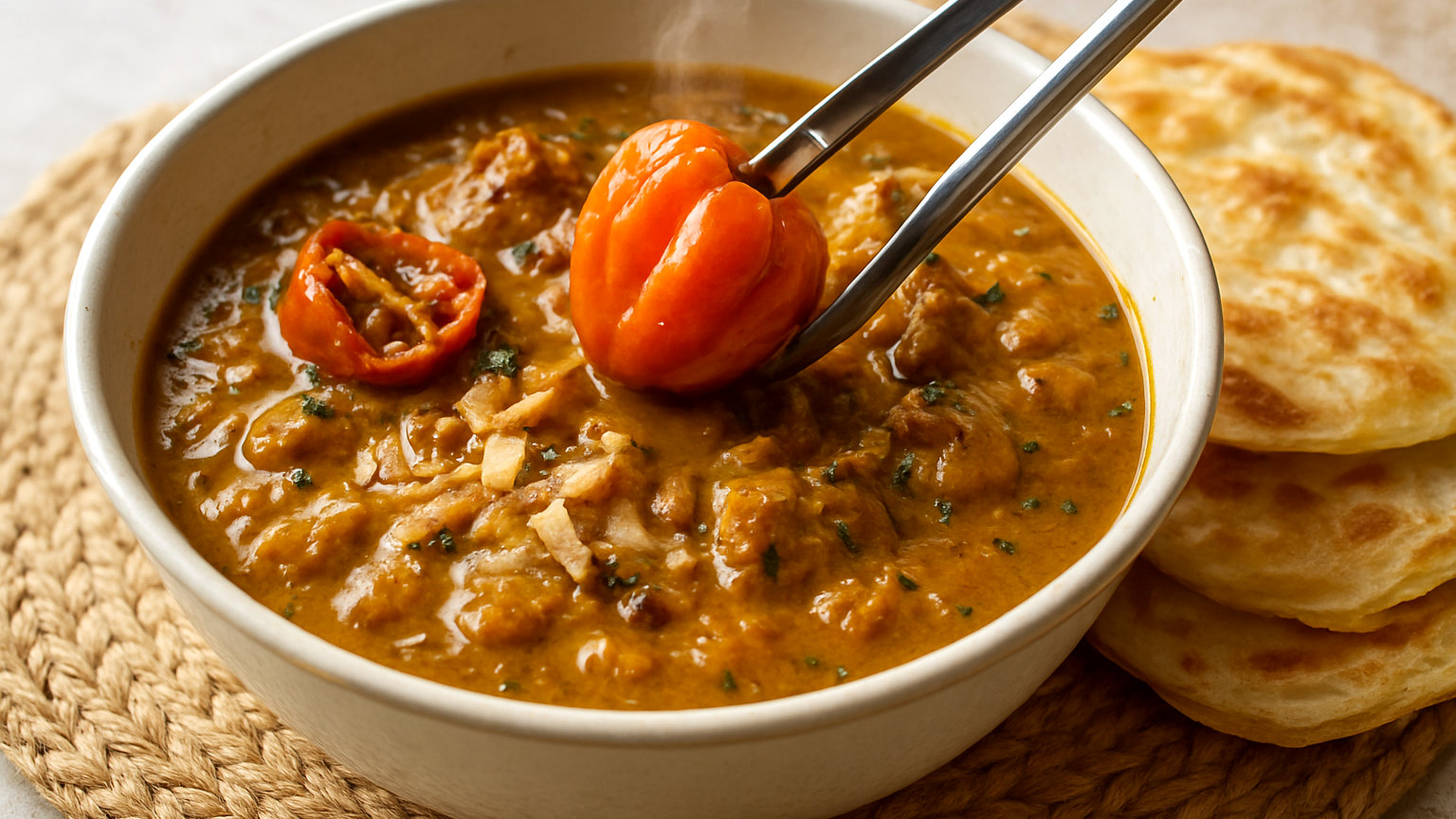
A Sri Lankan beef or chicken curry can be genuinely black, and people seeing it for the first time assume it has been burnt or cooked for hours. Neither is true, and the colour comes from a decision made before the curry begins.
Where does the colour come from?
The roasted curry powder, almost entirely. Coriander, cumin and fennel seeds roasted to a deep chocolate brown produce a powder that is nearly black, and three tablespoons of it in a pot colours everything.
Nothing that happens during the cooking contributes much. A Sri Lankan curry simmered for twenty minutes is as dark as one simmered for two hours.
What else contributes?
- Roasted curry leaves and pandan - ground into the powder, adding a dark green-black.
- Goraka - which stains everything deep brown.
- Black pepper - used generously, more than in most Indian cooking.
- Roasted coconut - in the black curry style specifically.
- Dark roasted chillies - where included in the blend.
What is a black curry?
The name refers to a style where grated coconut is dry-roasted until genuinely dark, then ground and added to the curry alongside the roasted powder.
It produces the darkest curries of all, and it is most associated with beef and pork.
Is it burnt?
It is roasted close to the edge, and it should stop short of burning. The distinction is real: properly roasted spice tastes deeply toasted and nutty, where burnt spice is acrid and bitter with no complexity.
Anyone roasting their own will overshoot at some point, and the acrid smell is unmistakable when it happens.
Does dark mean hot?
No, and the two are unrelated. The colour comes from roasted coriander and cumin, neither of which carries any heat. Sri Lankan food is often very hot, and that comes from chilli added separately.
A dark curry can be mild and a pale white curry can be fierce.
Are all Sri Lankan curries dark?
Far from it, and this is the point of keeping two curry powders. Fish curries, vegetable curries, dhal and the white coconut curries are all pale, made with the unroasted blend.
A Sri Lankan rice and curry plate deliberately contains both, so the colours contrast across the dishes.
How dark should yours be?
For a meat curry, deep brown to nearly black. If yours is golden or mid-brown, the powder was not roasted far enough. That is the single most common reason a homemade Sri Lankan curry looks and tastes wrong.
Does the pot affect it?
Not the colour, which is set by the powder before cooking begins. What a heavy pot does help with is even cooking without catching, which matters given how much dark spice is in the pan. A thin pot develops hot spots where the powder scorches and turns genuinely bitter.
Should you add anything for colour?
No, and there is no need. Nothing is added for appearance in this cuisine the way caramel colouring goes into a Japanese roux block. If a curry is not dark enough, the answer is a better-roasted powder next time rather than anything stirred in now.
Does it look burnt to people unfamiliar with it?
Frequently, and it is worth warning guests. A properly made black curry looks alarming next to an Indian or Thai curry, and people assume something has gone wrong. The taste settles the question immediately, since it is toasted and nutty rather than acrid.
Does the colour affect the taste?
Directly, since both come from the same source. The roasting that darkens the powder is what develops the toasted, nutty, faintly bitter depth that makes the cuisine recognisable. A pale Sri Lankan curry does not merely look different, it tastes of raw spice rather than roasted.
Does the meat contribute?
Very little to the colour. Beef and chicken both darken slightly during the initial frying, and against a powder this dark the difference is imperceptible. A vegetable curry made with the same roasted powder comes out just as black, which confirms where the colour is actually coming from.