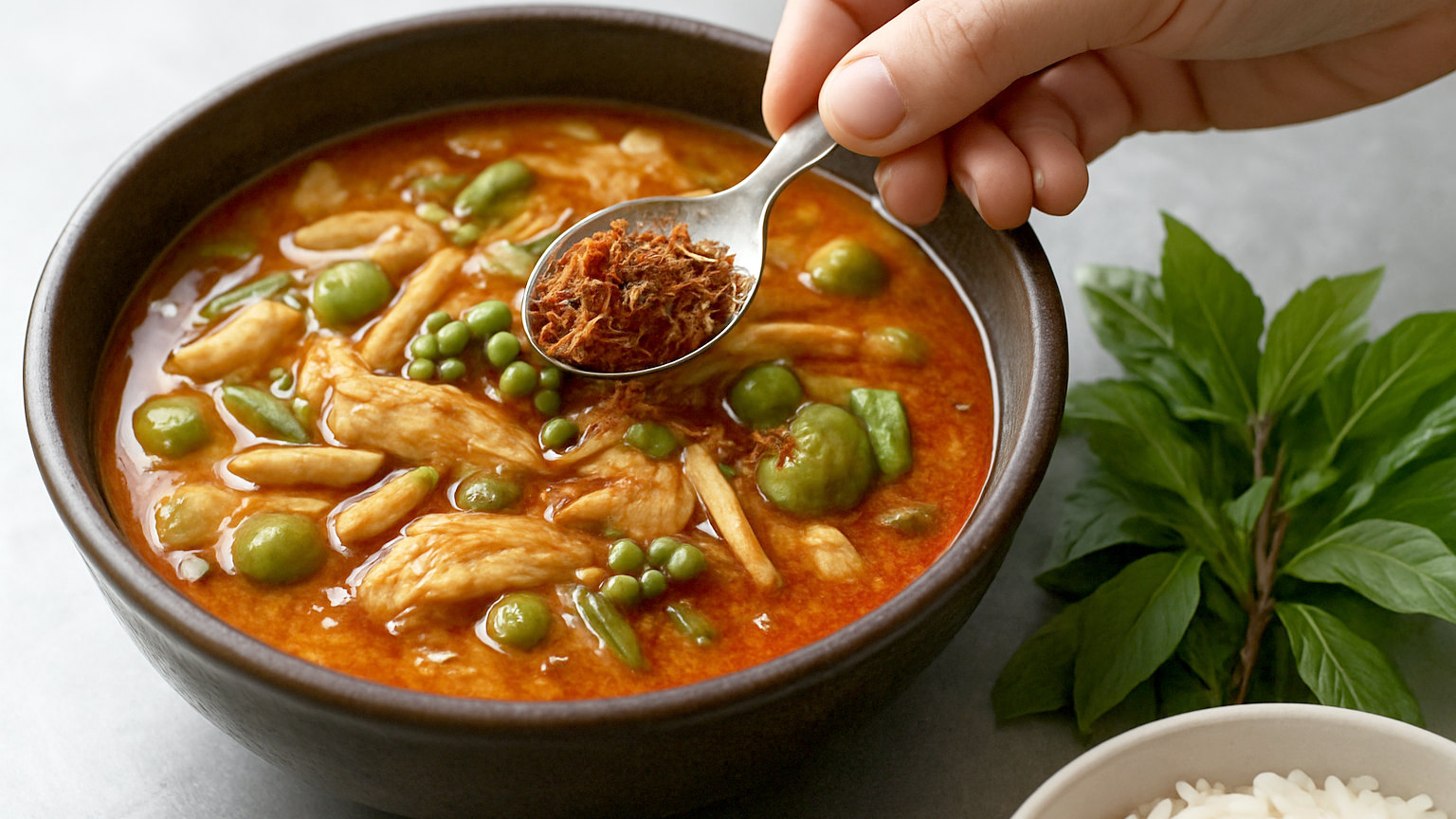
Holy Basil or Thai Basil: Which for Jungle Curry?
Holy basil is correct and peppery, Thai basil is the common substitute and tastes of aniseed. They are different plants and the swap is noticeable.
Thai curry is quick to cook and easy to get wrong, because almost every recipe skips the step that makes it taste like the restaurant version: frying the paste in split coconut cream until the oil separates and the kitchen smells of it. These recipes put that first. They also give an honest account of shop-bought pastes - which brands are worth buying, how much more you need than the jar suggests, and what to add to lift one - alongside the from-scratch versions for when you have a pestle and mortar and half an hour.
Holy basil is correct and peppery, Thai basil is the common substitute and tastes of aniseed. They are different plants and the swap is noticeable.
Thin in texture is correct, thin in flavour is not. More paste, a real stock and enough fish sauce are what separate a good broth from hot water.
A great deal of rice and something with fat in it. This is the hottest thing on a Thai menu and the table needs to provide the relief the dish does not.
Read the coconut percentage and the additives list. Seventy per cent extract with nothing but water alongside it is what you want, and it costs little more.
Almost always emulsifiers in the tin, occasionally too little fat or too much stirring. Two of the three are fixable and one means buying a different brand.
Grainy at the start is correct and grainy at the end is not. The difference is whether the sauce came back together after the paste went in.
The method stripped back to its essentials, using whichever paste you have. Learn this and every Thai coconut curry becomes a variation on it.
All three are the same thing at different water contents. Knowing the ratios lets you substitute one for another without guessing.
Easily, from desiccated coconut in ten minutes, and it splits beautifully because there is nothing in it to prevent it. Fresh coconut is better and more work.
Not for a Thai curry, where the fat is doing structural work. It has uses elsewhere, and diluting a good tin yourself is better than buying a light one.
A coconut soup rather than a curry, and the one dish where coconut milk should never be boiled. Keep it below a simmer and add the lime at the very end.
Ice crystals rupture the emulsion, so a thawed curry looks grainy. It is fixable in thirty seconds and the alternative is to freeze before the coconut goes in.