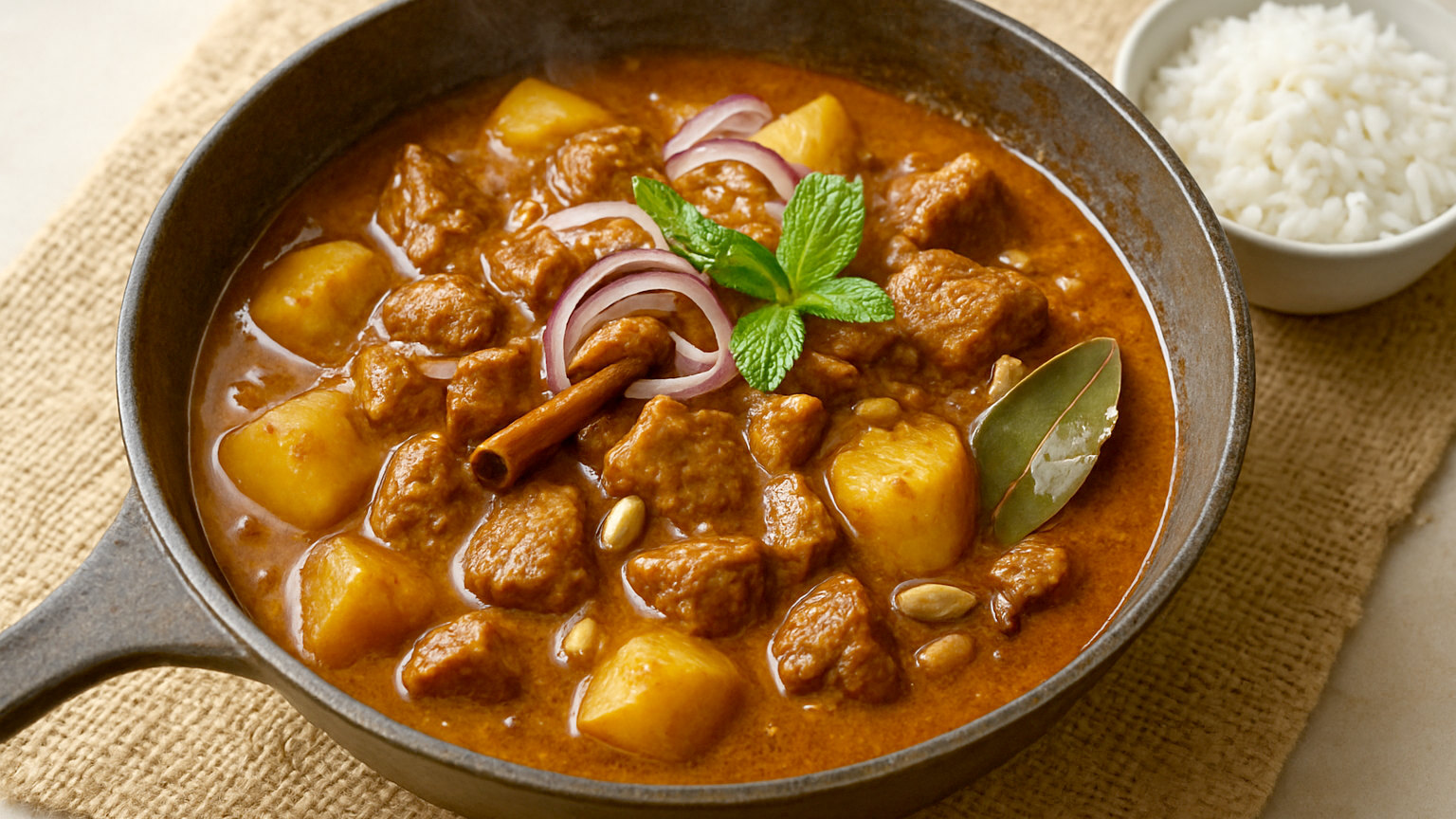
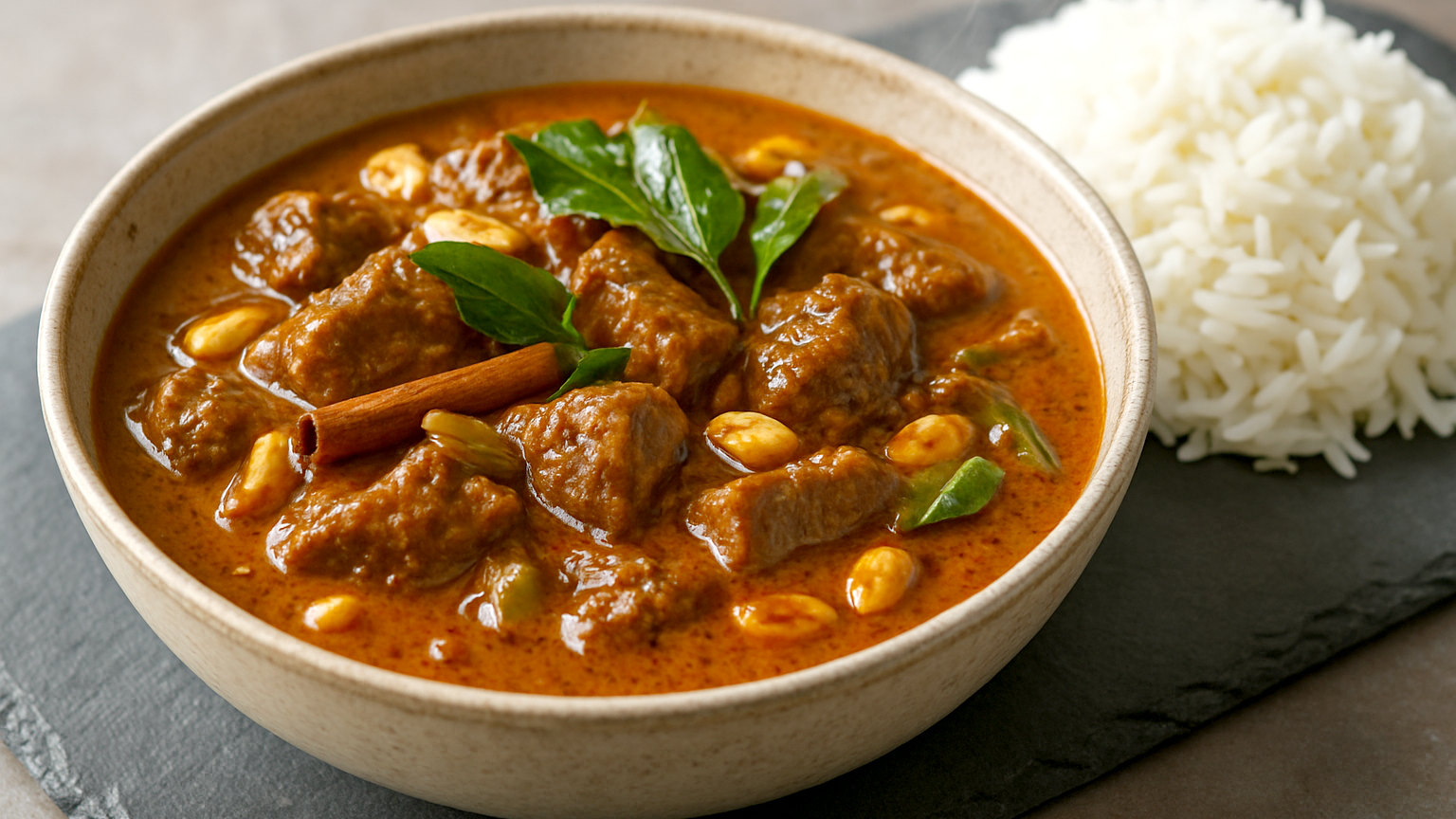
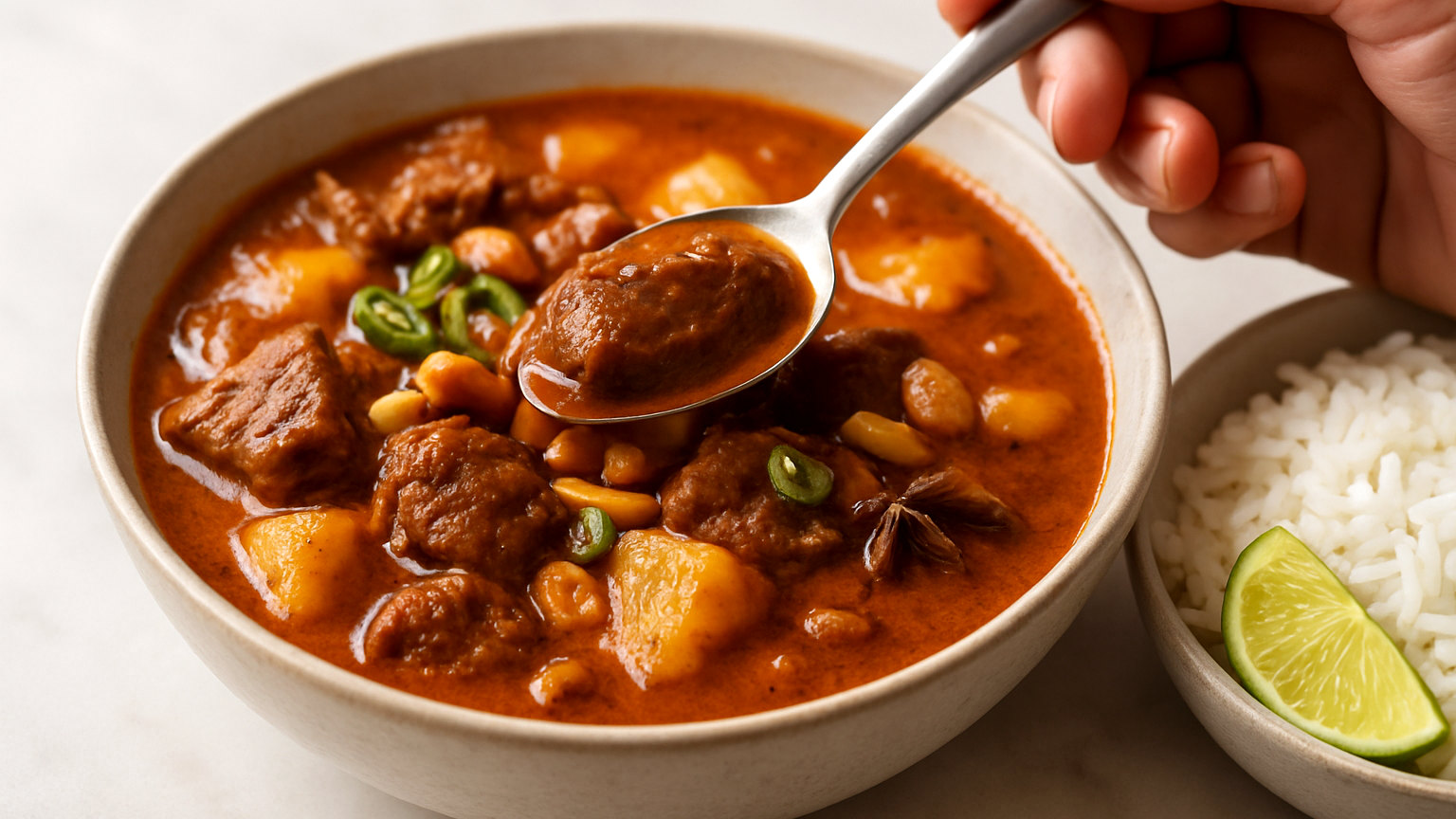
Why Is Massaman the Mildest Thai Curry?
Because the heat comes largely from white pepper and mild dried chillies, and the warm spices, coconut and peanut between them buffer what remains.
By Curry Recipes Team
18 Apr 2026

Thai curry is quick to cook and easy to get wrong, because almost every recipe skips the step that makes it taste like the restaurant version: frying the paste in split coconut cream until the oil separates and the kitchen smells of it. These recipes put that first. They also give an honest account of shop-bought pastes - which brands are worth buying, how much more you need than the jar suggests, and what to add to lift one - alongside the from-scratch versions for when you have a pestle and mortar and half an hour.
Because the heat comes largely from white pepper and mild dried chillies, and the warm spices, coconut and peanut between them buffer what remains.
Lamb suits the warm spices better than beef does, and shoulder gives the same long braise. Skim the fat, because lamb releases considerably more.
They are traditional and they thicken as well as flavour, but a massaman without them is still a massaman. Several substitutes work for allergies.
Waxy varieties that hold their shape. Floury potatoes break down and cloud the sauce, which is a different dish and not a better one.
Massaman adapts more easily than the other Thai curries, since potato and peanut already carry the dish. Check the paste for shrimp and swap the fish sauce.
Because four sweet ingredients are stacking and the tamarind or fish sauce is short. Salt first, then sourness, and only then consider the sugar itself.
Two hours for beef, fifty minutes for chicken, and the spices want most of that regardless. It is the one Thai curry you cannot rush.
Better suited than any other Thai curry, since it already wants a long gentle braise. The paste still has to be fried in a pan first.
Jasmine rice and something sharp. The curry already contains potato and peanut, so it needs contrast rather than more substance beside it.
Thicker than any other Thai curry, with a sauce that clings to the meat. Use less thin coconut liquid, more cream, and finish with shredded lime leaf.
Because the dish is built on concentration rather than volume. A panang is eaten in small quantities alongside other dishes, not ladled over a plate of rice.
Essentially a red paste with roasted peanuts pounded in and a heavier hand with the kaffir lime. Fewer chillies too, since panang is meant to be gentler.